
Satellite imagery indicates new strike marks at Iran’s Bushehr nuclear complex
Al Jazeera said Sentinel-2 images show fresh impact scars at Bushehr after US strikes, while Iran said the reactor was not hit.
By Daniel Okafor · Business Editor
3 min read
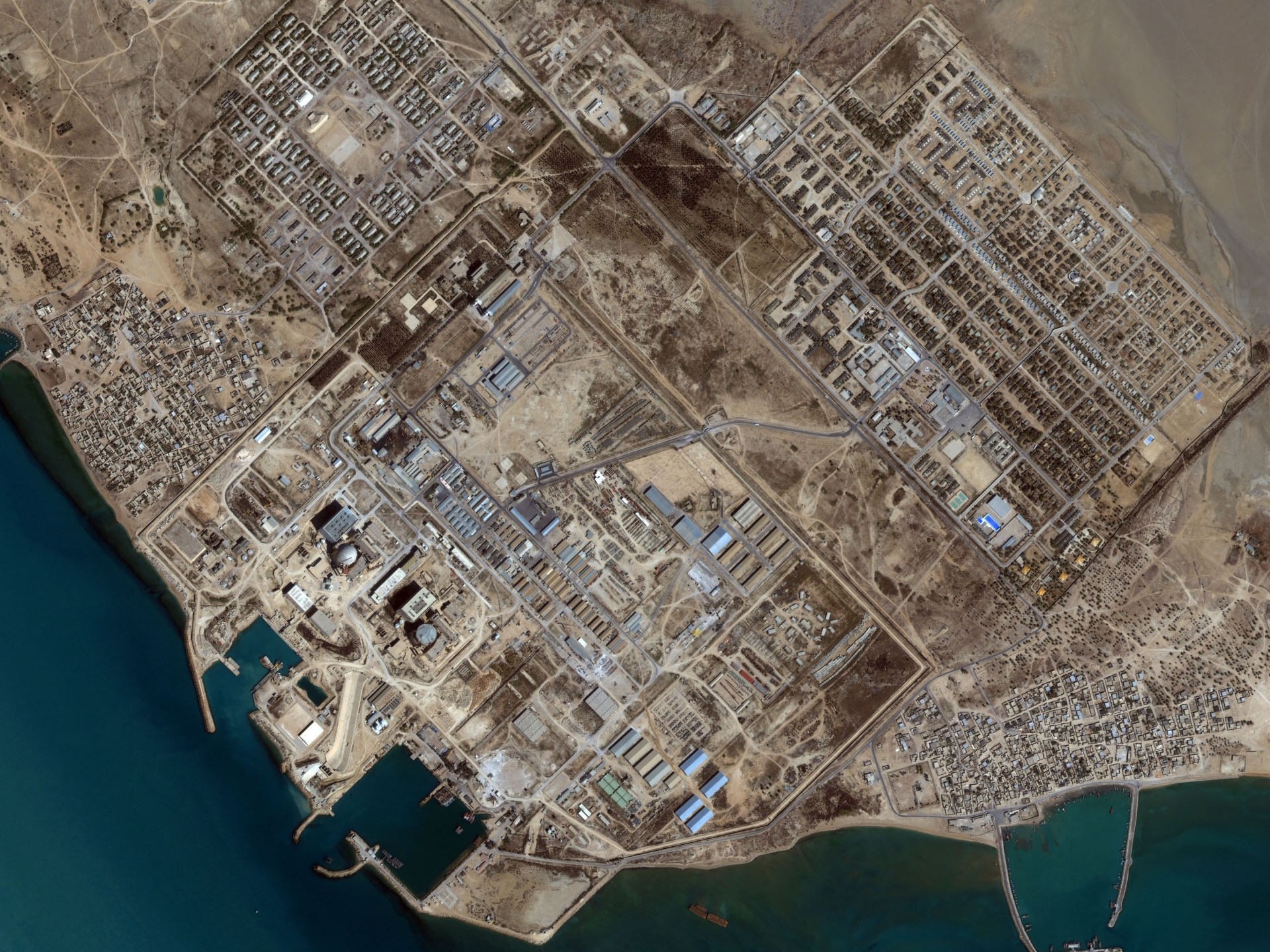
New satellite imagery indicates fresh impact marks inside Iran’s Bushehr nuclear power plant complex after a wave of US strikes, according to Al Jazeera’s open-source unit. The finding raises concern because Bushehr is Iran’s only operating nuclear power plant and contains nuclear fuel tied to electricity generation, according to Al Jazeera and International Atomic Energy Agency data.
Al Jazeera said it compared European Sentinel-2 satellite images taken on July 7 and July 12. The unit said the images show new scars within the Bushehr complex and another apparent strike location in nearby support facilities.
The imagery was part of a wider mapping effort by Al Jazeera’s open-source unit, which said it used satellite pictures, field footage and official information from US Central Command to locate US strikes in Iran from July 7 to July 15.
Iran said nearby areas were struck
Ehsan Jahanian, deputy governor of Bushehr province, said on July 9 that several locations in the province had been hit, Iran’s state news agency IRNA reported. According to IRNA, Jahanian listed areas around the Bushehr nuclear power plant, a military site in Choghadak and a fishing port in the province’s south.
Jahanian later rejected accounts that the nuclear power plant itself had been hit, according to IRNA. He said the reactor was unaffected and was operating normally.
US Central Command said it struck about 90 military targets in Iran on July 7 and July 8. CENTCOM said those targets included air defense systems, missile and drone storage sites, naval assets and other military infrastructure along Iran’s southern coast.
CENTCOM did not name Bushehr or any nuclear site among the targets it announced.
Why Bushehr is sensitive
Al Jazeera identified Bushehr as Iran’s only operating nuclear power plant. The site sits about 17km south of the city of Bushehr and covers about 2.5 square kilometres, according to Al Jazeera.
The complex includes reactor buildings, ocean-linked cooling-water channels, assembly halls and a harbour used for equipment and materials connected to construction and reactor work, according to Al Jazeera. The site has two reactor buildings, one in operation and another that has remained unfinished for years, Al Jazeera said.
The IAEA’s Power Reactor Information System lists Bushehr-1 with net electrical capacity of about 915 megawatts. According to the IAEA database, the reactor was first connected to Iran’s electricity grid in September 2011 and entered commercial operation in September 2013.
Al Jazeera said Bushehr differs from enrichment sites such as Natanz or Fordow because its operating reactor holds nuclear fuel and radioactive material linked to power generation. Damage involving cooling, power supply or containment systems would be especially sensitive, according to Al Jazeera.
Earlier projectile incidents
IAEA event reports submitted by Iran’s nuclear regulator recorded several earlier projectile incidents near or within the Bushehr plant in 2026. The reports cited projectiles striking inside the plant’s premises on March 17, March 24 and March 27, as well as an impact near the fence around the first reactor unit on April 4.
In each case, Iranian authorities told the IAEA that the reactor continued to operate normally and that no damage to the reactor itself had been recorded. The IAEA has said nuclear facilities should not be targeted in armed attacks because of possible consequences for people, the environment and regional nuclear safety.
This story draws on original reporting from Al Jazeera.