
Red cards and water breaks mark first day of 2026 World Cup
Mexico beat South Africa and South Korea edged Czechia as officiating, VAR and mandatory hydration breaks drew attention on day one.
By Lucas Ferreira · Science & Environment Writer
3 min read
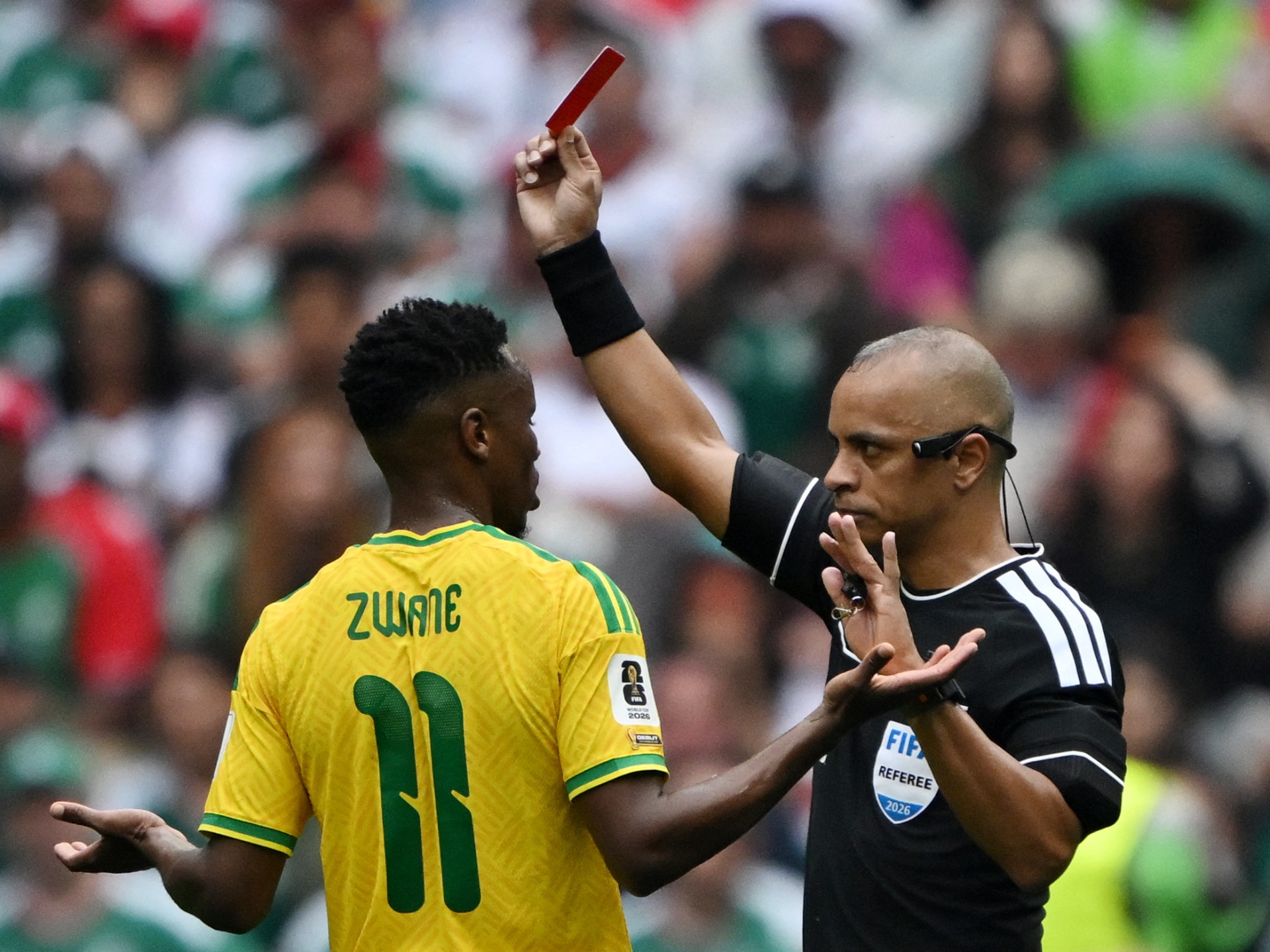
The 2026 World Cup opened Thursday with Mexico defeating South Africa 2-0 and South Korea coming from behind to beat Czechia 2-1, according to Al Jazeera. The first day also put tournament procedures in focus, with three red cards, VAR intervention and fixed hydration breaks shaping the early discussion.
Al Jazeera reported that the opening day produced five goals across matches in Mexico City and Zapopan, along with four water breaks and an opening ceremony. The tournament is being staged over 39 days and 104 matches in North America, Al Jazeera reported.
Three red cards in the opener
Mexico’s win over South Africa at Estadio Azteca featured red cards for Yaya Sithole, Themba Zwane and Cesar Montes, Al Jazeera reported. That total was nearly as many as the four red cards shown across the entire 2018 World Cup in Russia and the 2022 World Cup in Qatar, according to Al Jazeera.
Al Jazeera reported that Thursday’s match finished one red card short of the World Cup single-game record of four, set in the 2006 Portugal-Netherlands match known as the “Battle of Nuremberg.” The same 2006 tournament in Germany also holds the overall World Cup record with 28 red cards, Al Jazeera reported.
VAR decision draws South Africa’s complaint
The most disputed dismissal came when Brazilian referee Wilton Sampaio sent off Zwane after a VAR review, according to Al Jazeera. Sampaio initially did not show a red card, but changed his decision after checking the pitchside monitor over an incident involving Mexico’s Roberto Alvarado.
Al Jazeera reported that replays did not give a clear view of intent, though Zwane’s hand appeared to catch Alvarado in the face as he tried to move past him. Zwane was dismissed for violent conduct, a decision South Africa coach Hugo Broos questioned after the match.
“The second red card, I think the Mexican player blocked my player,” Broos said, according to Al Jazeera. Broos said he accepted the referee’s authority but added that he thought the decision was “too soft” for a red card.
Hydration breaks split opinion
FIFA’s fixed hydration breaks also debuted at the World Cup on Thursday, with one three-minute pause in each half regardless of weather conditions, Al Jazeera reported. FIFA introduced the breaks with player welfare in mind, according to Al Jazeera.
The policy drew early criticism from some viewers and coaches, Al Jazeera reported. In the United States, some fans were frustrated after Fox cut to full-screen commercials during the second-half break in Mexico vs South Africa and missed live action, according to Al Jazeera.
US coach Mauricio Pochettino said he supported water breaks only in extreme conditions, according to Al Jazeera. He said the pauses could help coaches make adjustments, but added that he did not agree with using them in all conditions and did not expect them to have a large effect on matches.
South Korea win despite Son’s misses
Al Jazeera reported that Son Heung-min had several chances for South Korea but failed to score in the 2-1 win over Czechia. Oh Hyeon-gyu and Hwang In-beom scored as South Korea completed a late comeback, according to Al Jazeera.
Both teams used 3-4-3 formations, but Al Jazeera described sharply different approaches. South Korea used possession and quick combinations involving Son, Lee Kang-in and Lee Jae-sung, while Czechia relied more on direct play and set pieces, according to Al Jazeera.
This story draws on original reporting from Al Jazeera.