
Rare Meghalaya cicada ties village life to a four-year cycle
The niangtaser cicada emerges near Saiden every four years, bringing food, income, folklore and new worries about habitat loss.
By James Whitfield · Staff Writer
4 min read
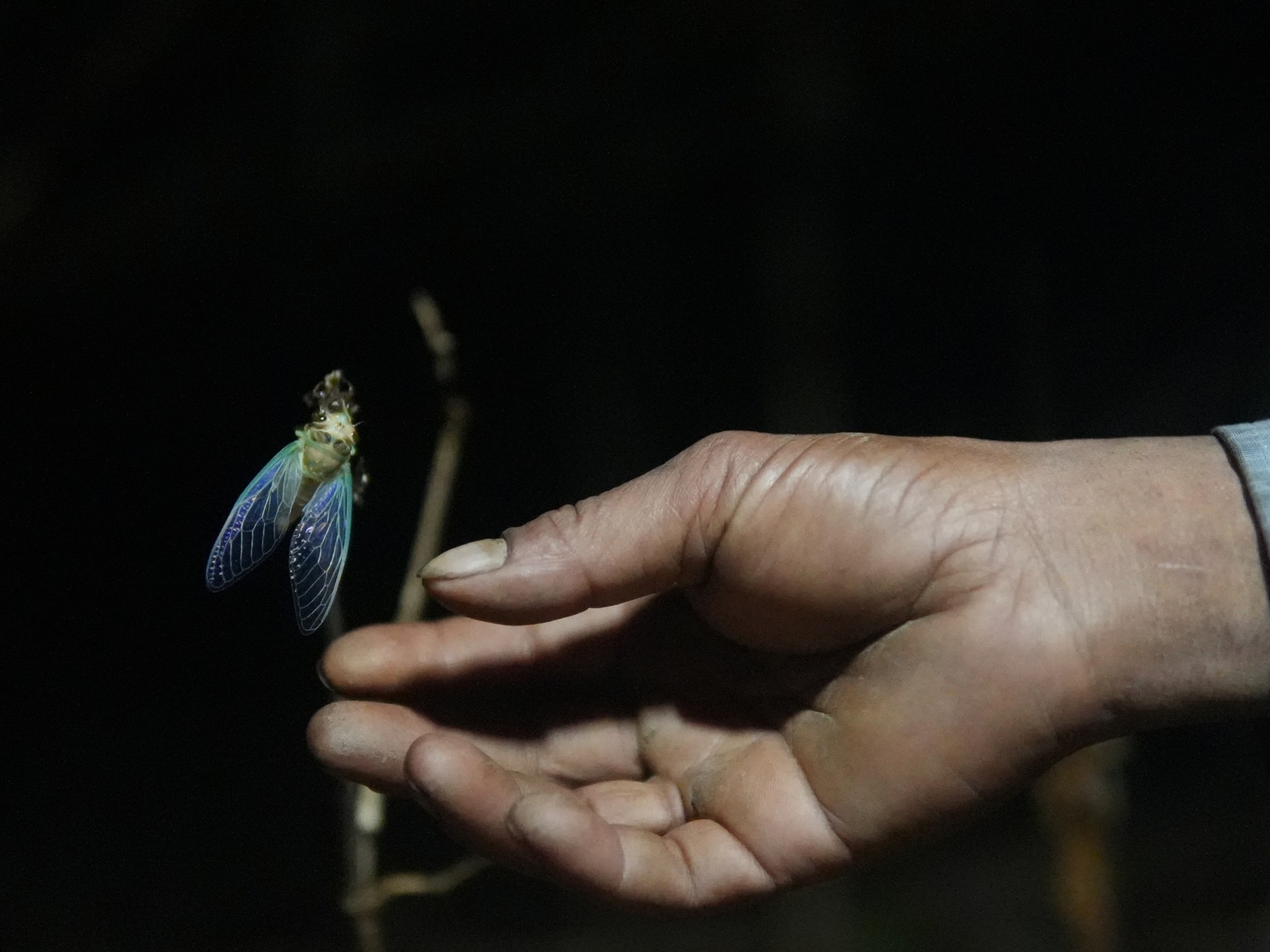
A rare cicada found in a small part of India’s Meghalaya state is emerging on a four-year cycle that has become part of village life in Saiden. Al Jazeera reported that the insect, locally called niangtaser, is both a seasonal delicacy and a conservation concern because scientists have recorded it nowhere else.
The insect appears from May into June after spending most of its life underground, according to Al Jazeera. Villagers link its return with the FIFA World Cup, which also comes every four years, and local leaders say generations have used the twin arrivals as a marker of time.
Evansis Jones Myrthong, the village chief of Saiden, told Al Jazeera that he grew up collecting the cicadas before watching late-night World Cup matches on the village’s only television, a government-issued black-and-white set kept at the school. The old television remains in the office of the Dorbar Shnong, the village community council, according to the report.
After rain breaks the summer heat, families head toward the forest edge after dark with torches and bamboo containers known as tyndong, Al Jazeera reported. The young cicadas climb low vegetation soon after leaving the soil, while their bodies are still soft and pale; villagers collect them before their shells harden.
Livingstone “Livi” Marak, a betel leaf farmer in Saiden, told Al Jazeera that the insect is part of the village’s identity. He and Eddie Kharbani collected more than a kilogram each during one night near the Nongkhyllem Wildlife Sanctuary, the outlet reported.
The harvest quickly becomes food and cash. Wanley R Marak, Livi’s wife, told Al Jazeera that she fries the cicadas with salt, turmeric and chilli at her roadside tea stall and serves them with rice. She said a small plate sells for 20 rupees, while raw niangtaser fetches about 400 to 800 rupees per kilogram.
The insect also carries a local origin story. Al Jazeera reported that, in Khasi, “niang” means insect, while Taser was the name of a woman in village lore who was isolated near the forest after illness and loss; villagers say insects filled the place where she had been after four years. The late E K Lapang, a former village chief and organiser of the Niangtaser festival, documented the account in a pamphlet for the festival’s 2014 edition, according to the report.
Science gives the insect a separate identity. Professor Sudhanya Ray Hajong, an entomologist at North Eastern Hill University in Shillong, told Al Jazeera that he first examined the cicada in 2006 and found no scientific record of it. He and collaborators later described it as a new species, Ribhoi Chremistica, named after the district where it lives.
Hajong told Al Jazeera the niangtaser is the only known periodical cicada in the Indian subcontinent. He said the nymphs feed on bamboo roots underground and use seasonal changes in moisture, temperature and nutrients as cues before emerging together after four annual cycles.
The synchronized emergence helps the species survive by overwhelming predators, Hajong said. He also warned that climate shifts, development and human activity have helped restrict such cicadas to shrinking forest pockets.
Saiden has tried to protect the insect while keeping its traditions. Al Jazeera reported that the Niangtaser Festival began in 2010 and now includes food stalls, football matches, fishing contests and music. Myrthong said the event is meant to preserve cultural practices and raise awareness of the ecology the cicada needs.
The Dorbar Shnong has set aside about 16 hectares of community land for niangtaser, Al Jazeera reported. Signs bar cutting trees and bamboo there, and some areas close to collectors for four Sundays during the emergence so the insects can breed; violators face fines set by the council.
Myrthong told Al Jazeera that villagers must limit collection of young cicadas and leave enough for birds, fish and other animals. By mid-June, he said, the emergence ends, and mature cicadas fly toward the Umrong River, where many die in the water.
This story draws on original reporting from Al Jazeera.