
Pope Leo visit puts Spain’s far right on defensive over migration
The pope’s trip highlighted a clash between Vox’s Catholic identity politics and Church teaching on migrants, according to Al Jazeera commentators.
By James Whitfield · Staff Writer
4 min read
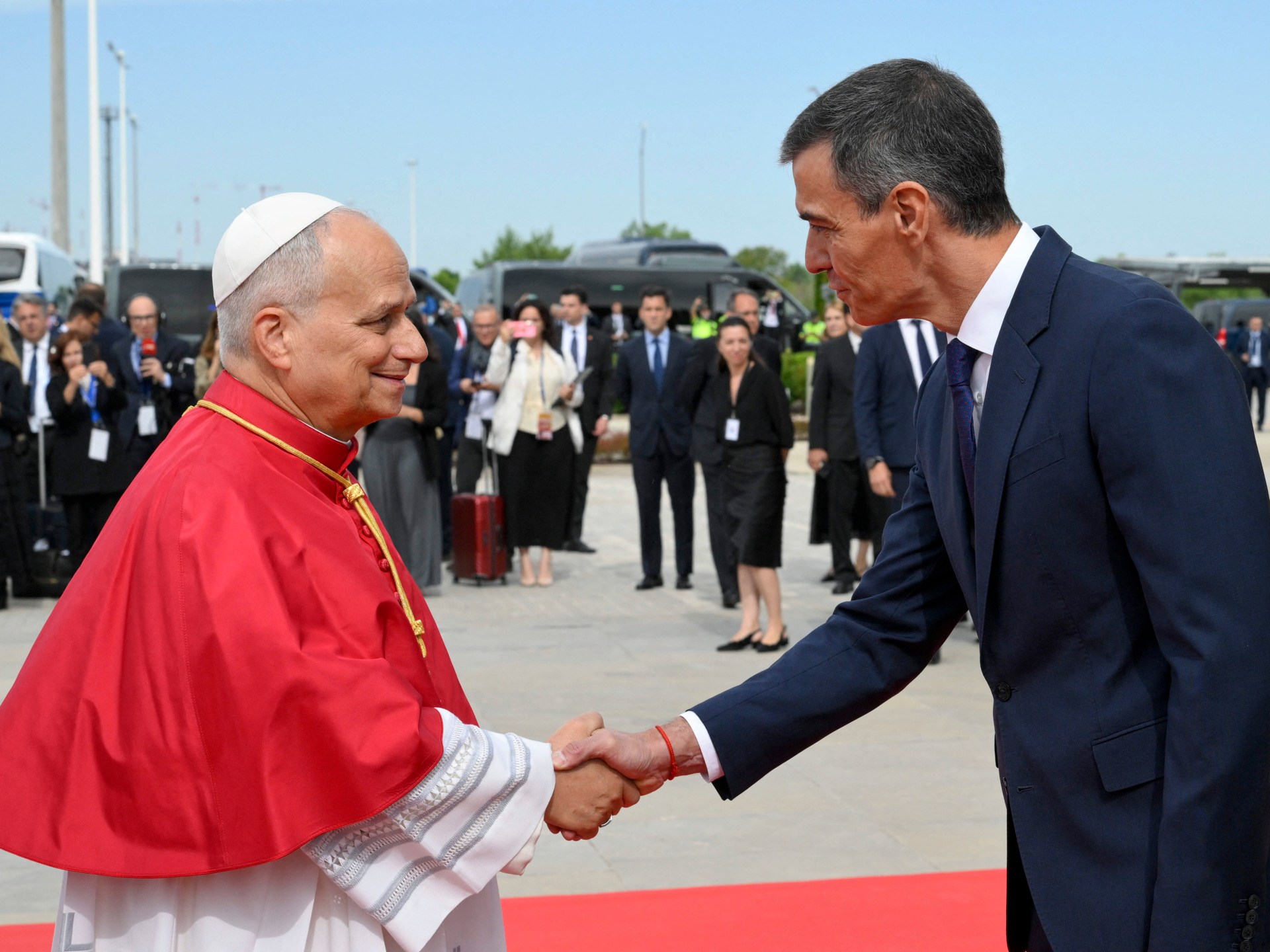
Pope Leo XIV ended a visit to Spain that put migration, Catholic identity and far-right politics at the center of national debate. Writing for Al Jazeera, Santiago Zabala and Claudio Gallo said the trip exposed a sharp tension for Vox, the party that presents Catholicism as a pillar of Spanish identity while pressing hardline policies against migrants.
The pope was received at Madrid’s Barajas Airport on June 6 by Prime Minister Pedro Sánchez, according to a Vatican Media handout cited by Al Jazeera. During the trip, Leo addressed Spain’s parliament and invoked the School of Salamanca, the 16th-century Catholic intellectual movement associated with arguments for the dignity and rights of Indigenous peoples in the Americas.
Zabala and Gallo said that historical reference carried a clear message in a country divided over immigration. They described the pope’s remarks as a challenge to politics that measures national belonging by exclusion rather than by the treatment of vulnerable people.
Migration dominated the visit
Vox, led by Santiago Abascal, has called for large-scale deportations under the label “remigration,” according to Al Jazeera. Zabala and Gallo wrote that the party’s targets include undocumented migrants, some children of immigrants, people accused by Abascal of relying on public benefits, and those he says do not adapt to Spanish customs.
The pope also visited Gran Canaria, where he met people connected to the Atlantic migration route from Africa to Europe. At least 1,214 people died or went missing last year while trying to reach the Canary Islands, according to the International Organization for Migration, while nongovernmental organizations estimate a higher toll.
Sánchez had political reasons to welcome the papal focus on migration, Zabala and Gallo wrote. His government has opened a route for at least 500,000 undocumented migrants and asylum seekers to regularize their status.
Spain’s Catholic politics are changing
Spain’s religious profile has shifted, according to polling cited by Al Jazeera. The state pollster CIS found that about 68 percent of Spaniards identified as Catholic a decade ago; by spring 2025, the figure had fallen to 52.8 percent, with 17.3 percent describing themselves as practicing Catholics.
Among younger Spaniards, the trend is more complicated. The Fundación SM “Jóvenes Españoles 2026” survey found that the share of young people identifying as Catholic rose from 31.6 percent to about 45 percent over five years, according to Al Jazeera. Zabala and Gallo linked that change to a broader rightward shift among young voters.
At an open-air Mass in Madrid attended by more than a million people, Leo told the crowd that “no one can kneel before the Lord and despise their brother,” Al Jazeera reported. Zabala and Gallo said the message drew a boundary between Christian language and far-right politics.
After Leo’s address to parliament, Abascal said people “must distinguish between speeches and practical policy” and called the pope’s remarks “the words expected of a religious leader,” according to Al Jazeera. Zabala and Gallo also wrote that Leo warned against using the Church for political ends after Vox criticized Spanish bishops who supported the government’s migrant amnesty.
Election stakes
Vox is rebuilding regional ties with the conservative People’s Party, including agreements in Extremadura, Aragon and Castilla y León, according to Al Jazeera. Zabala and Gallo wrote that the parties hope to carry that partnership into national government if the People’s Party wins next year’s general election.
The commentators said the alliance could carry costs among Catholic voters if the People’s Party adopts Vox’s “national priority” approach, which favors Spaniards over foreign-born residents in housing and benefits.
They also cautioned that Sánchez should not treat Leo as a political ally. On migration and on the US-Israel war on Iran, which Leo called “unjust” and Sánchez called “illegal,” their positions appeared aligned, according to Al Jazeera. On issues such as family and abortion, Zabala and Gallo wrote, Catholic doctrine remains closer to Vox than to the Socialist Party.
This story draws on original reporting from Al Jazeera.