
Pope Leo XIV switches planes after Spain departure is grounded
A technical problem halted the pope’s charter flight from Tenerife, and King Felipe VI offered his private jet for the trip to Rome.
By Lucas Ferreira · Science & Environment Writer
3 min read
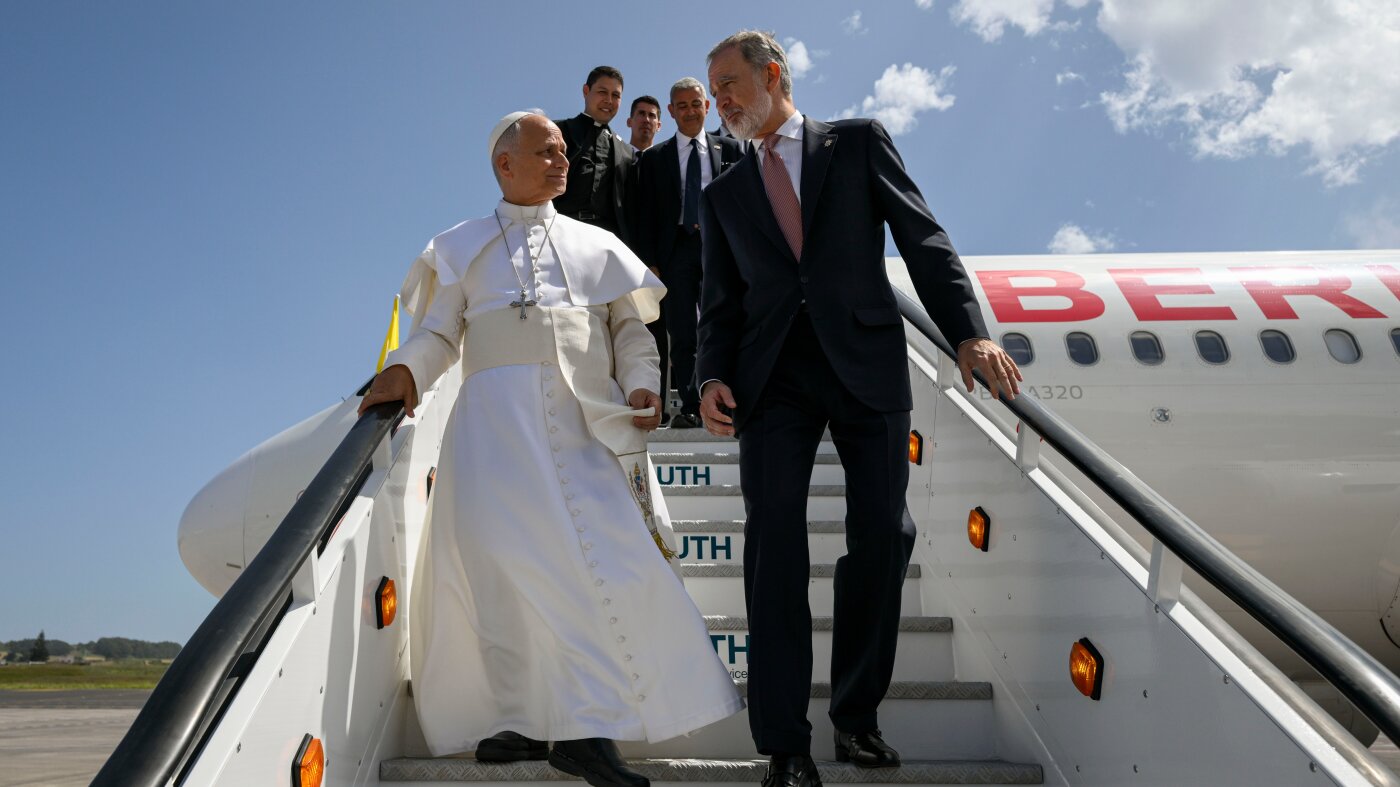
Pope Leo XIV left Spain on King Felipe VI’s private jet after a technical fault grounded the charter aircraft that was supposed to carry him back to Rome, The Associated Press reported. The disruption delayed the pope’s departure from Tenerife by more than three hours and forced Vatican officials and reporters to wait for a replacement plane.
The Iberia charter had been scheduled to take Leo home Friday after a weeklong visit to Spain, according to AP. The problem arose at Tenerife Norte-Los Rodeos International Airport in Santa Cruz de Tenerife, in the Canary Islands.
King Felipe escorted the pope across the tarmac to his Falcon aircraft, AP reported. Leo and members of his delegation boarded the jet and departed after the delay.
An Iberia pilot said the aircraft’s engine failed to start after the pope had boarded, according to AP. Attempts to fix the issue at the airport did not work, and passengers were told to get off the plane.
Iberia said it was sending another aircraft from Madrid to pick up the Vatican officials and journalists who did not travel with Leo on the king’s plane, AP reported. The Canary Islands are a Spanish archipelago closer to Africa than to the Iberian Peninsula.
An unusual end to a high-profile visit
The aircraft problem came at the end of what AP described as an otherwise successful papal trip through Madrid, Barcelona and the Canary Islands. During the visit, Leo emphasized his message on migration and inaugurated the new tower of Barcelona’s Sagrada Familia basilica.
The disruption was rare for modern papal travel. AP reported that it was the first time in decades that a problem on a papal flight was serious enough to require the pope to change aircraft.
Veteran Vatican correspondents cited by AP recalled earlier flight complications during the papacy of St. John Paul II, though those incidents involved weather rather than a mechanical fault requiring an aircraft switch. In 1986, John Paul’s return flight from India landed in Naples because of snow in Rome, and the pope and passengers continued to Rome by special train.
AP also reported that in 1988, bad weather forced John Paul’s plane to land in South Africa while he was traveling to Lesotho. South Africa had been left off that African trip because of apartheid, and John Paul later continued by road into Lesotho.
How papal flights usually work
AP reported that papal trips typically follow a set pattern: Italy’s national carrier, ITA Airways, flies the pope to his destination, and the host country’s national carrier flies him back. ITA sometimes handles both legs when the journey is especially long or when the destination does not have the capacity for the return charter.
The aircraft are charter flights, according to AP. The pope, Vatican delegation and security team sit in the front section, while about 70 journalists usually travel in coach.
Earlier in the Spain trip, Iberia had released video of Leo seated in the cockpit and smiling during flights from Madrid to Barcelona and from Barcelona to the Canary Islands, AP reported. Spanish military aircraft escorted the flights in both cases, a gesture AP described as a sign of respect for visiting dignitaries; in one clip, Leo waved toward an escorting pilot.
This story draws on original reporting from NPR.