
At 93, Scotland fan Moira Brown heads to World Cup after decades away
Moira Brown, a longtime Tartan Army supporter, plans to watch Scotland in person as the team returns to the World Cup for the first time since 1998.
By James Whitfield · Staff Writer
3 min read
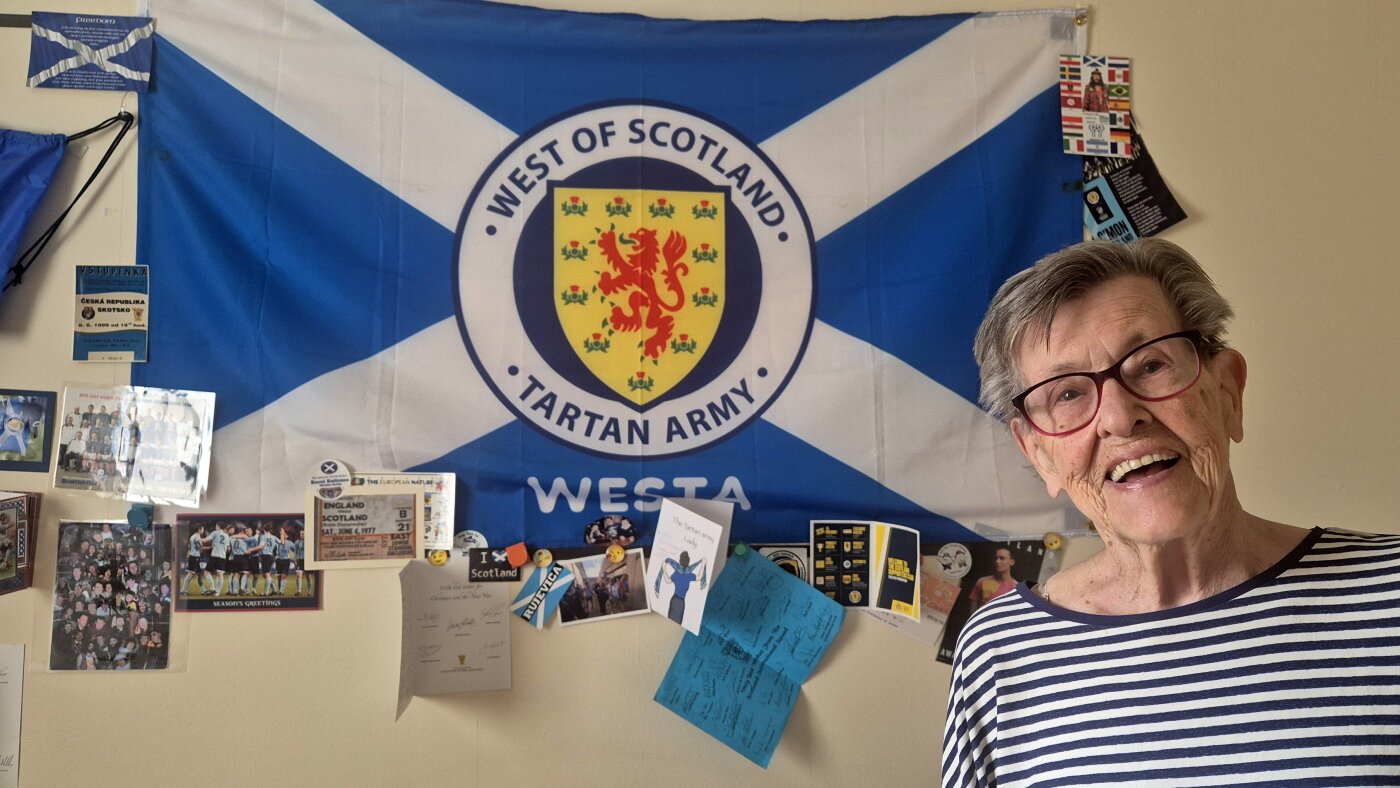
Moira Brown, 93, is traveling from Glasgow to the United States to watch Scotland play in the World Cup, a return that carries unusual weight for Scottish supporters after nearly three decades out of the tournament. NPR reported that Brown, described as perhaps the oldest member of Scotland’s Tartan Army fan base, has tickets for all three of Scotland’s group-stage matches.
Scotland opens against Haiti near Boston on June 13 at 9 p.m. ET, according to NPR. Brown is also set to attend another match near Boston and one in Miami with other fans from Glasgow.
Brown told NPR she waited almost 30 years to see Scotland back at a World Cup and considers herself fortunate to be going. It will be the fourth World Cup she has attended in person, NPR reported.
A fan since childhood
Brown was born on Christmas Eve in 1932 and told NPR she first saw soccer as a child in the 1930s, when her father took her to a club match in Motherwell. She said girls were not commonly taken to matches then, and playing was even less common.
She later watched Scotland defeat England at Hampden Park in a 1946 Victory International, a match held after World War II, NPR reported. Across her life, Brown worked as a nurse and teacher, raised a family and traveled to follow Scotland’s men’s and women’s national teams in countries including Japan, Peru and Morocco.
Brown told NPR that soccer tickets are where she spends her money. At her Glasgow apartment, NPR reported, the walls are covered with Scotland memorabilia, and Brown still lives independently enough to manage the stairs to her third-floor home and travel internationally with only a carry-on bag.
Scotland’s long wait
Scotland had not qualified for a men’s World Cup since 1998 before securing its place in the 2026 tournament. Former Scotland international and commentator Pat Nevin told NPR the team’s qualification after beating Denmark in November 2025 was a major moment in modern Scottish sport.
Andy Kerr, visitor attraction manager at the Scottish Football Museum, told NPR that Scotland’s football identity runs deep. He said the short-passing style now used across the sport developed in Scotland in the late 19th century, while England is usually credited with codifying the modern game.
Kerr also told NPR that Scotland has the world’s oldest national football trophy and that Scottish workers helped spread the game to countries including Brazil and Argentina. Despite that history, Scotland has yet to advance beyond the group stage at a major tournament, according to NPR.
The Tartan Army’s changing image
Nevin told NPR that Scotland’s traveling support once carried a rough reputation, linked to heavy drinking and the threat of trouble. He said that changed during the 1970s and 1980s as Scottish fans worked to distinguish themselves from violent hooliganism associated with parts of English football culture.
Brown recalled to NPR that she was once insulted at an international match in Croatia and that other Scotland fans quickly rallied around her. She said she had to calm them down.
Brown told NPR she hopes Scotland can get out of the group stage, which would mark a first for the national team. She said she travels with hope even when she does not expect success, and the Tartan Army’s own anthem, “No Scotland, No Party,” reflects those modest expectations.
This story draws on original reporting from NPR.