
Mali ambush points to tighter rebel and jihadist cooperation
A joint claim by Tuareg separatists and JNIM after the Anefis attack highlights the strain on Bamako’s Russia-backed security push.
By James Whitfield · Staff Writer
3 min read
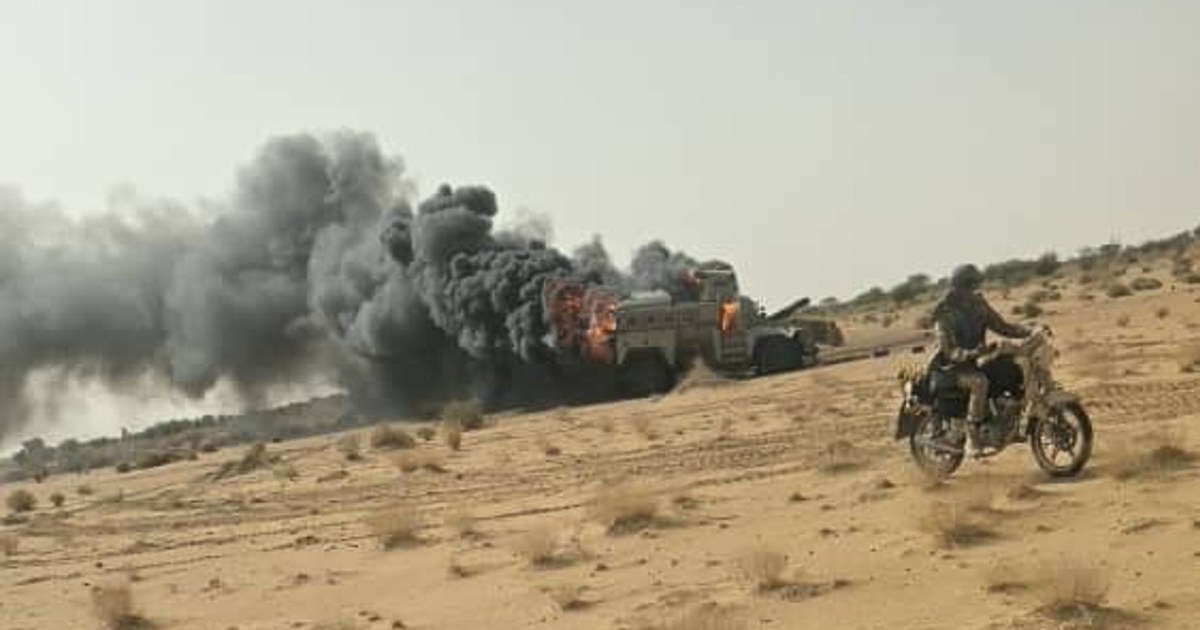
An ambush near Anefis in northern Mali killed at least 50 Malian soldiers on July 18, according to Al Jazeera, exposing the growing coordination among armed groups fighting Bamako. The attack hit a joint convoy of the Malian Armed Forces and Russia’s Africa Corps, raising fresh doubts about the military government’s security approach.
The Malian military confirmed the assault and said it had begun counter-operations, Al Jazeera reported. Africa Corps later published footage that it said showed drone strikes against fighters involved in the attack.
The Azawad Liberation Front, a coalition of mainly Tuareg separatist groups, and Jama’at Nusrat al-Islam wal-Muslimin, an al-Qaeda affiliate known as JNIM, jointly claimed the ambush, according to Al Jazeera. Their cooperation is significant because the groups have different goals: the FLA seeks greater autonomy or independence for northern Mali, while JNIM seeks rule based on its interpretation of Islamic law across the region.
Shared enemies, separate goals
Héni Nsaibia, a senior West Africa analyst at the Armed Conflict Location & Event Data monitor, told Al Jazeera that the groups are cooperating because they share enemies in the Malian army and its Russian partners. He said their coordination allows them to combine resources and pressure their opponents more effectively.
Nsaibia also told Al Jazeera that kinship ties matter despite the groups’ ideological differences, with fighters viewing one another as people defending ancestral land against outside forces. For Mali’s military, Al Jazeera reported, that kind of battlefield coordination makes attacks harder to predict and repel.
The shift follows major decisions by Mali’s military government, including its abandonment of the 2015 Algiers Peace Agreement, its request for the withdrawal of the UN peacekeeping mission MINUSMA, and its expanded military cooperation with Russia, according to Al Jazeera. The collapse of the peace framework removed one of the mechanisms that had helped manage relations between Bamako and northern armed groups.
Russia’s role has limits
Africa Corps has replaced the Wagner Group as Moscow’s main military presence in Mali and has become a key partner for the Malian army, Al Jazeera reported. Russian personnel have supported combat operations, while drones and aircraft have improved surveillance and strike capacity.
Nimi Princewill, a regional analyst focused on West Africa and the Sahel, told Al Jazeera that Russia has strengthened Mali’s military and given it more battlefield support. He said the Anefis attack and the earlier fighting around Kidal show that Russian support has not changed the overall course of the conflict.
Malian forces seized Kidal, a northern town long held by Tuareg rebels, in November 2023, according to Al Jazeera. Tuareg and allied fighters retook the town in April this year, the outlet reported.
Al Jazeera reported that convoys in northern Mali still face frequent ambushes, especially on routes linking Gao, Anefis and other military positions. The withdrawal of MINUSMA also ended an international presence that had provided logistics, monitoring and intelligence support across much of the north.
Regional risks
The conflict carries risks beyond Mali, according to Al Jazeera. JNIM operates across Mali, Burkina Faso and Niger, while violence continues across the central Sahel.
The fighting also tests the Alliance of Sahel States, formed by Mali, Burkina Faso and Niger to improve collective security, Al Jazeera reported. Mali’s withdrawal from the Economic Community of West African States has reduced opportunities for regional coordination with other neighbours facing similar threats.
A Niger-based security expert, who requested anonymity because of fear of repercussions, told Al Jazeera that armed groups do not respect regional blocs and that the war is spreading south. Whether the FLA-JNIM partnership lasts remains unclear, but the Anefis ambush shows armed groups are adapting as Bamako changes its security strategy.
This story draws on original reporting from Al Jazeera.