
Lebanon fighting strains ceasefire push and U.S.-Iran accord
Israeli strikes killed at least seven people in southern Lebanon as continued fighting delayed planned U.S.-Iran talks in Switzerland.
By James Whitfield · Staff Writer
3 min read
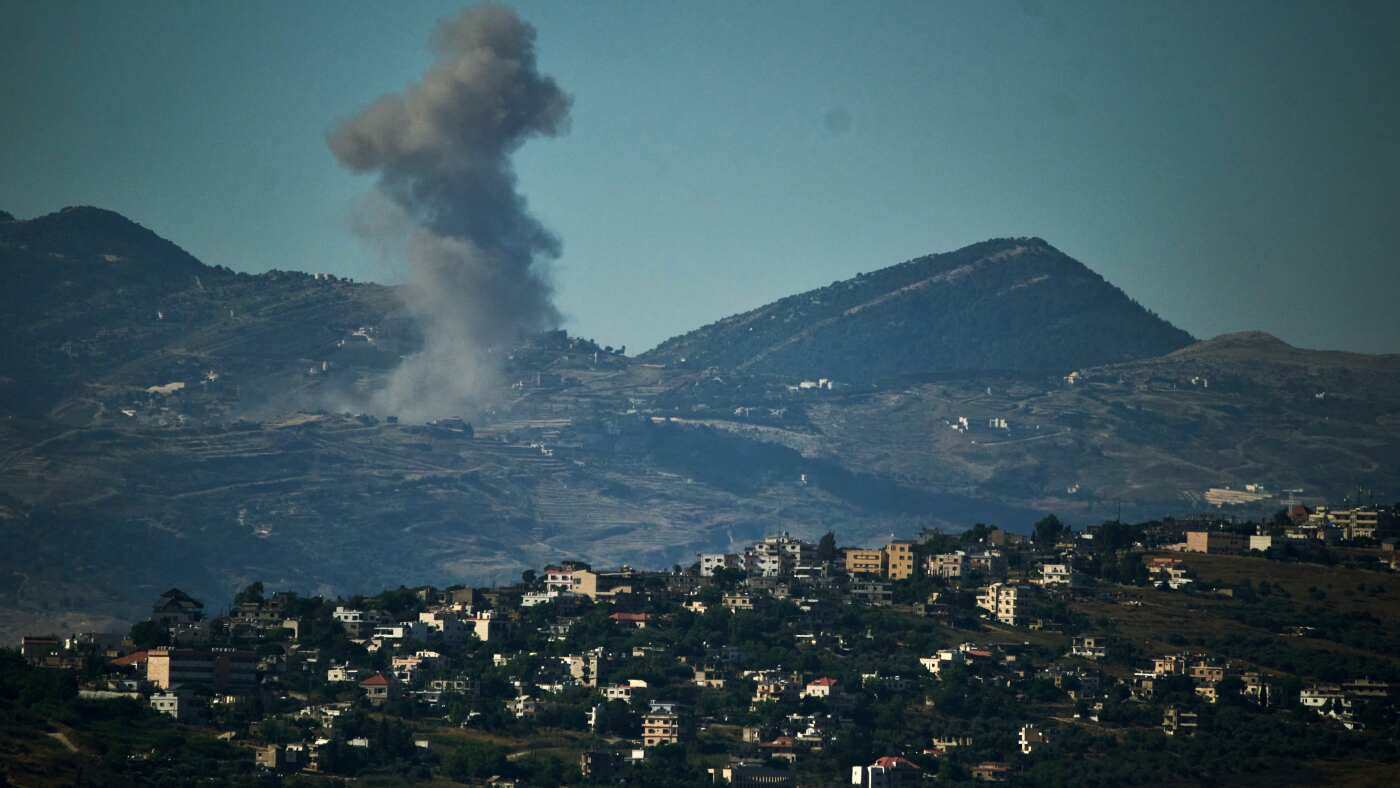
Israeli strikes in southern Lebanon killed at least seven people Saturday, including two children, after reports of a possible ceasefire, Lebanon’s National News Agency said. The continued combat is also putting pressure on an interim U.S.-Iran agreement meant to help end the wider regional war, The Associated Press reported.
The Lebanese agency said strikes hit Nabatiyeh and nearby villages, and that at least seven people were still trapped beneath debris. The AP reported that smoke rose over southern Lebanon and Israeli aircraft flew low over the coastal city of Tyre.
In Barish, a strike killed four members of one family, including the parents and two children, according to the Lebanese agency. It also reported that rescuers recovered a body from a destroyed home in Arab Salim, while drone strikes in Doueir and Kfar Rumman killed a person on a motorcycle and a Lebanese soldier.
Ceasefire efforts falter
Mediators were trying to stop fighting between Israel and Hezbollah after an intense exchange Friday killed at least 47 people in Lebanon and four Israeli soldiers, the AP reported. An Israeli military official told the AP that Hezbollah fired more than 50 projectiles at Israeli forces in southern Lebanon overnight, and said Israel responded by striking Hezbollah targets.
Israel’s ambassador to Washington, Yechiel Leiter, wrote on X on Friday that Israel supported an immediate ceasefire if Hezbollah observed the terms and stopped fighting. Hezbollah has said publicly that it would respect a ceasefire if Israel did, but the group has not said that one had taken effect, according to the AP.
A Hezbollah official, speaking anonymously because he was not authorized to comment publicly, told the AP that Qatar, the United States and Iran were working on a ceasefire between Israel and Hezbollah. The official did not confirm that an agreement had been reached.
Israeli Prime Minister Benjamin Netanyahu’s office did not immediately comment on the mediation effort, the AP reported. Netanyahu wrote on X on Friday that the Israeli military, acting on his orders, struck 150 Hezbollah targets and killed dozens of militants; Israeli military spokesman Brig. Gen. Effie Defrin said Israeli forces were operating in a “forward defense zone” and would keep doing so.
U.S.-Iran talks delayed
The fighting threatens an interim U.S.-Iran agreement signed this week, according to the AP. The deal calls for military operations in Lebanon to stop and for Lebanese sovereignty to be respected, though neither Israel nor Hezbollah signed it.
The AP reported that the agreement reopened the Strait of Hormuz after Iran had closed it during the war, disrupting access to oil and natural gas supplies. It also set up renewed negotiations over Iran’s nuclear program, a central issue in the conflict.
Planned U.S.-Iran talks in Switzerland did not begin Friday, and no new date has been announced, the AP reported. Iranian officials did not travel, saying the fighting in Lebanon had to end first, while U.S. Vice President JD Vance also postponed his trip.
Iranian Foreign Ministry spokesman Esmail Baghaei told the semi-official ISNA news agency that Pakistan’s interior minister would visit Iran as part of continuing mediation. Baghaei said earlier that contacts through mediators were continuing on the next phase of talks for a final U.S.-Iran agreement, according to the AP.
Iran says its nuclear program is peaceful, while the International Atomic Energy Agency says Tehran has enough highly enriched uranium that it could use to build multiple atomic bombs if it chose to do so, the AP reported. The interim agreement gives negotiators 60 days to reach a nuclear deal, with an option to extend, and includes possible sanctions relief and a $300 billion reconstruction fund if a final agreement is reached, according to the AP.
This story draws on original reporting from NPR.