
Probe finds wider Israeli military footprint across Gaza, Lebanon and Syria
Al Jazeera says Israeli forces have built or held control zones totaling about 1,000sq km across Gaza, southern Lebanon and southern Syria.
By Daniel Okafor · Business Editor
3 min read
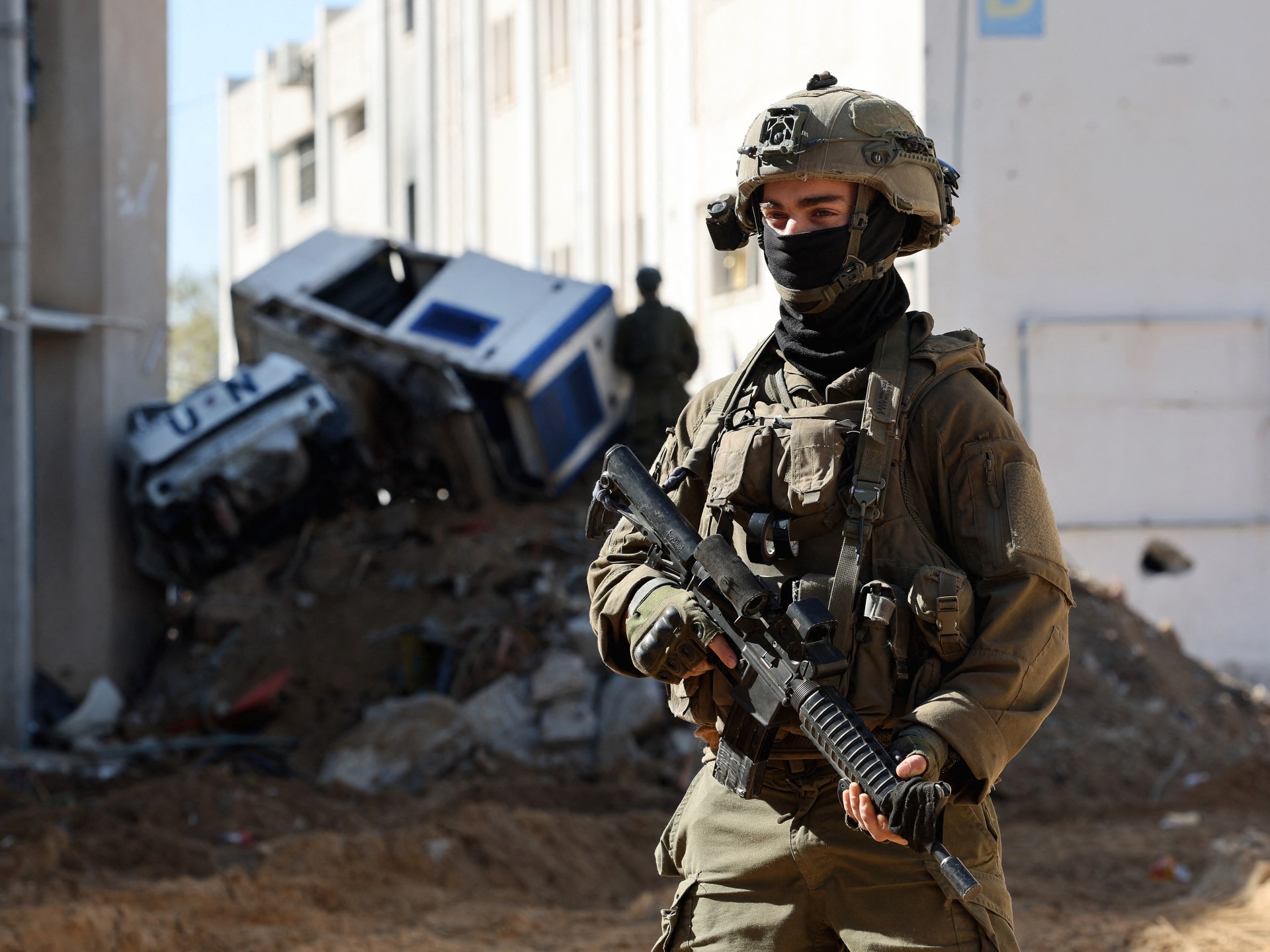
Israeli forces have established a de facto military presence across about 1,000sq km in Gaza, southern Lebanon and southern Syria, according to an investigation by Al Jazeera’s open-source unit. The findings point to a gap between Israel’s published military maps and the territory where its forces have operated or built fixed positions since the war in Gaza began on October 7, 2023.
Al Jazeera said the area amounts to about 386 square miles, larger than New York City, and equal to roughly 5 percent of Israel’s pre-October 2023 landmass when including the occupied Palestinian territories and the occupied Syrian Golan Heights. The broadcaster said its unit compared Israeli maps issued around ceasefire agreements with satellite imagery, geographic information systems data and Armed Conflict Location and Event Data Project records.
Gaza and Lebanon lines
In Gaza, Al Jazeera said Israel introduced a “Yellow Line” after an October 2025 ceasefire to mark a zone of control of about 200sq km. The investigation found that physical markers and military activity extended beyond that line in some areas.
In northern Gaza, Al Jazeera reported that the area under Israeli control grew from 67.3sq km to 73.9sq km, covering 54.7 percent of the north. The broadcaster said satellite images also showed demolitions outside declared military zones, including in Shujayea.
Al Jazeera reported a similar pattern in southern Lebanon after an April 2026 ceasefire. It said official Israeli maps showed a 570sq km buffer zone, while satellite images later showed building demolitions in towns outside those declared boundaries, including Zawtar al-Sharqiya.
Ehab Jabareen, described by Al Jazeera as an expert in Israeli affairs, called the approach “calculated chaos” and “strategic deception.” He told the broadcaster that Israeli political officials present one line to Washington and mediators while the military shifts it on the ground under operational justifications.
Analysts cite political and military aims
Analysts interviewed by Al Jazeera said the expansion serves military, political, ideological and psychological purposes. Mohannad Mustafa, identified as an expert on Israeli politics, told the broadcaster that wider buffer zones have become Israel’s substitute for decisive battlefield outcomes.
Mustafa said Israel’s political leadership ultimately seeks control over as much as 70 percent of Gaza, converting populated areas into emptied security zones. Mamoun Abu Amer, a political researcher, told Al Jazeera that holding territory from Arab countries gives Israel leverage for political concessions and helps project strength domestically after the Hamas-led attacks of October 7, 2023.
Jabareen told Al Jazeera that Prime Minister Benjamin Netanyahu is using territorial control to present a “picture of victory” to supporters because Israel has not achieved stated goals such as ending Hamas, disarming Hezbollah or permanently deterring Iran.
Southern Syria presence
Al Jazeera said the Syrian front differs from Gaza and Lebanon because Israel has not declared a Yellow Line there. The investigation found a chain of Israeli military outposts beyond the 1974 disengagement boundary, known as the alpha line, creating a de facto control area of 235sq km from Jabal al-Sheikh, or Mount Hermon, to the Yarmouk River.
The broadcaster said it documented more than 800 Israeli incursions into Syrian territory between December 2024 and January 2026. One operation reached 63km into the Deraa countryside, according to Al Jazeera.
Jabareen described the Syrian front to Al Jazeera as a “low-noise occupation,” saying Israel is shaping a new security environment before a new Syrian state or a new US-backed regional understanding can take hold.
Analysts cited by Al Jazeera warned that holding such areas could strain Israel’s reserve forces and economy. Jabareen said the military presence requires supply routes, fortifications, fuel, engineering work and constant guard duties, while Mustafa said the expansion continues because there is no strict international response.
This story draws on original reporting from Al Jazeera.