
Iran rejects US-Gulf statement after Manama meeting
Tehran accused Washington and Gulf states of pressuring Iran over its nuclear programme, missiles, regional allies and the Strait of Hormuz.
By Sofia Marchetti · World Affairs Correspondent
4 min read
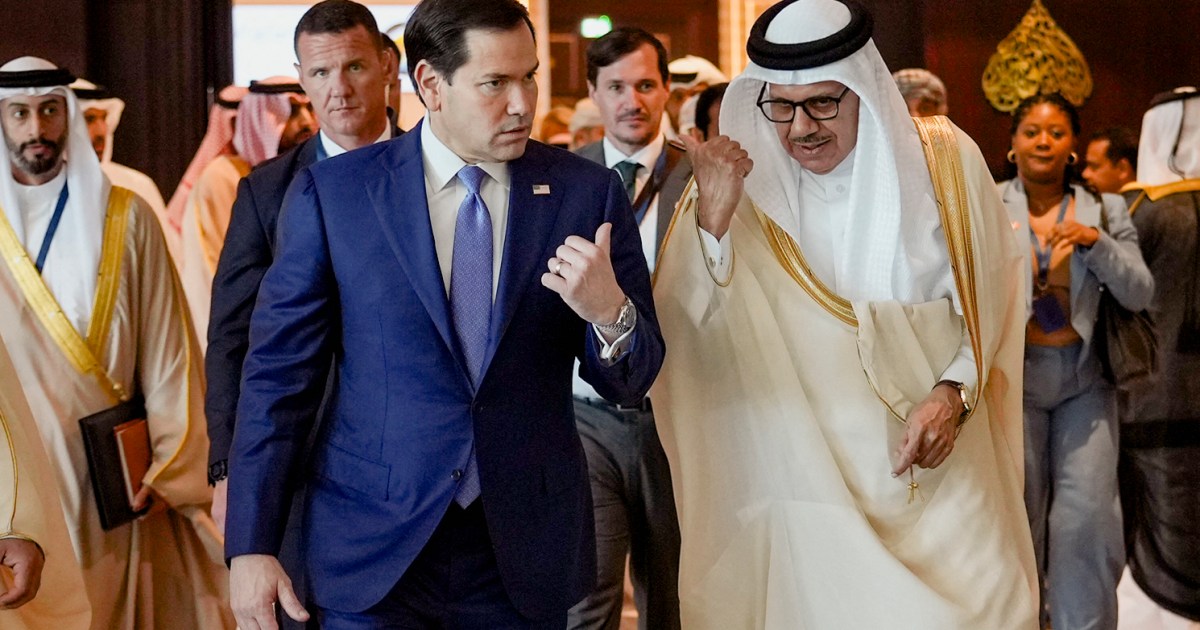
Iran condemned a joint statement by the United States and the Gulf Cooperation Council, calling it interventionist and provocative after ministers met in Bahrain. The dispute raises tensions over Iran’s nuclear programme, missile forces, regional alliances and control of shipping through the Strait of Hormuz after the recent US-Israeli war on Iran.
Iran’s Foreign Ministry said Friday that the US-GCC communique misrepresented conditions in the region and echoed American and Israeli positions. Al Jazeera reported that the statement followed a June 25 ministerial meeting in Manama co-chaired by US Secretary of State Marco Rubio and Bahraini Foreign Minister Abdullatif bin Rashid Al Zayani.
Foreign ministers from Kuwait, Oman, Qatar, Saudi Arabia and the United Arab Emirates also joined the talks, according to Al Jazeera. The ministers welcomed a June 17 memorandum of understanding between Washington and Tehran, while linking future economic activity with Iran to conditions they described as reversible.
What the US and Gulf states said
The US-GCC statement said any trade and investment with Iran would be “conditional and reversible,” according to Al Jazeera. It also reaffirmed a shared aim of preventing Iran from developing or acquiring a nuclear weapon.
The ministers said regional security required addressing what they called Iran’s threats, including ballistic missiles, drones and support for regional proxies. They also rejected tolls, fees or other attempts to assert control over the Strait of Hormuz, saying free passage through the waterway was essential to regional and global security.
On Lebanon, the statement said Lebanese sovereignty could not be complete while armed groups outside state control retained military capabilities, an apparent reference to Hezbollah, which is aligned with Iran. The ministers called for the disarmament of such groups and support for the Lebanese Armed Forces, and welcomed US-facilitated negotiations between Israel and Lebanon.
Iran’s response
Iran’s Foreign Ministry said the US and Israel had fabricated allegations about what Tehran describes as its peaceful nuclear programme. It urged Gulf states to work with Iran toward a nuclear weapons-free zone in the Middle East; experts widely understand Israel to possess a nuclear arsenal, though Israel has not confirmed or denied that and is not a party to the Nuclear Non-Proliferation Treaty.
Foreign Ministry spokesperson Esmaeil Baghaei described Iran as more committed than any other party to collective regional security, according to Al Jazeera. He suggested Gulf states were wrong to seek protection from the United States, which he called the greatest violator of security.
Baghaei also rejected any negotiation over Iran’s defensive capabilities. In a post on X cited by Al Jazeera, he said Iran’s national security and dignity allowed no compromise, and that the means of legitimate self-defense could not be subject to bargaining.
Tehran said the use of regional bases and facilities during recent US and Israeli strikes showed Washington did not value the security of Gulf partners. Iran urged states whose territory was used during the conflict to reconsider their positions, citing international law and good-neighbourliness obligations against allowing hostile acts from their soil.
Strait of Hormuz dispute
The Strait of Hormuz was a central point of disagreement. Iran said any disruption there stemmed from US and Israeli military action and stressed that the waterway lies within the territorial waters of Iran and Oman.
Iran pointed to Article 5 of the recent memorandum of understanding, which says Tehran will discuss future administration and maritime services in the strait with Oman and other Persian Gulf coastal states, in line with international law and coastal state rights.
Deputy Foreign Minister Kazem Gharibabadi said on X that safe passage could not be guaranteed under arrangements that exclude Iran, according to Al Jazeera. Ali Akbar Velayati, a senior adviser to Iran’s supreme leader, said Gulf stability had long depended on Iran’s handling of the strait rather than Western military power.
Al Jazeera reported that Iran has repeatedly argued US bases in the Gulf expose host countries in any confrontation with Washington. The US usually has about 40,000 troops across the region, a figure that rose above 50,000 after President Donald Trump escalated the war against Iran, according to Al Jazeera; The Wall Street Journal reported Washington is considering changes to its Gulf posture.
This story draws on original reporting from Al Jazeera.