
Iran leader visits Pakistan amid push for U.S. deal to end war
Masoud Pezeshkian’s Islamabad trip comes as U.S. and Iranian teams work through terms after high-level talks in Switzerland.
By Daniel Okafor · Business Editor
3 min read
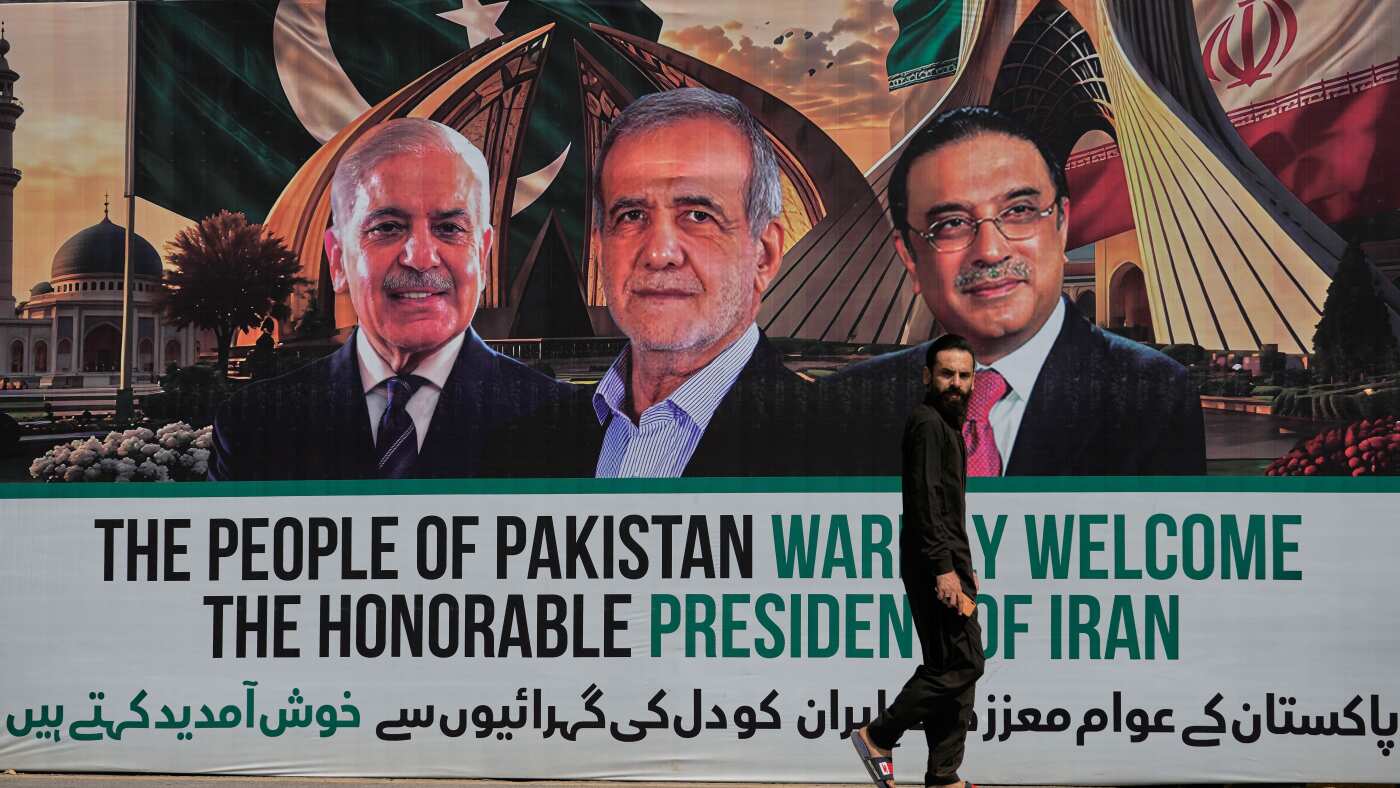
Iranian President Masoud Pezeshkian traveled to Islamabad on Tuesday as U.S. and Iranian negotiators tried to turn a preliminary understanding into a permanent deal to end the war, according to The Associated Press. The visit matters because Pakistan has been one of the mediators between Tehran and Washington, even as the sides appeared to differ over what they had already accepted.
Pezeshkian was due to meet Pakistani President Asif Ali Zardari and Prime Minister Shehbaz Sharif, AP reported. Security was heavy in the part of Islamabad where the meetings were planned, and Pezeshkian and Sharif were expected to speak to reporters afterward.
The trip is Pezeshkian’s first to Pakistan since the conflict began with a U.S. and Israeli attack on Iran on Feb. 28, according to AP. Technical teams were working on the details after Monday’s senior-level talks in Switzerland, which AP said were led by U.S. Vice President JD Vance and Iranian parliamentary speaker Mohammad Bagher Qalibaf.
A key dispute emerged over nuclear inspections. Iranian Foreign Ministry spokesperson Esmail Baghaei told reporters in Tehran that no International Atomic Energy Agency visits had been arranged for Iranian nuclear sites bombed by the United States last year, AP reported. Vance had earlier said the Switzerland negotiations produced agreement for the U.N. watchdog to inspect those locations, according to AP.
The IAEA has made visits to Iran since Israel’s 12-day war against Iran in 2025, AP reported, but it has not been allowed into the bombed enrichment sites struck by the United States during that war.
Pezeshkian urged caution before his Pakistan meetings. On X, he wrote that the talks would work only if the parties fully met their obligations and carried them out precisely. He also said progress would be judged by practical compliance and that statements beyond the agreed text would not help negotiations.
The first round of talks launched a 60-day diplomatic track aimed at a lasting settlement, according to AP. Iran and the United States agreed to form a “de-confliction cell” to address fighting in Lebanon between Israel and Hezbollah, the Iranian-backed militia group, AP reported.
The United States also said negotiators discussed ways to keep the Strait of Hormuz open, according to AP. The waterway is a major route for oil shipments, and AP reported that Iran had effectively blocked it during the war.
Iran’s state-run IRNA news agency said the technical talks in Switzerland had produced separate negotiating groups on sanctions relief, nuclear matters, reconstruction and monitoring. IRNA quoted Deputy Foreign Minister Kazem Gharibabadi, who is leading the technical talks, as saying the countries involved also created a contact mechanism for shipping through the Strait of Hormuz and for the Lebanon fighting.
The Lebanon piece remained uncertain. Pakistan and Qatar, the mediators, said the cell would include Lebanon’s government and would help ensure military operations in Lebanon end, according to AP. Israeli Prime Minister Benjamin Netanyahu said Monday night that Israel’s military retained “full freedom of action” against any direct or developing threat to Israel or residents in the north.
AP reported that neither Israel nor Hezbollah has signed the U.S.-Iran deal. Netanyahu has said Israeli forces will stay in southern Lebanon until threats to Israel are removed, while Hezbollah has said it will not stop attacks unless Israel commits to withdraw, according to AP.
Asked about Netanyahu’s remarks, U.S. President Donald Trump said officials would review the matter and that the situation would “get solved,” AP reported. AP said the renewed Lebanon ceasefire, brokered Saturday, appeared to be holding overnight, with no new Israeli or Hezbollah strikes reported.
Lebanon and Israel were expected to hold another round of direct talks in Washington on Tuesday, AP reported. Those discussions were expected to focus on a plan for an Israeli withdrawal.
This story draws on original reporting from NPR.