
Lawyer says Iran deal talk is obscuring continuing Palestinian deaths
Ahmad Ibsais argues that focus on Iran has pushed Gaza, the West Bank and Lebanon out of view as Israeli attacks continue.
By Lucas Ferreira · Science & Environment Writer
3 min read
Palestinian American lawyer Ahmad Ibsais says talk of an Iran-US deal has drawn attention away from continuing Israeli violence against Palestinians. Writing for Al Jazeera, Ibsais argued that claims of an “end of war” ignore deaths, displacement and territorial control in Gaza, the occupied West Bank and Lebanon.
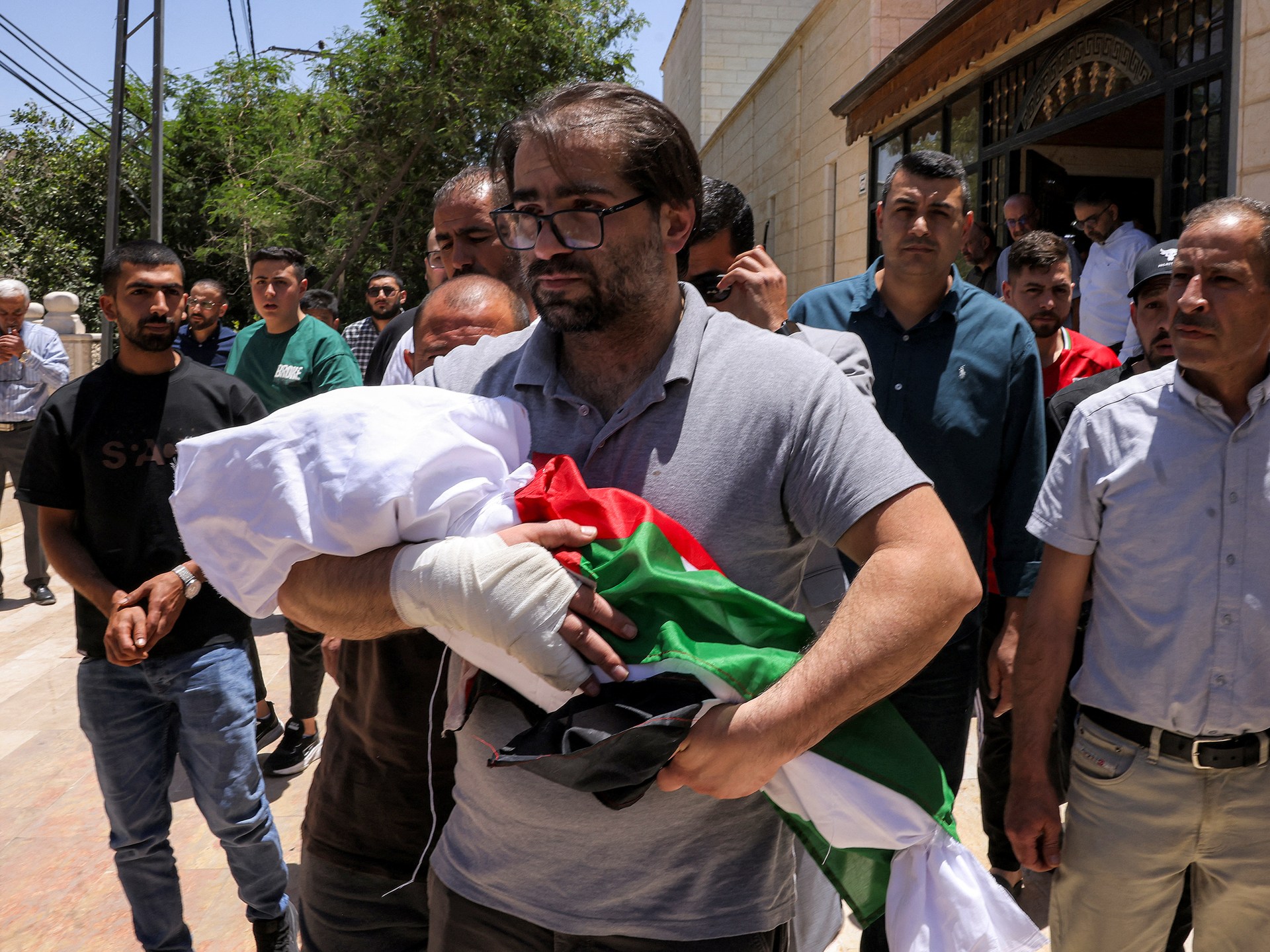
Al Jazeera reported that seven-month-old Sam Fahd Abu Haikal was shot and killed by Israeli soldiers near Hebron in the occupied West Bank earlier in June. An AFP photo published by Al Jazeera showed his father, Fahd Abou Haikal, carrying the baby’s body during a funeral in Hebron on June 6.
Ibsais said the child’s death received little attention in Western media, which he accused of treating Palestine as a secondary story after the war with Iran dominated headlines. He said coverage of Gaza declined while Israeli fire continued despite a ceasefire that began in October.
Claims of continuing ceasefire violations
According to Ibsais, Israeli fire into Gaza has continued on an almost daily basis since the ceasefire took effect. He wrote that more than 2,000 violations had been documented by spring and that at least 981 Palestinians had been killed, including children.
Ibsais said Palestinians have been shot for approaching what is known as the yellow line, a boundary he said has shifted deeper into Gaza. He also said drones, snipers, bulldozers and collapsing buildings remain part of daily life in the territory.
He argued that hunger in Gaza has continued because aid access is restricted and controlled. In his account, Palestinians are being kept from food, land and basic necessities through military restrictions and closures.
Land access and displacement
Ibsais wrote that in mid-March, as attention moved toward Iran, the Israeli army gave aid groups maps showing that Israeli control had expanded past the yellow line. He said the share of Gaza under Israeli control had increased from 53 percent under the ceasefire terms to 64 percent.
By late May, Ibsais said, Israeli Prime Minister Benjamin Netanyahu told a settler conference that the army controlled 60 percent of Gaza and that he had ordered it to take 70 percent. Ibsais wrote that people at the event called for 100 percent to be taken.
He said Palestinians can no longer access about two-thirds of Gaza, including nearly all of its farmland east of the yellow line. Farmers, fishermen, families returning to damaged homes and children searching for food have been fired on, he wrote.
Ibsais also pointed to the occupied West Bank, naming Sinjil as a village he said is confined by barbed wire and cut off from residents’ land. He said settlers have attacked Palestinian villagers by burning homes and cars and by threatening or abusing residents, while receiving Israeli military protection.
Lebanon framed as another front
Ibsais said a similar pattern is visible in southern Lebanon, where Israeli evacuation orders have forced people from areas south of the Litani River. He wrote that up to roughly one-fifth of Lebanon has been ordered emptied and that more than 1.2 million people have been displaced.
He also said hospitals and ambulances have been hit and that land has been burned with white phosphorus. In his view, displaced families in both Gaza and Lebanon are treated as threats when they try to return home.
Ibsais argued that presenting the conflict through Iran and Hezbollah obscures the central role of Palestine. He said no agreement with Iran should be described as ending the region’s war while Gaza is hungry, Palestinian land is being taken and the West Bank remains divided by soldiers, settlers, checkpoints and barriers.
This story draws on original reporting from Al Jazeera.