
India-UK trade pact takes effect, cutting tariffs on key goods
The CETA agreement lowers duties on textiles, whisky, food products and other goods while widening access for service firms in both countries.
By Sofia Marchetti · World Affairs Correspondent
3 min read
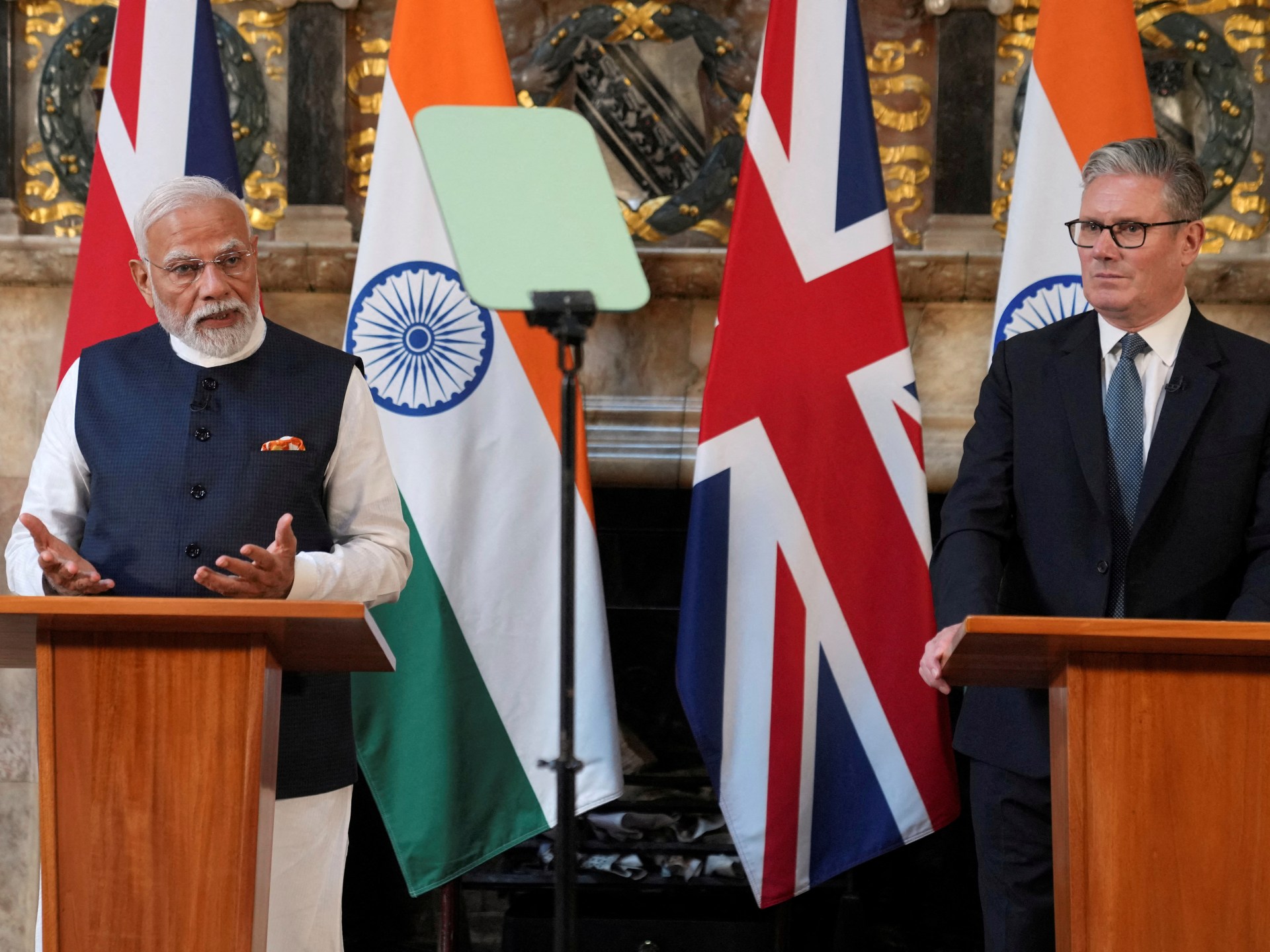
India and the United Kingdom’s Comprehensive Economic and Trade Agreement took effect on Wednesday, reducing tariffs across thousands of product lines and widening access for service companies. Al Jazeera and Reuters reported that the pact gives Indian exporters broad immediate access to the British market while giving UK businesses expanded entry into India through tariff cuts and quotas.
India’s Commerce and Industry Minister Piyush Goyal called the agreement a “defining milestone in India-UK ties” in a post on X. Goyal said the deal creates opportunities for Indian textiles, leather, gems and jewellery, engineering goods, marine products, chemicals, processed foods, small businesses, farmers and manufacturers, and also expands prospects for IT, professional, financial, education and business services.
Tariff cuts on both sides
A British government policy paper published Wednesday said the UK had secured what it described as the “best deal that any country has ever agreed with India.” According to the paper, India will remove or reduce duties, or keep existing zero tariffs, on 90 percent of tariff lines covering 92 percent of current goods imports from the UK, based on 2022 trade.
The same British policy paper said the UK will immediately eliminate duties on 96.8 percent of tariff lines, accounting for 97.7 percent of trade value. Al Jazeera and Reuters reported that India will immediately remove duties on 64.1 percent of tariff lines and phase out tariffs on another 21 percent, while keeping exclusions for sensitive products.
India’s Ministry of Commerce and Industry data cited by Reuters showed India exported $13.44bn in goods to the UK in the 2025-26 financial year and imported $11.68bn. Reuters also reported that bilateral services trade reached $35.44bn in 2024, with India recording a services surplus of nearly $7.9bn.
British goods expected to cost less in India
The British policy paper said tariff reductions should make products such as cosmetics, whisky, chocolates, soft drinks and lamb cheaper in India. It also said manufacturers of cars, electrical circuits, high-end optical products and medical devices are expected to benefit.
The agreement includes provisions on labour mobility, according to Al Jazeera and Reuters. Indian workers who move temporarily to the UK for work will be exempt from National Insurance contributions for five years.
Goyal said on X that more than 75,000 professionals and more than 900 companies are expected to benefit from the agreement. He listed IT, IT-enabled services, financial, professional, healthcare, education, engineering, telecommunications and consultancy services among the sectors set to gain.
Indian goods expected to cost less in the UK
Al Jazeera and Reuters reported that duties will be removed on Indian marine exports, textiles, leather, footwear, gems and jewellery, helping Indian suppliers compete in the UK market. The agreement is also expected to lower UK prices for Indian spices, vegetables, processed foods and fruits.
Indian Prime Minister Narendra Modi said on X that economic ties between the two countries would deepen under the agreement. Modi said sectors in India would gain stronger access to the UK market and that cooperation would expand in technology, professional services and innovation, along with mobility for skilled Indian workers.
Products left out
The agreement does not cover poultry, eggs, sugar or dairy, according to Al Jazeera and Reuters. India also excluded apples, walnuts and specific categories of gold bars and smartphones from the deal.
This story draws on original reporting from Al Jazeera.