
India’s fertility rate falls as costs and careers reshape family plans
Government data puts India’s fertility rate below replacement level, with education, costs, work and access to contraception shaping choices.
By James Whitfield · Staff Writer
3 min read
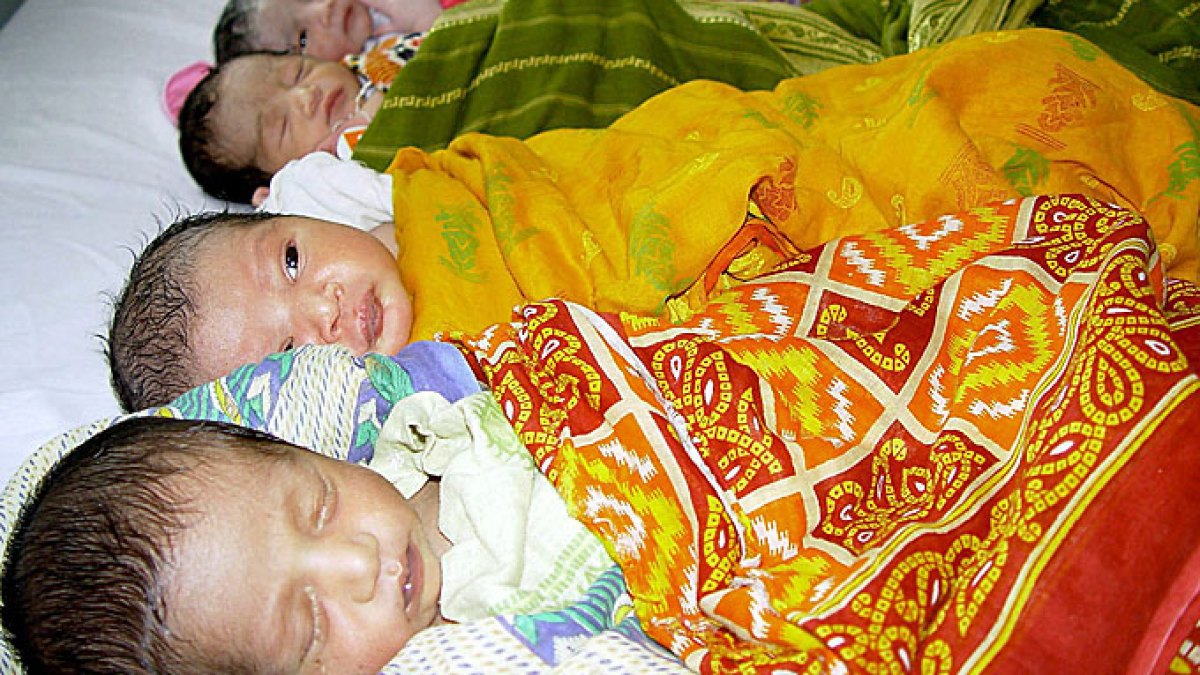
India’s fertility rate has fallen below the level needed to keep its population stable, according to the latest Sample Registration System report. The shift matters for the world’s most populous country because it signals a broad change in how Indians are weighing children against work, money and personal choice.
The report, released by India’s Office of the Registrar General and Census Commissioner, put the total fertility rate at 1.9 children per woman, below the 2.1 replacement benchmark. Al Jazeera reported that India’s rate stood at about 3.3 births per woman in the 2000s.
Doctors and families interviewed by Al Jazeera pointed to several forces behind the decline: better education, wider access to contraceptives, rising living costs, career goals and changing expectations for women.
Work and choice are changing family plans
Nidhi Agarwal, a 41-year-old public relations entrepreneur in Bengaluru, told Al Jazeera that she and her husband decided after marriage not to have children. She said they chose to focus on careers and business goals, despite family pressure.
Jyotsna Mirlay, a Bengaluru gynaecologist, told Al Jazeera that more educated and financially independent women in their 30s and 40s are less willing to accept older expectations that marriage and motherhood define a settled life. She said couples increasingly ask whether children would add to their lives or mainly satisfy social pressure.
Shweta Luthra, a 41-year-old human rights lawyer in Bengaluru, told Al Jazeera she married at 23 and initially wanted to study, travel and build her career before having children. She later had a son while pursuing a PhD in the United Kingdom, earlier than she had planned.
Some women are also using fertility technology to delay parenthood. Al Jazeera reported that India has more than 2,000 fertility centres offering egg freezing, and a 38-year-old Bengaluru makeup artist identified as Maria said friends had used the option while focusing on work or waiting for the right partner.
Household costs weigh on decisions
Money is another constraint. India’s Ministry of Statistics and Programme Implementation said consumer price inflation rose to 3.48 percent in April from 3.40 percent in March, its sixth straight monthly increase, according to Al Jazeera.
The International Monetary Fund put India’s average annual income at $2,878 in 2025, or just under $240 a month. Numbeo estimated that one person’s monthly costs in India were 27,664.7 rupees, or $290.40, in June 2026, excluding rent.
Roopa, a 36-year-old team leader at an electronics company, told Al Jazeera she would want financial security before having children. She said many people want to provide education and opportunities before expanding their families.
Health, contraception and state policy
The SRS report also showed infant deaths falling from 30 per 1,000 live births in 2019 to 24 per 1,000 in 2024. Al Jazeera reported that experts have long linked falling infant mortality with lower fertility, as families feel less pressure to have more children.
Regional data in the May demographic survey showed wide variation. Bihar recorded a fertility rate of 2.9, followed by Uttar Pradesh at 2.6, while New Delhi recorded 1.2 and Tamil Nadu and Kerala each recorded 1.3, according to the registrar general’s office.
Mirlay told Al Jazeera that easier access to oral contraceptives through pharmacies and primary health centres has helped women make more deliberate decisions. She also said later parenthood can become harder when grandparents are less available and paid childcare is costly.
India has not announced a national policy to raise births, but some states have acted. Al Jazeera reported that Andhra Pradesh is offering 30,000 rupees for a third child and 40,000 rupees for a fourth, while Goa, Karnataka and Telangana have introduced state-funded IVF centres for first-time parents.
Mirlay said incentives alone may not change decisions already made by couples. Agarwal told Al Jazeera that Indian society should respect reproductive choices, including the decision not to have children.
This story draws on original reporting from Al Jazeera.