
India’s E20 petrol rollout draws complaints from motorists
Drivers report lower mileage and performance as India’s government defends its rapid shift to 20 percent ethanol-blended petrol.
By Daniel Okafor · Business Editor
3 min read
India’s rapid shift to E20 petrol has triggered complaints from vehicle owners who say the new fuel is cutting mileage and changing how their cars perform. The dispute matters because the government has made the 20 percent ethanol blend standard at petrol stations while millions of older petrol vehicles remain on the road.
Under India’s National Policy on Biofuels, Prime Minister Narendra Modi’s government moved up the target for 20 percent ethanol blending from 2030 to 2025. Al Jazeera reported that E20 became mandatory at petrol stations last year, replacing the earlier ceiling of 10 percent ethanol in petrol.
New Delhi motorist Krishna Kumar told Al Jazeera his petrol sedan’s mileage fell from about 18-20km per litre to about 16-17km per litre after he began using E20. He said the car also felt slower during overtaking, uphill driving and when the air conditioner was on.
Another Delhi driver, Anas Khan, told Al Jazeera that his 2021 Maruti Suzuki Baleno fell from about 18km per litre to nearly 15km per litre. Khan said the vehicle’s pick-up had weakened, especially in city traffic and while overtaking.
Older vehicles raise compatibility concerns
Al Jazeera reported that automakers began using E20-compatible materials in new vehicles from 2023, while fully E20-compliant models entered the market from 2025. The government says older vehicles can use E20 with routine maintenance, but many owners remain uncertain about engines and fuel systems built before the higher blend became standard.
Independent automobile expert Sajad Ahmad Wani told Al Jazeera that non-compatible vehicles may not show problems immediately, but extended use of higher ethanol blends can speed wear in rubber hoses, seals, gaskets and some fuel-system parts. He also said drivers may notice some loss of mileage.
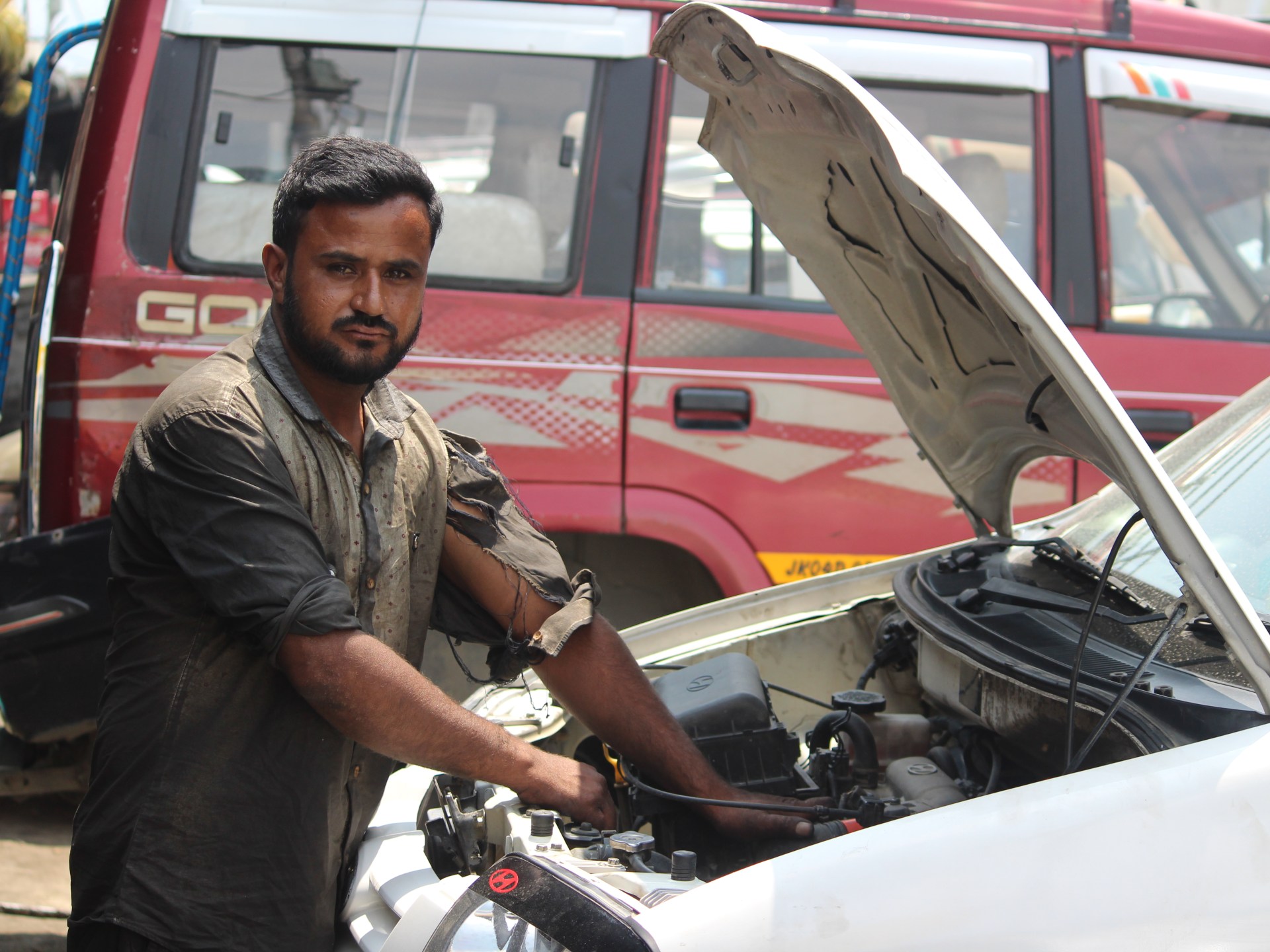
Mechanic Bilal Ahmad told Al Jazeera he has seen more customers reporting lower fuel economy and weaker engine performance. He said the effect appears to differ by vehicle.
The Ministry of Petroleum and Natural Gas has rejected claims that E20 causes engine damage or sharply reduces mileage, saying they are largely unsupported by scientific evidence. The ministry cited studies by the Automotive Research Association of India, the Indian Institute of Petroleum and oil companies that found no significant difference in engine performance, power output or wear, including in older vehicles.
According to the ministry, E20-compatible four-wheelers see only about a 1 to 2 percent drop in fuel efficiency. It also said any long-term degradation of rubber parts can generally be handled through routine replacement during servicing.
Government cites energy security and farm income
The government says ethanol blending can reduce crude oil imports, improve energy security, cut greenhouse gas emissions and expand demand for crops such as sugarcane and maize. Transport Minister Nitin Gadkari has defended the programme, saying industry bodies have found E20 safe for cars and that the policy benefits farmers as well as the transport sector.
Energy analyst Shyamasis Das of the Centre for Social and Economic Progress told Al Jazeera that India appears to have managed the supply rollout, with no major disruption at petrol pumps. But he said the fuel has less energy per litre, so vehicles need more fuel to travel the same distance, limiting the reduction in crude demand.
Environmental experts cited by Al Jazeera warned that expanding ethanol production may add pressure on water resources if it increases cultivation of water-intensive crops such as sugarcane. Others raised concerns about farmers shifting from food crops to fuel crops if ethanol becomes more profitable.
The programme has also drawn political scrutiny. Opposition parties, including Congress, have alleged a potential conflict of interest because Gadkari’s family is linked to companies involved in agro-processing and ethanol production, including CIAN Agro Industries and Manas Agro Industries. Gadkari has rejected the allegations, saying ethanol decisions are made by the cabinet and implemented through state-owned oil marketing companies, and that businesses tied to his family produce less than 0.5 percent of India’s ethanol.
This story draws on original reporting from Al Jazeera.