
Hormuz shipping drops sharply as US-Iran fighting renews
Maritime data showed tracked vessel traffic through the Strait of Hormuz fell sharply after fresh US and Iranian strikes.
By Daniel Okafor · Business Editor
3 min read
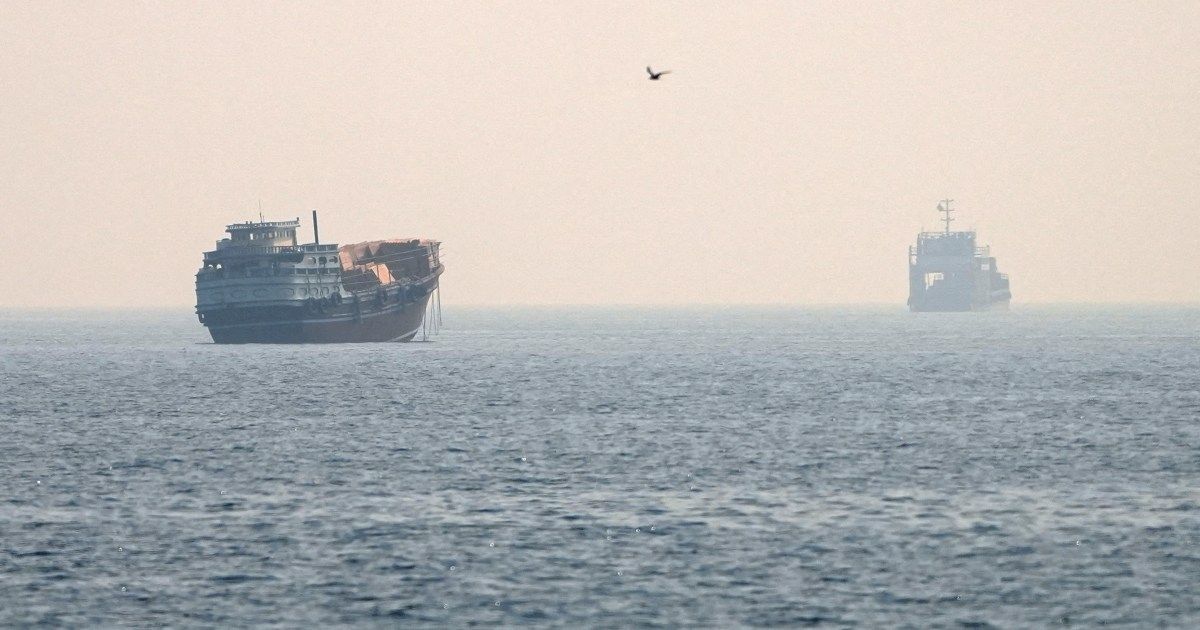
Shipping through the Strait of Hormuz has fallen sharply as fighting between the United States and Iran resumes, raising new concerns for energy trade through one of the world’s key oil routes. Maritime tracking firms reported a steep drop in visible vessel movements this week, while oil markets held mostly steady after recent gains.
Lloyd’s List Intelligence said Thursday that no vessel above 10,000 deadweight tonnes had passed through the US-coordinated route near Oman with its automatic identification system switched on since July 7. The firm said at least two ships were believed to have crossed without broadcasting their positions.
Windward, a maritime intelligence platform, said Thursday afternoon that only five vessels had been tracked crossing the strait on Wednesday and early Thursday. It said 45 transits were recorded Monday.
Before the war began in late February, about 130 vessels a day moved through the Strait of Hormuz, according to Al Jazeera. The narrow waterway links the Gulf with the Gulf of Oman and is central to global energy shipments.
Fresh strikes reported
Iran reported several explosions in its south on Thursday, Al Jazeera said. The blasts followed US strikes on dozens of Iranian targets on Tuesday and Wednesday.
A US official told Al Jazeera that American forces were not responsible for the latest attacks in southern Iran. No country or group had claimed responsibility for those attacks at the time of the report.
Iranian officials and state media said earlier Thursday that Iranian forces had hit US military assets and other sites in Bahrain, Kuwait, Qatar, Jordan and Iraq. They described the attacks as retaliation for US strikes that Washington said were launched in response to repeated attacks on vessels in the Strait of Hormuz.
The renewed fighting follows a memorandum of understanding signed by Washington and Tehran last month on ending the war, according to Al Jazeera. Brent crude had returned to pre-war levels after that agreement, but has since risen by more than $4 a barrel compared with last week.
Oil steady, products under pressure
Brent crude, the main international oil benchmark, was at $76.37 a barrel at 02:30 GMT Friday, Al Jazeera reported. That was nearly unchanged from Thursday’s settlement and about 2 percent below Wednesday’s level.
Bart Melek, global head of commodity strategy at TD Securities in Toronto, told Al Jazeera that the market’s relative calm reflected confidence that the Middle East situation would stabilize. He said the latest hostilities could add to upward pressure as oil and product inventories fall in the weeks ahead.
Melek said TD Securities sees Brent rising $10 to $15 into the summer as shrinking inventories strain supply chains.
June Goh, senior oil market analyst at Sparta Commodities in Singapore, told Al Jazeera that refined fuels face the strongest price pressure. She pointed in particular to diesel, citing lost supply from Middle East refineries and attacks by Ukrainian drones on Russian refineries.
Asian markets rise
Equity markets in Asia opened higher Friday after the S&P 500 in the United States gained 0.8 percent overnight, according to Al Jazeera.
Japan’s Nikkei 225 rose 1.9 percent in morning trading, South Korea’s Kospi advanced 3.6 percent and Hong Kong’s Hang Seng Index gained 1.4 percent.
This story draws on original reporting from Al Jazeera.