
Guterres visits Haiti as new anti-gang force prepares to deploy
The U.N. chief toured Port-au-Prince amid rising displacement, killings and kidnappings tied to gang violence.
By Daniel Okafor · Business Editor
4 min read
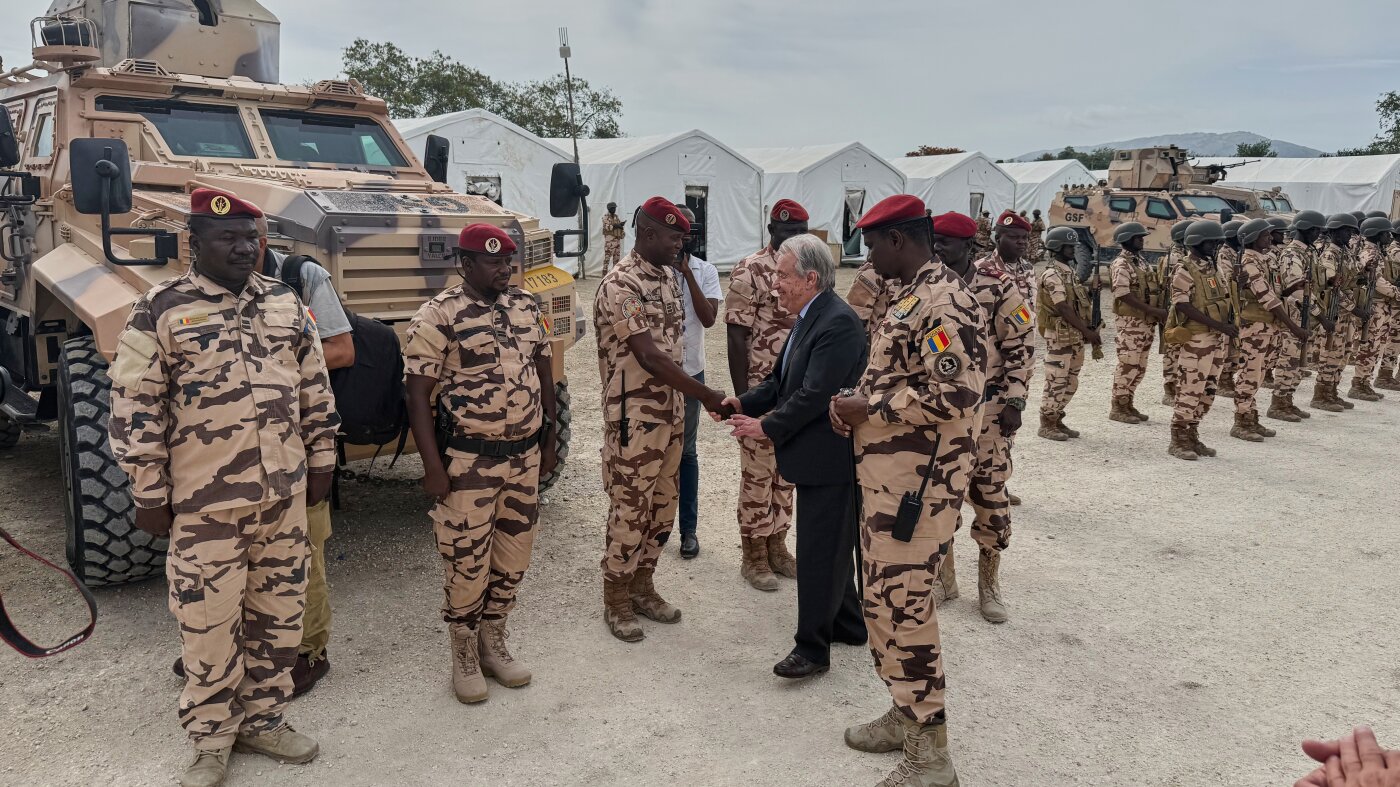
U.N. Secretary-General António Guterres visited Haiti on Tuesday as a new international force prepares to begin operations against gangs that have tightened their grip on the capital. The visit put renewed attention on a crisis the U.N. says has killed 2,300 people in Haiti this year and displaced 1.5 million.
The Associated Press reported that Guterres spent one day in Port-au-Prince, where gang violence has pushed more than 1 in 10 people from their homes. The U.N. says another 100 people have been kidnapped this year, including James Boyard, cabinet director of Haiti’s Defense Ministry, who was abducted last week in one of the capital’s comparatively safer areas.
Guterres arrived after a violent weekend in Cité Soleil, a seaside slum, where more than 30 people were killed, wounded or reported missing, according to the local human rights group Cooperative for Peace and Development.
His convoy passed through areas marked by the conflict, AP reported, including damaged car dealerships, empty homes and concrete buildings scarred by gunfire. A public bus known as a tap-tap moved through the area with bullet holes in its windshield.
Graffiti on a damaged wall denounced Viv Ansanm and praised the police, AP reported. Viv Ansanm, a powerful gang federation, has been designated a foreign terrorist organization by the U.S. government and is estimated to control 70% of Port-au-Prince.
New force expected within weeks
Guterres first visited the headquarters of the new gang-suppression force, which the U.N. Security Council approved in September. The force is replacing a U.N.-backed mission led by Kenyan police that was intended to help Haiti’s National Police fight gangs but remained short of money and personnel.
Troops from Jamaica, Chad, El Salvador and Guatemala have arrived so far, totaling fewer than 1,000, AP reported. The force is expected to start operations in the coming weeks and work alongside Haiti’s National Police and its expanding Armed Forces.
AP reported that hundreds of Haitian men and a few women lined up along a dusty road seeking interviews to join Haiti’s forces.
Guterres later met privately with Prime Minister Alix Didier-Fils-Aimé. Haiti, a country of nearly 12 million people, has not had a president since Jovenel Moïse was killed at his private residence in July 2021, and Fils-Aimé faces pressure to hold elections.
Fils-Aimé told AP that he and Guterres had “a frank conversation” about Haiti’s situation and the government’s plans. He said security is the priority for holding elections and returning to “republican rule,” and said Guterres could help by pressing countries supporting the new force to honor their commitments.
Displaced families ask to return home
Guterres also visited a shelter in a former school, where AP reported more than 1,200 displaced people live side by side and only one meal a day is guaranteed. Some residents said they had been there for as long as four years after gangs attacked and burned their communities.
More than 300,000 people have been displaced by gang violence across Port-au-Prince, according to the U.N. International Organization for Migration. The agency says that number includes more than 18,000 people who fled Cité Soleil in May.
“Haiti’s displacement crisis is entering an even more alarming phase,” Gregoire Goodstein, IOM’s chief of mission in Haiti, said in a recent statement.
At the shelter, Guterres met privately with six women who described a lack of privacy, including for washing and using the bathroom, and said they feared for their young children. One woman described the crowding as “skin-to-skin and mouth-to-mouth,” AP reported.
Clifford Lala, 31, told AP that his community of Solino was not ready for residents to return after gangs overran it. Wendy Cejour, 26, said he and his family had lived at the school for a year and a half and wanted to go back to their neighborhood.
Human Rights Watch published a letter the day before the visit urging Guterres to protect civilians and address the causes of violence and human rights abuses. After the shelter visit, Guterres said what he saw would stay with him and said women and children were paying the highest price.
This story draws on original reporting from NPR.