
Governments face pressure as housing costs outrun wages
Western governments are revisiting housing policy as rents, home prices and lower public investment leave more households priced out.
By James Whitfield · Staff Writer
4 min read
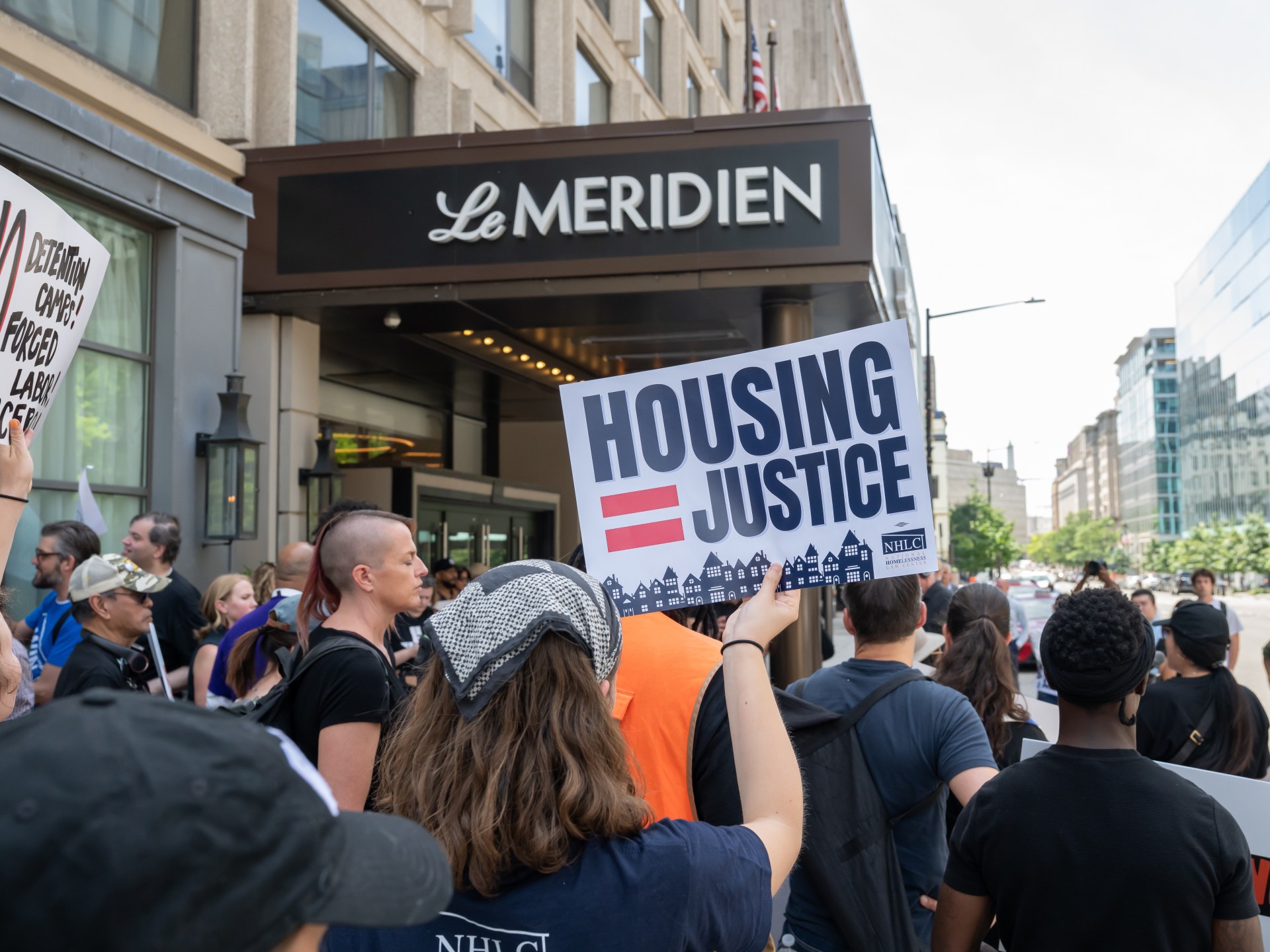
Housing affordability has moved up the agenda in several wealthy countries as rents and home prices continue to rise faster than incomes. The pressure is forcing governments to revisit rules on renters, construction and the role of investors in residential property.
In England and Wales, a renters’ rights law took effect on May 1, ending “no-fault” evictions, according to the UK government. The European Commission and European Parliament have also begun a new push on housing affordability, while the US Senate has advanced a bipartisan measure aimed at easing barriers to construction and increasing affordable supply, Al Jazeera reported.
Housing is often treated as unaffordable when costs pass 30 percent of household income, according to UN-Habitat. The OECD uses a higher “housing cost overburden” threshold of more than 40 percent of disposable income.
Those benchmarks no longer capture the full strain in many cities, according to housing researchers cited by Al Jazeera. Families may spend more than the benchmark, crowd into smaller homes, move farther from work and schools, delay buying a home or rely on debt to keep housing.
Prices have pulled away from incomes
US Census Bureau data cited by Al Jazeera show that the median US home sale price was 3.6 times median household income in 1984. By 2024, it was five times median household income.
Harvard University’s Joint Center for Housing Studies said in its June 2025 State of the Nation’s Housing report that the US price-to-income ratio reached 5.0 in 2024, up from 4.1 in 2019 and an average of 3.2 in the 1990s. The center also warned that a slowdown in new construction, combined with strong demand for rentals, could tighten rental markets.
The shift has changed who can buy. National Association of Realtors data cited by Al Jazeera show the median age of first-time US homebuyers rose from 31 in 2015 to 40 in 2025, while the average age of repeat buyers increased from 53 to 62.
In the UK, house prices have also moved far beyond past income levels. Schroders data cited by Al Jazeera show the average house price was four times average annual income in 1957, compared with nine times annual income by November 2022.
Public housing investment retreated
Leilana Farha, global director of the housing rights group THE SHIFT, told Al Jazeera that public spending on housing in Canada and parts of Western Europe began to erode from the late 1970s and early 1980s. She said the cuts hit social housing while governments privatised or eliminated existing stock.
Farha said Canada in the 1960s and 1970s had a broader mix of social housing, rental construction, homeownership options and mortgage products. She linked later policy shifts in the UK and US to a weakening of public housing, citing Margaret Thatcher’s Right-to-Buy programme and reductions in US federal housing support under Ronald Reagan.
The OECD’s 2024 affordable housing overview said public investment in housing and community amenities across OECD countries fell by nearly half between 2009 and 2016. It also said public investment in housing development was nearly cut by 90 percent over that period.
The Leibniz Institute for Research on Society and Space said in a 2023 study that institutional investors have done little to ease affordability pressures and may have added to rising housing costs in some cases. Farha told Al Jazeera that after the 2008 global financial crisis, large capital flows moved into residential real estate, making rental housing a major investment target.
Governments test new responses
Some governments are now promising more supply and tighter rules. Dutch Prime Minister Rob Jettan pledged in February to build 100,000 homes a year and create 30 large-scale housing developments across the Netherlands, Al Jazeera reported.
UN-Habitat’s 2025 Adequate Housing For All report said more than 2.8 billion people face some form of housing inadequacy, including 1.1 billion people living in informal settlements and slums. Its 2024 report warned that building more homes without a long-term strategy can worsen poor planning and inequality.
US President Donald Trump said at the G7 summit in Davos in January that homes are “built for people, not for corporations,” according to Al Jazeera. The same day, he signed an executive order directing federal agencies and government-sponsored enterprises, where legally allowed, to stop supporting the sale of single-family homes to large institutional investors when private owners or occupants could buy them.
This story draws on original reporting from Al Jazeera.