
France-Germany fighter jet collapse tests Europe’s defence ambitions
The end of the FCAS fighter plan exposes strains in European defence cooperation as doubts grow over US security commitments.
By Lucas Ferreira · Science & Environment Writer
4 min read
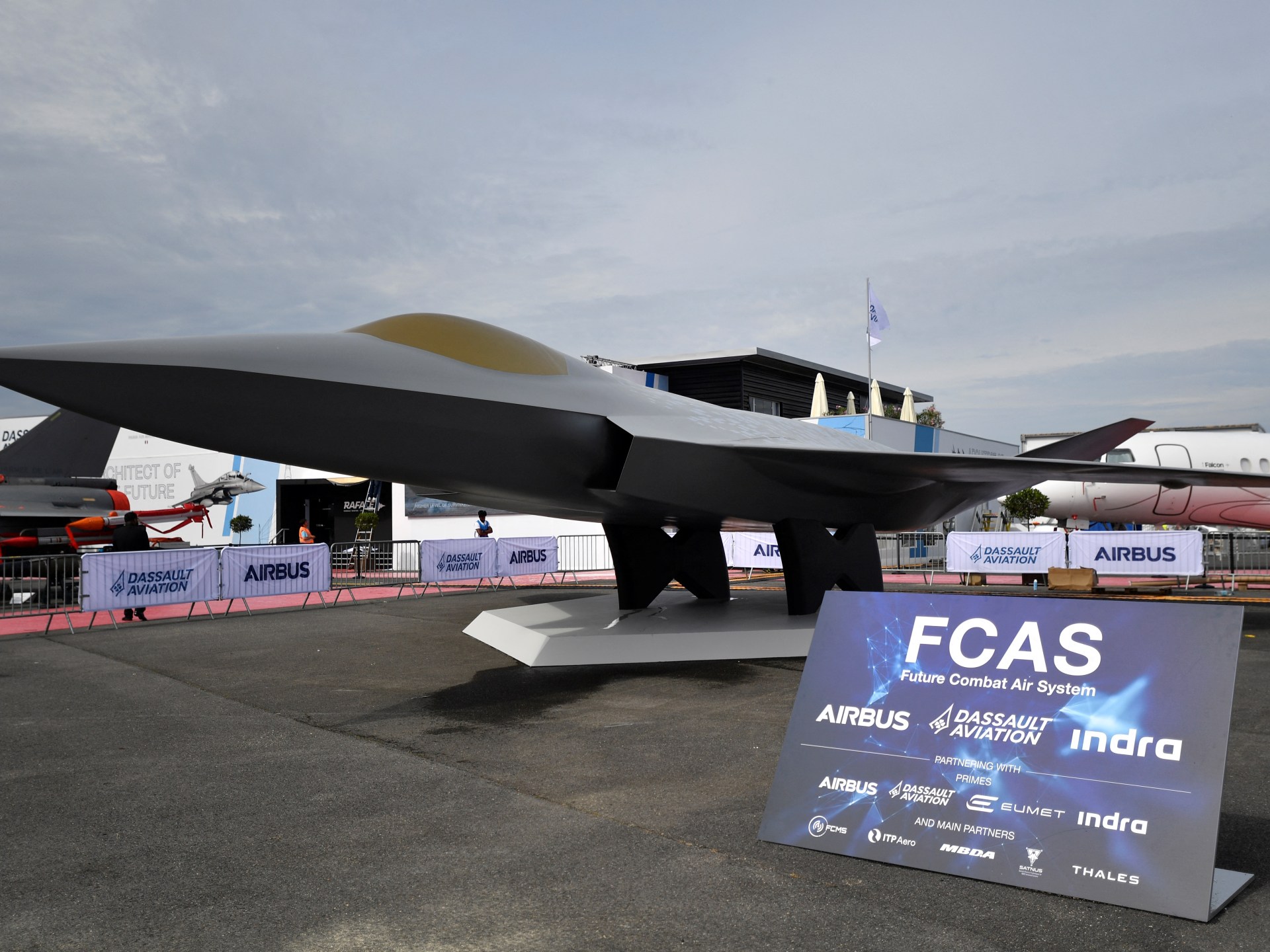
France and Germany have scrapped a flagship plan to build a sixth-generation fighter jet, dealing a setback to Europe’s push to rely less on the United States for military protection. French President Emmanuel Macron confirmed the termination on Monday, according to Al Jazeera, after disputes over industrial leadership derailed the Future Combat Air System project.
The programme, known as FCAS, involved France, Germany and Spain and was intended to produce a next-generation combat aircraft with connected systems. Al Jazeera reported that the split centred on whether Dassault Aviation of France or Airbus, representing German and Spanish interests, would lead the work.
The collapse comes as European governments reassess their security ties with Washington. Al Jazeera reported that US President Donald Trump has pressed NATO allies to spend more on defence, reduced much US support for Ukraine and raised concern in Europe with his pursuit of Greenland, a self-governing territory in the Kingdom of Denmark. Denmark and Greenland have said the island is not for sale.
European unease has also grown since Europe declined to join the US-Israeli war on Iran, which began with strikes on Tehran on February 28, Al Jazeera reported. Analysts told the outlet that the FCAS failure complicates Europe’s defence plans, though it does not end the broader effort to build independent capacity.
Analysts see a setback, not a breakdown
Giuseppe Spatafora, a policy analyst at the European Union Institute for Security Studies, told Al Jazeera that the dispute shows how national industrial priorities can collide with Europe-wide defence cooperation. He said the failure should not be overstated because the wider European trend remains a move away from dependence on US weapons systems.
Jamie Shea, a retired NATO official and associate fellow at Chatham House, told Al Jazeera that FCAS was the kind of advanced project Europe needs if it wants strategic autonomy. He said the programme could have advanced European work in artificial intelligence, space systems, data fusion and the links between crewed and autonomous platforms.
Spatafora noted that FCAS began in 2017, before Russia’s full-scale invasion of Ukraine and before Trump returned to the White House. He told Al Jazeera that a programme designed today might look different, given the current security situation.
Some parts of the wider effort may continue. Spatafora said France and Germany could keep working on FCAS elements such as the “combat cloud,” a system meant to improve cyber command and control. Shea said Airbus and other German companies are looking at continuing work in software architecture and drone technology.
Ukraine war shifts the focus
Analysts told Al Jazeera that Europe’s urgent problem is less the absence of a future fighter jet than its difficulty producing weapons at scale. Shea said modern warfare requires mass production and tighter integration across military domains, areas where the US remains ahead of Europe.
Spatafora pointed to Ukraine as a lesson for European defence planning. He told Al Jazeera that deterrence now requires cheaper systems that can be produced in large numbers, while FCAS represented a costly capability that was not Europe’s most immediate need.
Europe has strengths to build on, Shea said, including shipbuilding, submarines, short-range missiles and air defence systems such as Germany’s IRIS-T and the French-Italian SAMP/T. He also cited Europe’s record with combat aircraft programmes including Eurofighter Typhoon, Tornado and Gripen.
Other routes may now draw more attention. Analysts cited by Al Jazeera pointed to the UK-Italy-Japan Global Combat Air Programme, European Space Agency military space capabilities, EU financing tools such as Security Action for Europe, and joint ventures with Ukraine in drones and AI.
Shea said the FCAS failure benefits Russia and could also help US defence firms sell more F-35s in Europe. He argued that future cooperation should be driven by shared military requirements, citing a UK-Norway destroyer agreement as a model because both countries operate in the North Atlantic and Baltic Sea and have aligned needs.
This story draws on original reporting from Al Jazeera.