
FIFA rejects Belgium appeal after Balogun ban reversal
FIFA’s handling of Folarin Balogun’s red card has drawn criticism after Donald Trump urged Gianni Infantino to review the case.
By Daniel Okafor · Business Editor
3 min read
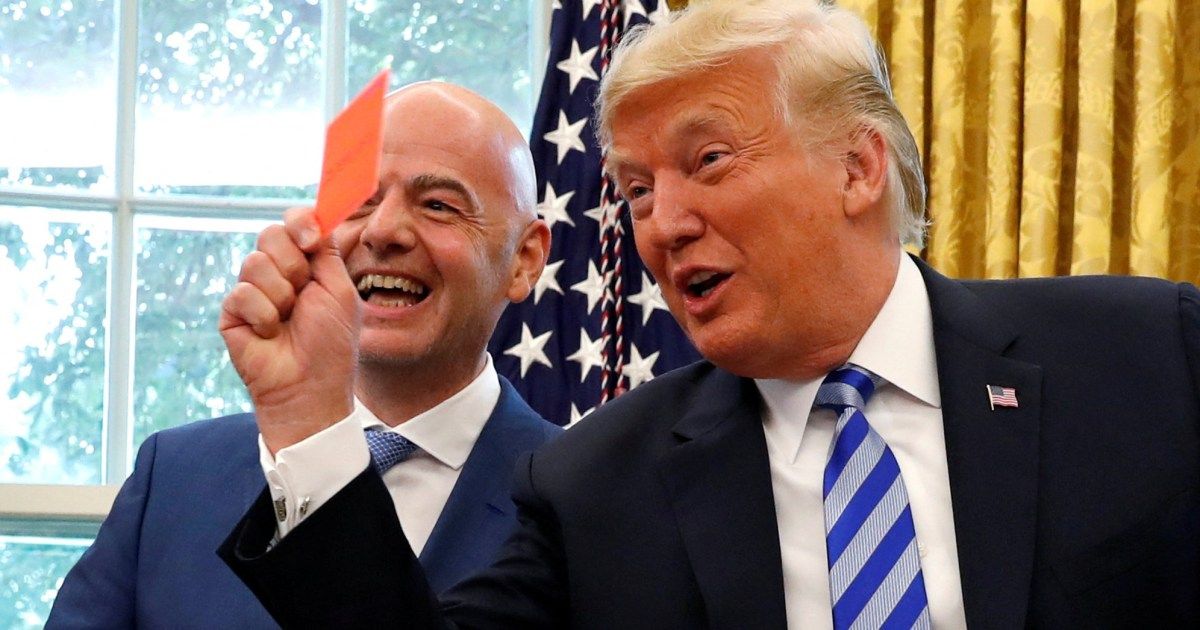
FIFA dismissed Belgium’s appeal over the reversal of Folarin Balogun’s World Cup suspension, leaving in place a decision that cleared the United States forward before a knockout match. The case has drawn scrutiny because it followed a call from US President Donald Trump to FIFA president Gianni Infantino.
Al Jazeera reported that FIFA rejected Belgium’s challenge on Monday as “inadmissible,” hours before the United States were due to face Belgium in Seattle. Balogun had been sent off in the USA’s 2-0 round-of-32 win over Bosnia and Herzegovina after stepping awkwardly on Tarik Muharemovic’s ankle, a red card that carried an automatic one-game ban.
FIFA announced on Sunday that it had suspended the punishment, according to Al Jazeera. The decision came after Trump urged Infantino to review Balogun’s case.
Simon Chadwick, professor of Afro-Eurasian sport at Emlyon Business School in Shanghai, told Al Jazeera that the dispute showed Trump’s growing influence over football’s global governing body. “Trump’s MAGA [Make America Great Again] agenda is now on full show for the world to see, as is Infantino and FIFA’s pursuit of revenues,” Chadwick said.
Chadwick said Trump had spoken publicly about World Cup-related issues before the tournament, including Iran’s participation, but had not commented on on-field football incidents during the event until the Balogun red card. He said it had seemed likely Trump would end that silence and that Infantino would respond to his request.
Infantino defends FIFA process
Infantino said in a statement that FIFA’s judicial committees made the decision independently. He said those bodies “operate autonomously,” apply FIFA’s disciplinary rules and decide cases on the facts and regulations before them.
The FIFA president also acknowledged that he had spoken with Trump about the matter. Infantino said he regularly discusses World Cup issues with the US president and also receives calls from heads of state, officials, football figures and business executives on various topics.
Infantino said he told Trump there was an ongoing legal process before FIFA’s independent judicial bodies and that the case would be decided by the competent bodies. He said he respects those decisions and the autonomy of the panels that issue them, even when he is surprised by a ruling or disagrees with it.
Chadwick challenged FIFA’s position, telling Al Jazeera that the case appeared “highly irregular” and a breach of established ethical standards. He said changing rules during a tournament under political influence would set “a very dangerous precedent.”
Coaches and former FIFA chief question ruling
The decision prompted criticism of FIFA and support for Belgium, Al Jazeera reported, as well as jokes from national team coaches about whether other cards could now be challenged. After England defender Jarell Quansah was sent off in a 3-2 last-16 win over Mexico, England coach Thomas Tuchel asked reporters who could overturn such a call, when and on what grounds.
Former FIFA president Sepp Blatter also criticized the episode in a post on X. “Red cards are not overturned by political phone calls,” Blatter wrote, saying they should be overturned by rules, evidence and independent bodies.
Blatter said that if a US president intervened with FIFA’s president and a player was then cleared before a World Cup knockout match, FIFA had to answer where it was heading. Chadwick made a similar point to Al Jazeera, saying the episode raised questions about who could seek such intervention next, for what purpose and to whose benefit.
This story draws on original reporting from Al Jazeera.