
EU to restart accession talks with Ukraine and Moldova
Ambassadors from the bloc's 27 states agreed to open the first negotiating cluster after Hungary dropped its veto, EU leaders said.
By Sofia Marchetti · World Affairs Correspondent
3 min read
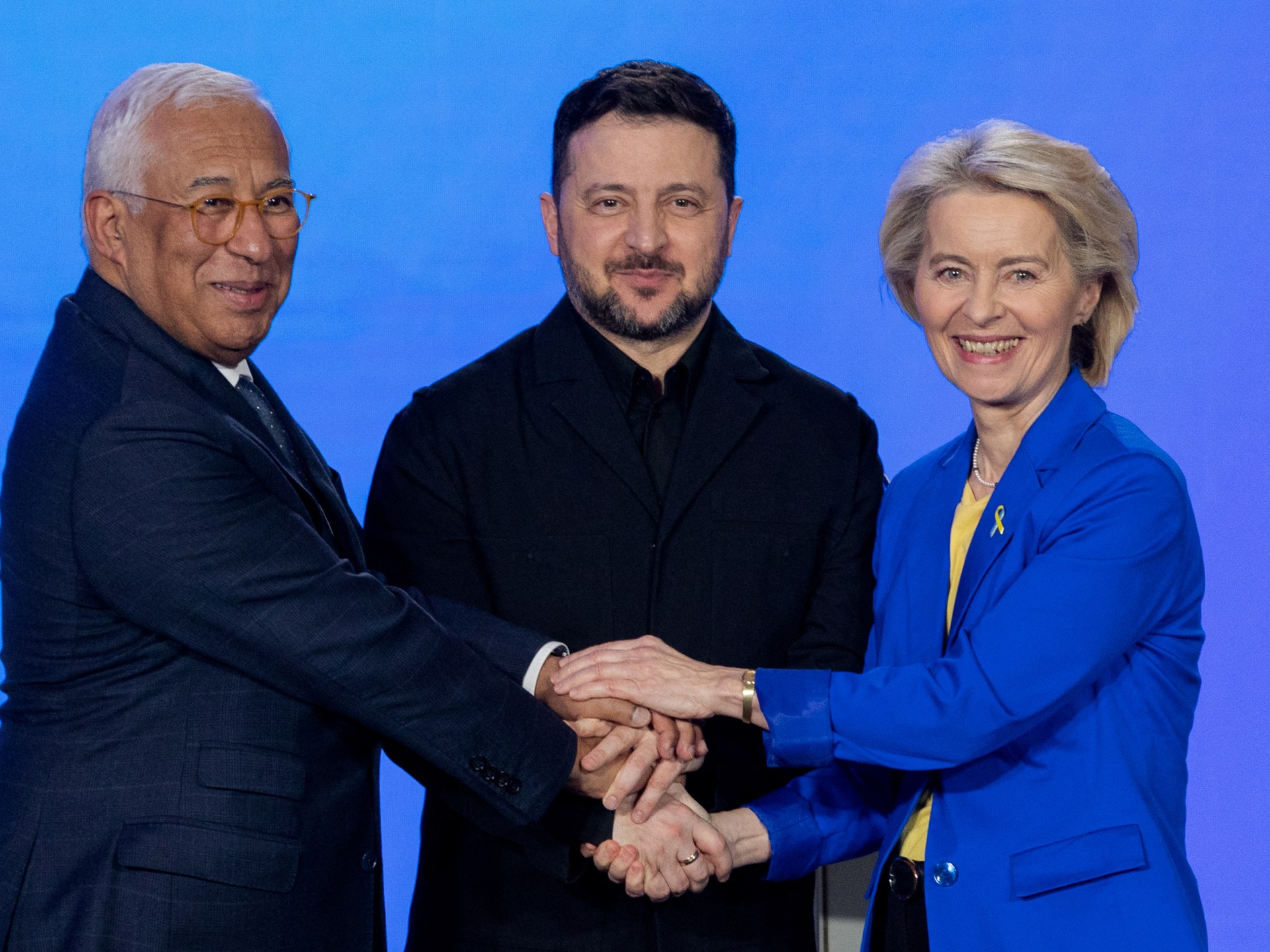
The European Union will restart accession negotiations with Ukraine and Moldova in Luxembourg on Monday, European Council President Antonio Costa and European Commission President Ursula von der Leyen said Friday. AFP and Reuters reported that the move reopens a path toward the bloc for two post-Soviet states that see EU membership as added security against Russian aggression.
Ambassadors from the EU’s 27 member states approved the step at a meeting in Brussels, according to AFP and Reuters. Costa and von der Leyen said all member states had agreed to open the first accession negotiations cluster with both candidates.
EU leaders agreed in December 2023 to open membership talks with Ukraine and Moldova, AFP and Reuters reported. The process then stalled because Hungary, under then-Prime Minister Viktor Orban, opposed Kyiv’s bid.
Hungary drops its block
Hungary’s new government, which took office in May, agreed last week to drop Orban’s veto, allowing the process to resume, according to AFP and Reuters. Prime Minister Peter Magyar also reached an agreement with Kyiv on the rights of Ukraine’s ethnic Hungarian minority, an issue that had long strained ties between the two neighbors.
Magyar has not endorsed a rapid route for Ukraine into the EU. AFP and Reuters reported that he said Hungary would hold a referendum on Ukraine’s membership if Kyiv manages to close all 33 accession chapters in the next 10 to 15 years.
The talks opening Monday will begin with the “fundamentals” section, Costa and von der Leyen said. That part of the accession process covers core requirements such as the rule of law.
A long process ahead
EU entry talks with Kyiv were formally opened in June 2024, AFP and Reuters reported. The step began a process that normally takes years and covers areas ranging from agriculture to judicial standards and the rule of law.
That earlier move was largely symbolic, according to AFP and Reuters, and served as a show of EU support for Ukraine after Russia’s full-scale invasion in 2022. The restart agreed in Brussels gives the process a more concrete next step through the first negotiating cluster.
Costa and von der Leyen said the agreement recognized the “determination, courage and hard work” of Ukraine and Moldova in carrying out reforms despite major challenges. They also described enlargement as a strategic choice and said a larger EU was in the bloc’s common interest at a time of growing uncertainty.
AFP and Reuters reported that Kyiv and Chisinau view joining the EU as a way to strengthen their security against Russia. Moscow says control over what it calls its “near abroad,” meaning post-Soviet states, is key to its own national security.
This story draws on original reporting from Al Jazeera.