
Health officials warn Ebola outbreak in eastern Africa could set record
Africa CDC says conflict, weak tracing and a lack of approved tools for Bundibugyo Ebola are making the outbreak hard to contain.
By James Whitfield · Staff Writer
4 min read
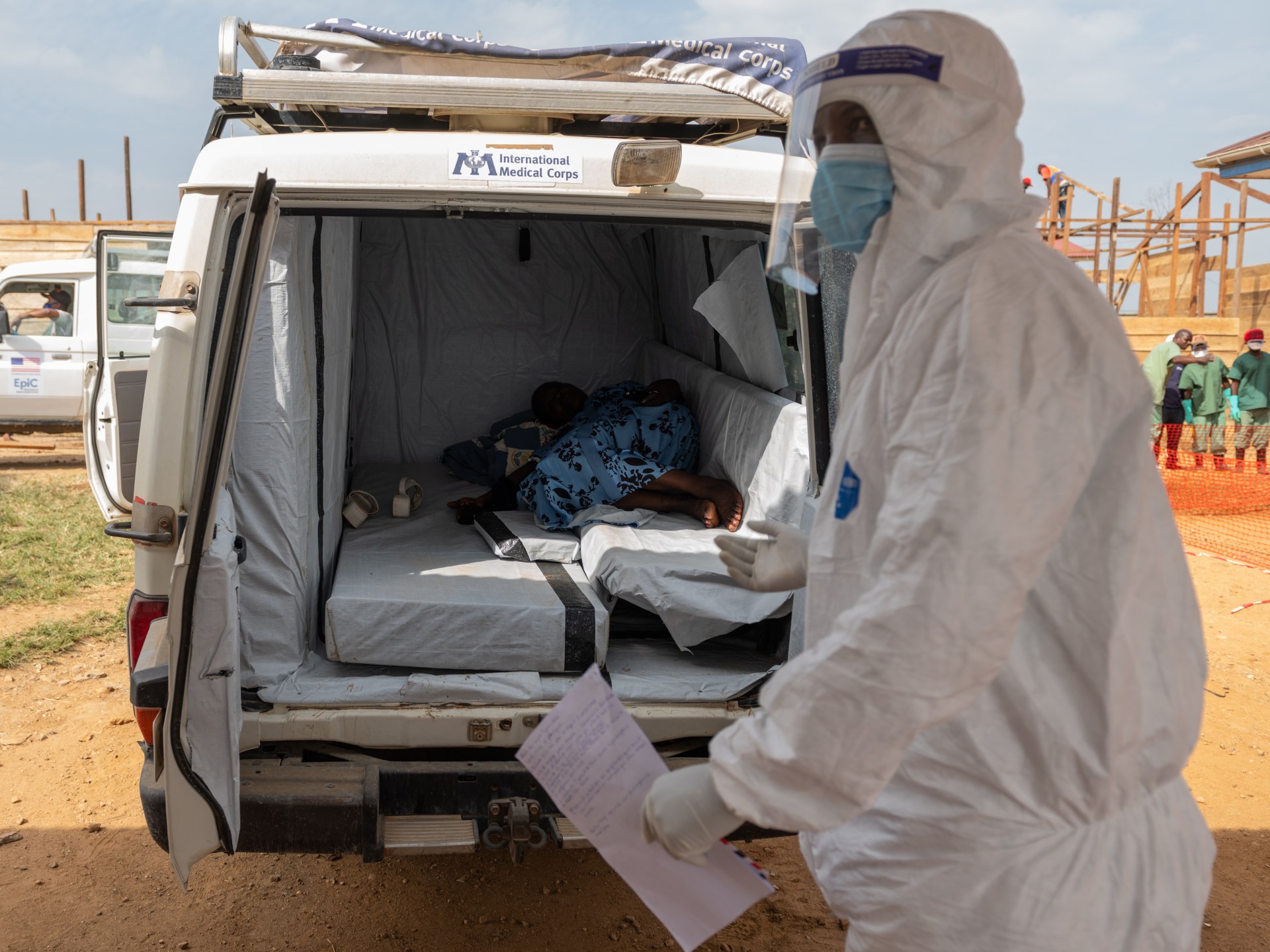
Africa’s top disease-control official has warned that the Ebola outbreak centered in the Democratic Republic of Congo could become the deadliest on record if it is not contained soon. The warning matters because the strain driving the outbreak has no approved vaccine or treatment, while conflict is limiting the response in eastern DRC.
Jean Kaseya, director-general of the Africa Centres for Disease Control and Prevention, raised the alarm on Tuesday during a virtual meeting with African heads of state and international donors in Burundi. He said the outbreak could surpass the 2014 West Africa epidemic and the 2018 DRC outbreak if transmission continues.
Authorities say at least 837 infections and 196 deaths have been recorded in DRC, the outbreak’s center. Uganda, which borders the affected region, has reported 19 cases and two deaths, according to authorities.
A rarer Ebola strain
Health officials identify the current virus as Bundibugyo, one of three known Ebola strains associated with large outbreaks, along with Zaire and Sudan. Ebola spreads through bodily fluids, and infected bodies remain highly contagious after death, according to health authorities.
The Zaire strain caused the major West Africa outbreak from 2014 to 2016 and a later DRC outbreak from 2018 to 2020. The West Africa epidemic infected nearly 29,000 people and killed more than 11,000, while the DRC outbreak infected about 3,400 and killed more than 2,000, according to officials cited by Africa CDC.
Vaccines and experimental treatments were developed for Zaire Ebola, and more than 300,000 people were vaccinated during the 2018-2020 DRC response. No approved vaccine or treatment exists for Bundibugyo Ebola, though candidates are in early development, according to health officials.
Trish Newport, deputy manager of Ebola programmes in DRC for Doctors Without Borders, said the strain has drawn less pharmaceutical attention because outbreaks have been uncommon. She told Al Jazeera that companies did not see it as a priority, leaving research and funding behind other Ebola strains.
Conflict slows the response
The outbreak is spreading in eastern DRC, where armed groups including M23 rebels are fighting government forces despite diplomatic efforts to end the conflict. Health officials say insecurity makes it harder to reach communities, trace contacts and care for patients in rebel-held areas or crowded displacement camps.
Kaseya told Al Jazeera that contact tracing is one of the main gaps in the response. He said more than 26,000 people who may need tracing have not been located, leaving officials unsure whether they are spreading the virus.
The virus has moved from Ituri Province into North Kivu and South Kivu, and across the border into Uganda, according to authorities. WHO officials say new cases are being found in affected DRC provinces on a near-daily basis, a sign of broad local transmission.
Mistrust is also slowing containment, according to health workers. Some communities in DRC believe Ebola is being used as a cover for government corruption, while others avoid reporting symptoms because of stigma or disbelief, health officials say.
Burial practices have become a flashpoint because Ebola victims remain infectious after death. In early June, angry youths trying to take relatives’ bodies for burial broke into a hospital and set fire to treatment tents and other medical facilities, according to authorities.
Funding gap
Burundi’s President Evariste Ndayishimiye, the current African Union chair, said only one-fifth of the $518m needed for the response has been raised. The shortfall contrasts with the 2014 West Africa response, when international donors provided between $5.9bn and $8.9bn in funding and personnel support, according to published estimates cited by officials.
The response has also been affected by cuts to foreign aid, including the closure of USAID under US President Donald Trump, and reductions by European donors, according to aid officials. In DRC, health workers also face too few isolation centers and shortages of personal protective equipment; at least four healthcare workers have died after contracting Ebola, authorities say.
Newport said responders need funding for Ebola control while also keeping basic services available. She said communities need access to non-Ebola healthcare and water if health teams are to maintain trust.
This story draws on original reporting from Al Jazeera.