
Colombia votes in runoff between Cepeda and de la Espriella
More than 41 million eligible voters are choosing between a leftist lawmaker and a far-right outsider in a polarized presidential race.
By Lucas Ferreira · Science & Environment Writer
3 min read
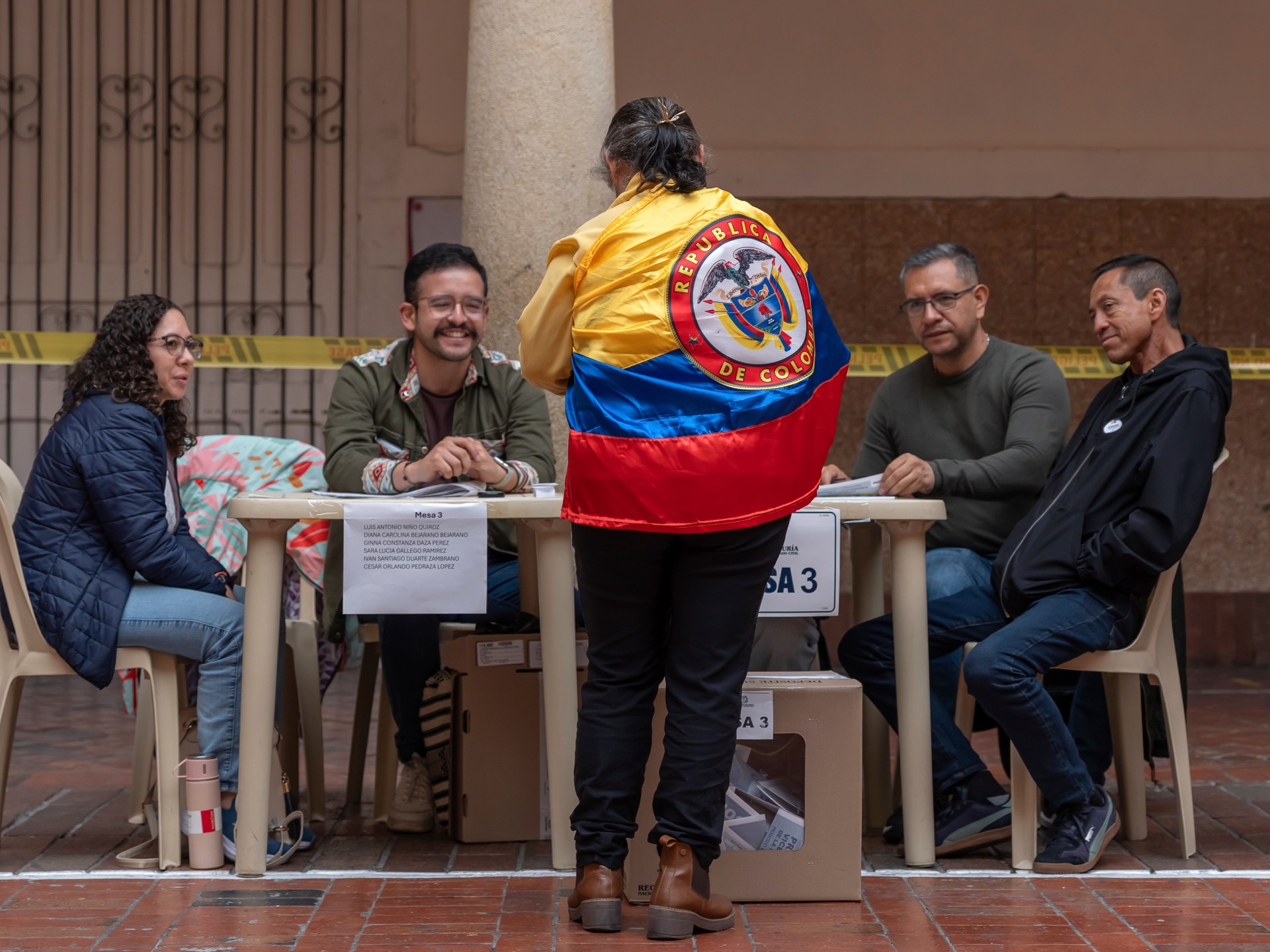
Colombians are voting Sunday in a presidential runoff that will decide whether the country extends a left-wing security strategy or turns to a far-right promise of forceful crime control. Al Jazeera and The Associated Press reported that the contest also carries stakes for Colombia’s health system, public debt and corruption as violence rises nearly a decade after a major peace deal.
More than 41 million people are eligible to vote, according to Al Jazeera and AP. The ballot pits lawmaker Ivan Cepeda against criminal defence lawyer Abelardo de la Espriella, who advanced from an 11-candidate first round held May 31.
Official results cited by Al Jazeera and AP showed de la Espriella leading the first round with 44 percent of the vote. Cepeda received 41 percent.
Two sharply different security plans
Al Jazeera and AP reported that both campaigns have focused on stopping Colombia from sliding back into the car bombings, kidnappings and disappearances that marked earlier decades of conflict. Their proposals differ sharply.
De la Espriella, a political newcomer nicknamed “The Tiger,” has pledged to pursue criminals aggressively and construct 10 mega-prisons, according to Al Jazeera and AP. The outlets reported that his plan draws from the policies of El Salvador’s President Nayib Bukele, whose security campaign has reduced homicide rates while drawing accusations of human rights abuses.
Al Jazeera and AP reported that United States President Donald Trump has endorsed de la Espriella. Cepeda, by contrast, is campaigning on continuing President Gustavo Petro’s approach, including talks with several armed groups.
Petro’s strategy, launched in 2022, has faced heavy criticism, Al Jazeera and AP reported. The outlets said it produced its first disarmament only on Thursday, when an armed group of about 100 members gave up weapons and began a resettlement process intended to reintegrate them into civilian life.
Petro also questioned the first-round result without evidence after Cepeda, who had led pre-election polling, failed to win outright and finished behind de la Espriella, according to Al Jazeera and AP.
Violence shapes the race
The vote comes 10 years after Colombia signed a peace agreement with the Revolutionary Armed Forces of Colombia, or FARC, according to Al Jazeera and AP. The deal had raised hopes of ending a cycle of fighting between the state and armed groups.
Al Jazeera and AP reported that violence has since returned, especially as many rebel groups moved away from ideological goals and toward drug-trafficking profits. Authorities recorded 14,780 homicides last year, the highest total since at least 2015, with clashes among illegal armed groups driving the toll, the outlets reported.
Among those killed was conservative presidential hopeful Miguel Uribe, according to Al Jazeera and AP. The outlets also reported that extortion cases reached 13,417 in 2025, more than double the number recorded in 2015.
The polarisation surrounding the runoff has worried some voters. “Right now, what worries me is the polarisation that exists between us: There are two very extreme sides, and the violence is concerning,” Bogota lawyer John Manrique told Al Jazeera and AP.
Manrique said he hoped Colombians would accept the result. “Let’s accept it, regardless of the side, and try to reach a social consensus. … Let’s not go out and fight,” he said.
This story draws on original reporting from Al Jazeera.