
Carney reaches pipeline deal to expand Canadian oil exports to Asia
The planned Alberta-to-Pacific line would move more than 1 million barrels a day and aims to reduce Canada’s reliance on US buyers.
By James Whitfield · Staff Writer
3 min read
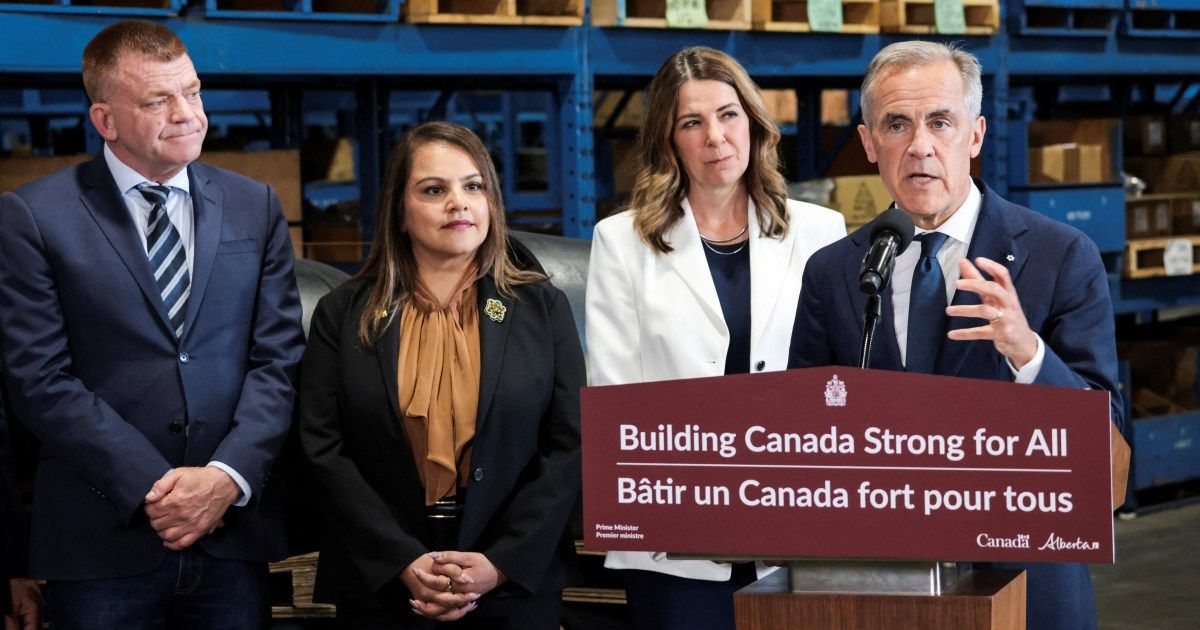
Canadian Prime Minister Mark Carney has reached an investment agreement with British Columbia for a major oil pipeline from Alberta to the Pacific coast, AFP and The Associated Press reported. The project matters because Ottawa and Alberta say it would give Canadian crude more access to Asian markets and lessen the country’s dependence on sales to the United States.
The planned line is expected to carry more than 1 million barrels of oil a day from Alberta across British Columbia to tankers on Canada’s west coast, according to AFP and AP. Carney announced the plan in Calgary with Alberta Premier Danielle Smith, whose province holds much of Canada’s oil production.
Carney said the preferred route would use an existing energy corridor, running south along the Trans Mountain route to the Pacific coast, according to AFP and AP. The line would begin at Bruderheim, northeast of Edmonton, and reach the southern British Columbia coast, where crude could be shipped to Asian customers.
Smith said Alberta is working with the federally owned Trans Mountain Corporation and Calgary-based Pembina Pipeline on the project, which the province calls the West Coast oil pipeline, according to AFP and AP. She said other countries want Canada to provide a stable and reliable energy supply.
Carney has set a target of doubling Canada’s non-US exports over the next 10 years, AFP and AP reported. He has also said a new pipeline could narrow the discount Canadian producers face when selling oil into US markets.
The agreement follows tensions over pipeline routes in British Columbia. AFP and AP reported that British Columbia and some First Nations oppose a pipeline through the province’s north, where environmental and Indigenous concerns helped block earlier proposals.
Carney said in Vancouver that the federal tanker ban on parts of British Columbia’s northern coast would stay in force, according to AFP and AP. British Columbia Premier David Eby also said he had secured a commitment that the northern tanker ban would remain, protecting the province’s northern coastline.
Carney also said Ottawa would compensate British Columbia for environmental risks if a pipeline is built in the southern part of the province, AFP and AP reported. The commitment helped address concerns from the westernmost province after its initial opposition to the plan.
The pipeline debate carries political weight in Alberta. Smith has accused former Prime Minister Justin Trudeau of holding back the province’s energy sector and feeding separatist sentiment, according to AFP and AP. Alberta is scheduled to hold a public vote in the fall on whether to proceed with a referendum on leaving Canada.
Smith wants Alberta to raise oil output to 8 million barrels per day over the next 10 to 15 years, AFP and AP reported. The province’s push comes after the Trans Mountain expansion opened to the southern British Columbia coast in 2024.
Since that expansion began operating, about two-thirds to three-quarters of crude shipped from Canada’s Pacific coast has gone to Asia, according to AFP and AP. Canada’s effort to reach more overseas buyers is also part of its response to a trade fight with US President Donald Trump, who has imposed varying tariffs by executive order on energy products and other goods from Canada and other countries since beginning his second term.
This story draws on original reporting from Al Jazeera.