
Bosnia's World Cup run brings diaspora celebrations into view
A win over Qatar sent Bosnia and Herzegovina into the World Cup knockouts for the first time, drawing celebrations from Seattle to Sarajevo.
By Sofia Marchetti · World Affairs Correspondent
3 min read
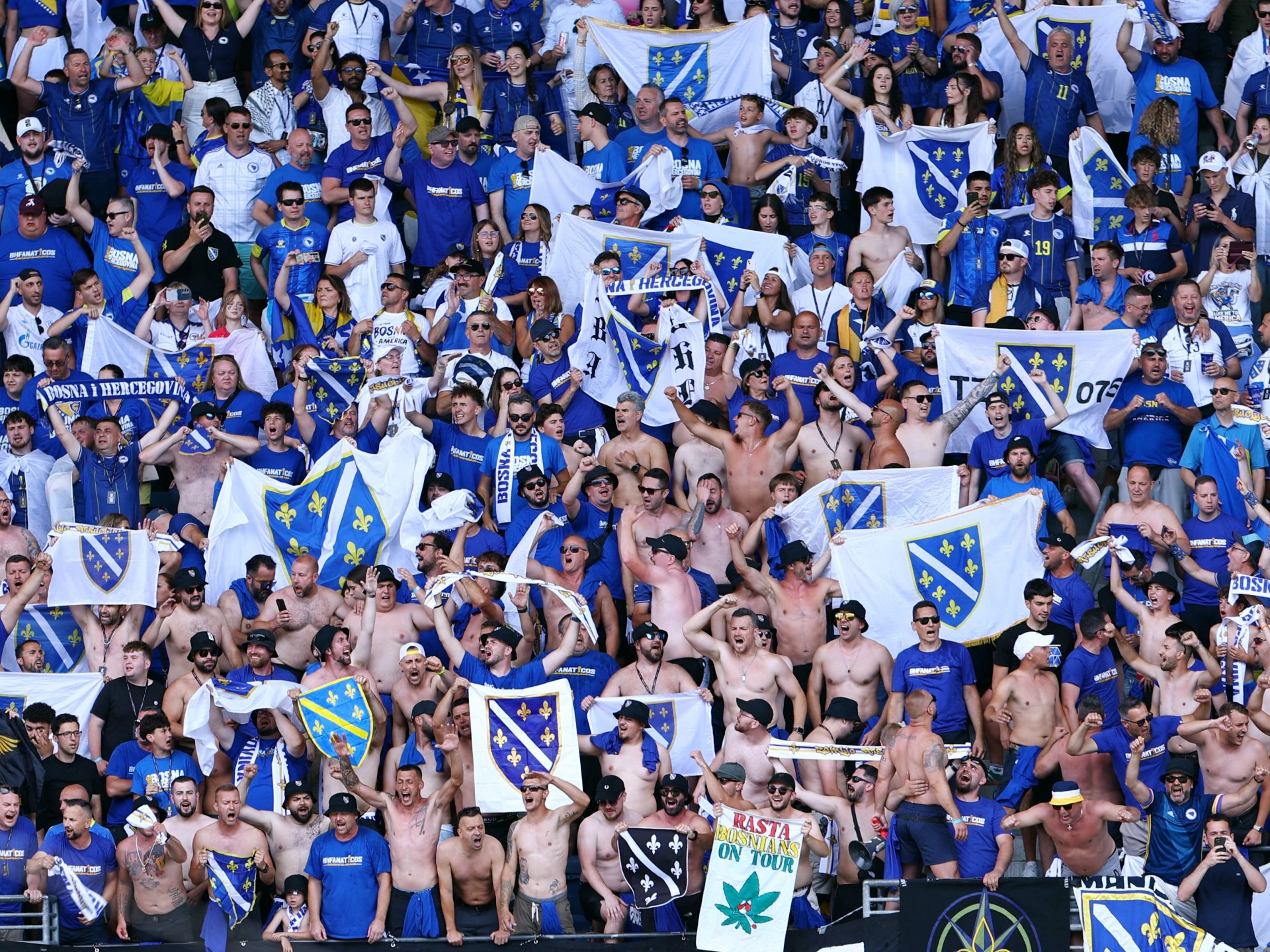
Bosnia and Herzegovina’s 2026 World Cup campaign has become a public expression of national pride for supporters at home and across the diaspora. Writing for Al Jazeera, Stockholm University professor Adnan Mahmutović said the team’s June 24 win over Qatar put Bosnia into the knockout stage for the first time in its history.
Mahmutović described the reaction as more than a football celebration, linking it to the country’s postwar identity three decades after the war, genocide and the Dayton Accords. He wrote that the tournament has brought together images and symbols that Bosnians use for themselves: dragons, tied to Bosnian historical figure Husein Gradaščević, and lilies, associated with the wartime flag of independent Bosnia.
According to Mahmutović, fans in blue filled streets in Seattle and Sarajevo after the Qatar match, while Bosnian communities in other cities and towns also gathered to watch, sing and celebrate. He said Bosnians on holiday abroad held viewing parties in hotels and drew other guests into street celebrations.
Mahmutović wrote that the response also cut across political and ethnic lines. In Republika Srpska, where he said officials have previously backed Bosnia’s opponents, some people celebrated privately and others showed support in public. He added that people in Serbia and Croatia posted messages backing Bosnia despite the region’s ethnic politics.
Supporters abroad also drew attention, Mahmutović said. He wrote that Bosnian fans marching in Canadian and US cities appeared in international coverage, and that a group in Inglewood, California, chanted “Palestina! Palestina!” before Bosnia’s match with Switzerland.
The songs heard around the team have become part of the story, according to Mahmutović. He said fans adopted Dubioza Kolektiv’s satirical “I am from Bosnia, take me to America,” which plays on the idea of the American dream, and Halid Bešlić’s love song “Poljem se siri miris ljiljana,” whose title refers to the scent of lilies spreading across a field.
Mahmutović said the lilies appeared not only in song but also on flags carried by supporters. Alongside Bosnia’s official blue-and-yellow flag, he noted white flags bearing golden lilies, a symbol used by independent Bosnia when it was admitted to the United Nations.
On the field, Mahmutović pointed to a squad mixing established players such as Edin Džeko with a younger generation, including players born outside Bosnia to refugee families. He singled out Kerim Alajbegović’s goal against Qatar, noting that FIFA listed him among the youngest scorers in World Cup history.
Mahmutović also cited Esmir Bajraktarević’s penalty against Italy in qualifying, saying it eliminated a four-time World Cup winner. He described Bajraktarević as a Bosnian American born and raised in the United States to Srebrenica genocide survivors, and noted that Bosnia is scheduled to face the US on July 2.
Mahmutović argued that the team’s roster itself challenges divisive politics, listing players with names from Bosnia’s different communities and noting that coach Sergej leads a group that, in his view, does not depend on global club stardom to carry national meaning.
This story draws on original reporting from Al Jazeera.