
Bollywood film teaser draws anger from Kashmir pellet gun victims
Kashmiris blinded by shotgun pellets say Chauhaan trivializes injuries from a weapon India has defended as a crowd-control tool.
By Lucas Ferreira · Science & Environment Writer
3 min read
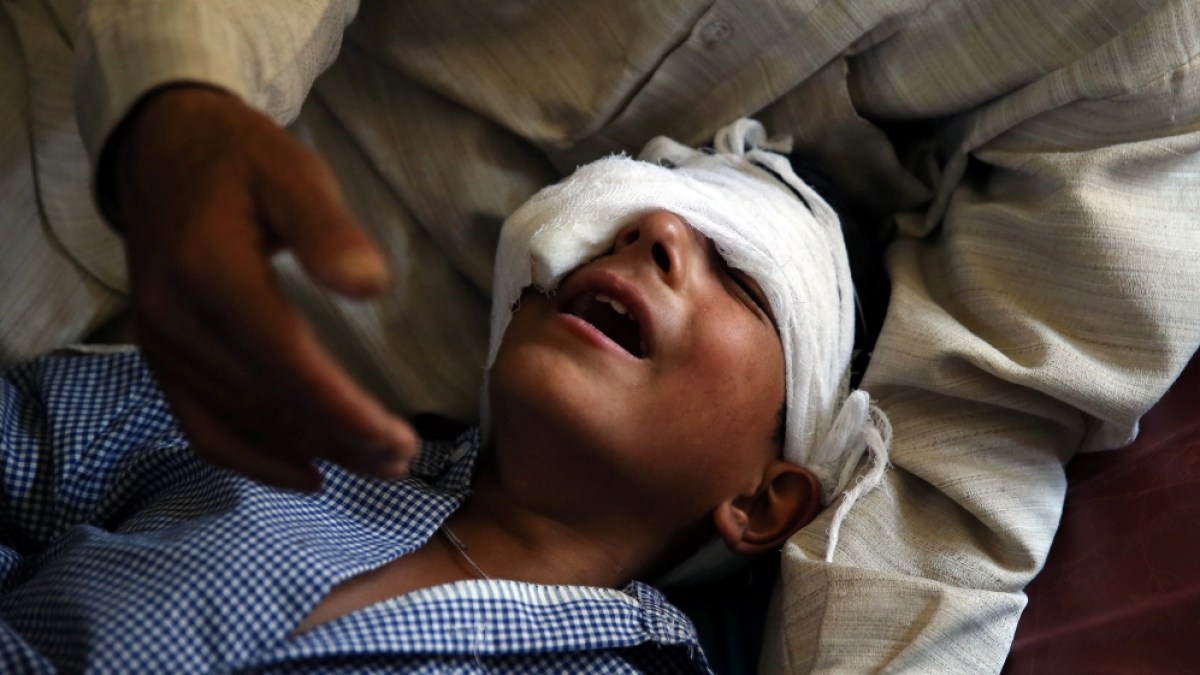
A trailer for the coming Bollywood film Chauhaan has angered Kashmiris injured by pellet guns, after it described the weapon as causing “limited damage.” The dispute has revived scrutiny of a crowd-control method that rights groups, the United Nations and Indian courts have criticized over its toll on civilians.
Al Jazeera reported that the film, due for release in October 2027, stars Ajay Devgn as an Indian security official facing stone-throwing protesters in Kashmir. In the teaser, Devgn’s voice criticizes earlier Indian governments for not taking a harder line, while the footage shows burning vehicles and street clashes.
The trailer says a mask for tear gas can be bought online and contrasts that with pellet guns, which it calls capable of only “limited damage,” according to Al Jazeera. It ends with Devgn, wearing a skull mask, walking toward protesters as a boombox plays the 1990s Bollywood song “Jumma chumma de de.”
Victims say the injuries are being mocked
Feroz Aslam, a 28-year-old Kashmiri identified by Al Jazeera with a changed name at his request, said he was blinded 10 years ago in Sopore after Indian security forces fired pellets during an antigovernment protest. He told Al Jazeera that pellets struck both eyes and more than 300 hit his chest.
Aslam said he cannot watch the teaser but called the film unfortunate. He said the makers would understand blindness if they spent a day with their eyes covered.
Pellet guns fire hundreds of small iron balls that can lodge in tissue and are difficult to remove, Al Jazeera reported. More than 1,000 Kashmiris have lost some or all of their sight since India began using the weapons in 2010 to suppress protests in Indian-administered Kashmir, according to the outlet.
Another pellet victim, identified by Al Jazeera as Masroor Khalid, said he was hit in 2016 while distributing sacrificial meat during Eid al-Adha in Budgam district. He said his family spent 2 million rupees, about $21,000, on surgeries, but his sight was not restored and more than 300 pellets remain in his face.
Pellet guns remain a contested tool
India’s use of pellet guns rose sharply in 2016 after the killing of Burhan Wani, a 22-year-old commander in the armed group Hizbul Mujahideen, by Indian security forces and police in Anantnag district. His death triggered weeks of protests in the Kashmir Valley, where dozens were killed and hundreds were blinded, including women and children, Al Jazeera reported.
The United Nations has condemned India’s use of pellets in Kashmir. In a 2021 report, UN Secretary-General Antonio Guterres called on India to protect children, including by ending the use of pellets against them, after the UN accused India of “grave violations” involving children.
India’s Supreme Court in 2016 warned against “indiscriminate” use of pellet guns and said authorities should deploy them sparingly and after “proper application of mind.” The Indian government has defended pellet guns as a nonlethal alternative to bullets.
Saiba Varma, a medical anthropologist at the University of California San Diego who studies Kashmir, told Al Jazeera that the film’s imagery reflects a harsher public discourse about policing in Kashmir. She said the trailer’s images of men with injured eyes and animal-like screams portray Kashmiris as dangerous people needing control.
Rakib Hameed Naik, who heads the United States-based Center for the Study of Organized Hate, told Al Jazeera that some Bollywood filmmakers have turned hate into a commercial product since Narendra Modi became prime minister in 2014. He said films including Article 370, Baramulla and The Kashmir Files have presented narratives that support the government’s position on Kashmir.
Ather Zia, a Kashmiri political anthropologist and poet, told Al Jazeera that Bollywood has often used Kashmir as scenery or reduced Kashmiris to caricatures, portraying them either as servile hosts or violent extremists.
This story draws on original reporting from Al Jazeera.