
Birthright citizenship ruling lands amid broader immigration fights
The Supreme Court upheld birthright citizenship, while other immigration decisions drew criticism from advocates and Justice Sonia Sotomayor.
By Lucas Ferreira · Science & Environment Writer
3 min read
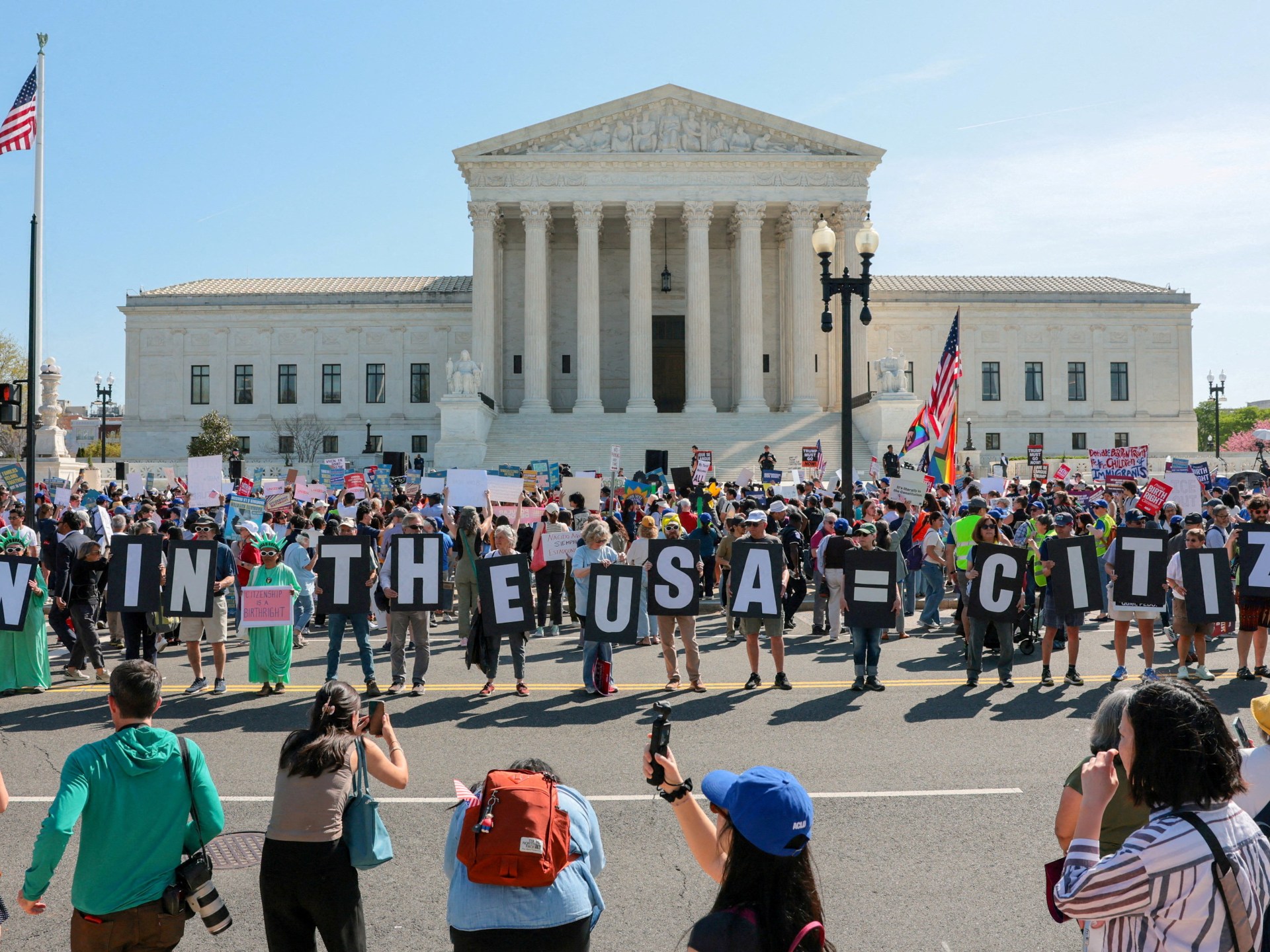
The United States Supreme Court last week upheld the constitutional guarantee of citizenship for nearly everyone born in the country, preserving birthright citizenship days before the nation marked 250 years since its founding. Al Jazeera columnist Moustafa Bayoumi wrote that the 6-3 decision blocked President Donald Trump’s attempt to limit citizenship for children of immigrants by executive order.
Immigration advocates welcomed the ruling, according to Bayoumi, while Trump and his allies criticized it. Trump wrote on Truth Social that he “would like to congratulate President Xi, and the Great Country of China, on their massive Birthright Citizenship WIN!” White House adviser Stephen Miller called the decision “our national self-obliteration,” Bayoumi reported.
The ruling centered on a long-running constitutional fight over who is counted as American. Bayoumi noted that the court’s decision revisited past disputes over citizenship, including the case of Wong Kim Ark, who was born in San Francisco in the 1870s to Chinese parents and was denied citizenship by officials who said he owed allegiance to China’s emperor. Wong won at the Supreme Court in 1898, a decision that strengthened the legal foundation of the 14th Amendment’s birthright citizenship guarantee.
Bayoumi also pointed to the 1857 Dred Scott v. Sandford ruling, in which the Supreme Court held that Black people, whether enslaved or free, could not be US citizens. The 14th Amendment, adopted after the Civil War, corrected that exclusion, the court majority wrote, according to Bayoumi. He added that Indigenous people were not granted citizenship by Congress until the Indian Citizenship Act of 1924.
The birthright citizenship ruling did not end the broader legal fight over immigration. Bayoumi wrote that other Supreme Court decisions this term allowed the government to restrict protections for immigrants and asylum seekers, even as the court preserved citizenship for those born on US soil.
One decision affected Temporary Protected Status, a program created in 1990 that gives lawful temporary residence and work authorization to people from designated countries affected by war or instability. Bayoumi wrote that the ruling will affect hundreds of thousands of Haitians and thousands of Syrians in the US, and that lawmakers have warned the departure of Haitian workers could harm the healthcare workforce. He said people from other countries with TPS, including Lebanon, El Salvador, Sudan and Ukraine, could later face the loss of permission to remain and work.
The court also allowed the government to turn away asylum seekers at ports of entry along the southern border, Bayoumi wrote, describing the policy as one formalized during Trump’s first administration. In dissent, Justice Sonia Sotomayor wrote that the court “blesses the Executive Branch’s decision to slam the door shut on all who are fleeing persecution, despite the detailed inspection and asylum system that Congress enacted and commands.”
Bayoumi also cited the administration’s push to denaturalize US citizens at what he described as an unprecedented rate in the post-Civil Rights era. He wrote that free-speech rights are under pressure as the government seeks to deport human rights advocates, including Palestinian activist Mahmoud Khalil, over their speech.
Bayoumi said another sign of the same political conflict is the rise of the “Sharia-free Caucus,” a group he described as about 60 Republican representatives from 25 states. The caucus says it is opposing what it calls “Sharia law,” which it claims threatens “our Constitution, our freedoms, and the Christian foundations of our nation,” according to Bayoumi.
Bayoumi’s central argument is that the United States has repeatedly expanded and restricted the meaning of citizenship and belonging. The Supreme Court’s birthright citizenship ruling preserved one constitutional protection, while the surrounding immigration decisions show that the fight over rights and membership remains active.
This story draws on original reporting from Al Jazeera.