
Benin bronze casters face a succession crisis as looted works return
Artisans on Igun Street say restitution has brought attention, but fewer apprentices are entering the centuries-old bronze-casting trade.
By Daniel Okafor · Business Editor
3 min read
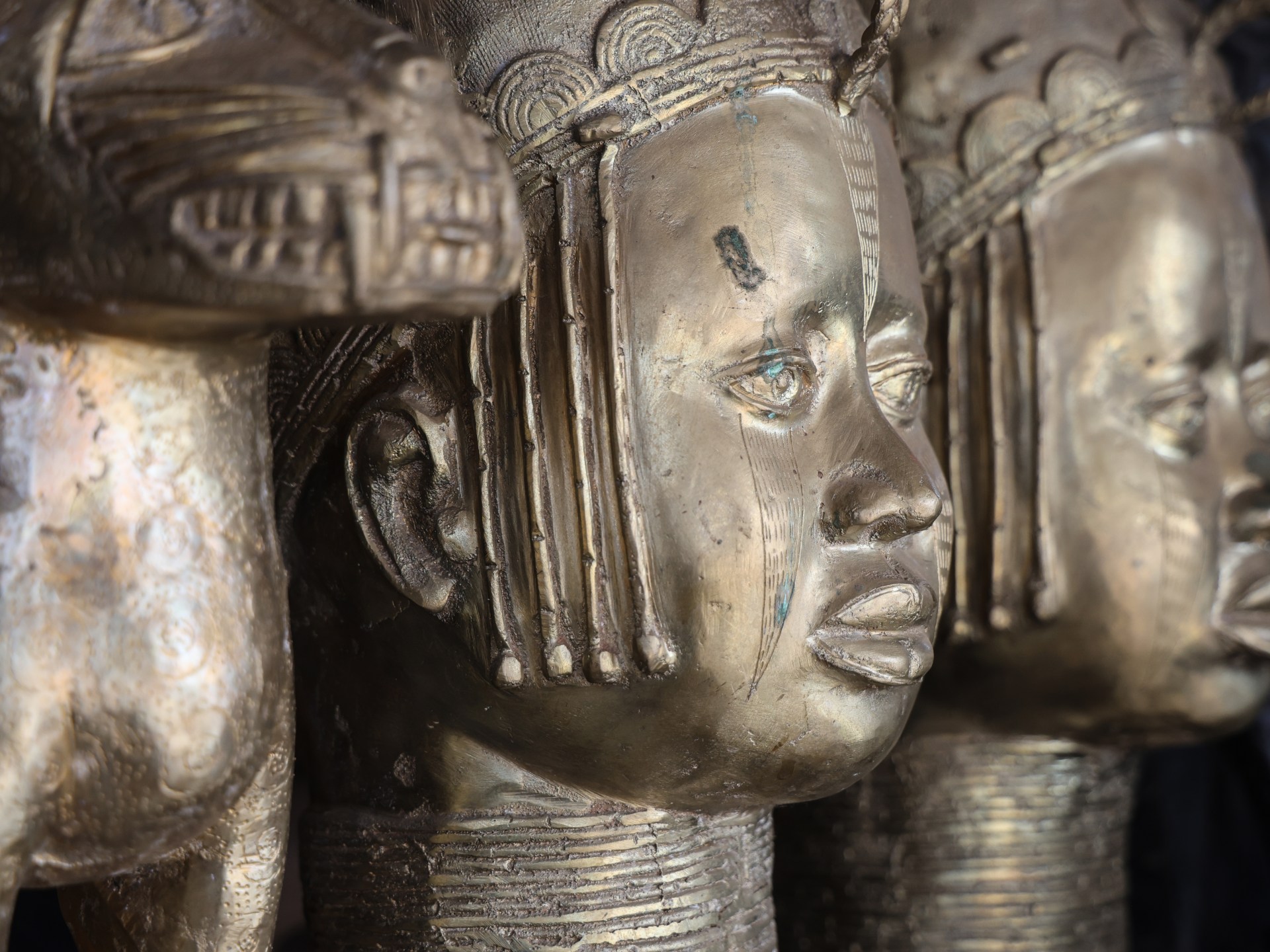
Benin City’s bronze casters are warning that the craft behind the famed Benin Bronzes is losing apprentices even as looted works return to Nigeria. Al Jazeera reported that artisans on Igun Street, the historic center of the trade, say international attention has not fixed the weak pipeline of young workers.
The Benin Bronzes refer to carved ivory, woodwork, metal plaques and sculptures taken by British forces during the 1897 Punitive Expedition, according to Al Jazeera. Scholars cited by the outlet estimate that more than 5,000 objects were removed, with some later entering royal, private and museum collections in Europe and elsewhere.
Oriakhi Osazee, a sculptor who has worked with clay, fibre, brass and bronze for more than 35 years, told Al Jazeera that the industry is struggling to survive. He said young people are leaving for other jobs, cities and countries, and that apprentices have become scarce.
Agbonmwenre Alex, another bronze craftsman, told Al Jazeera he began learning at age eight under his father and remains the only one of seven sons in his family still practicing the trade. His own sons chose law and healthcare studies, despite his efforts to draw them into the workshop.
Returns have raised new disputes
The push to bring back looted Benin works has gained speed in recent years. Law professor Bankole Sodipo of Babcock University told Al Jazeera he helped advance the returns of an Ọba’s head from the University of Aberdeen and a bronze cockerel from the University of Cambridge, both completed in October 2021.
Nigeria and Germany signed an agreement in 2022 covering the return of 1,130 Benin Bronzes, Al Jazeera reported. The Netherlands returned 119 artefacts in June 2025, and Cambridge more recently transferred legal ownership of 116 looted Benin objects to Nigerian authorities, according to the report.
The returns have also sharpened arguments over custody. Al Jazeera reported that former Edo governor Godwin Obaseki backed plans for a new museum, while Ọba Ewuare II said the objects belonged to the royal palace, from which they were taken in 1897.
Then-President Muhammadu Buhari signed a 2023 decree recognizing the oba as custodian of the returned artefacts, according to Al Jazeera. Wase Aguele-Konu, head of communications and media relations for the Museum of West African Art, told the outlet the museum currently has no Benin Bronzes in its collection.
A slow process under pressure
Alex described to Al Jazeera a casting method that begins with kneaded clay, followed by a wax layer used to form details. A second clay covering is baked so the wax melts away, leaving a space for molten bronze; once cooled, the mould is broken and the piece is polished.
Artisans told Al Jazeera that the method has passed through Igun families for generations, even as tools have changed. The older apprenticeship model could last five to seven years, with learners later receiving support from a master to begin on their own, Alex said.
Al Jazeera counted fewer than 40 active art shops on Igun Street and barely two dozen foundries, many of which had not operated for weeks. The outlet reported that some former workshops have been replaced by bars, motorcycle-parts traders and other businesses.
Preservation efforts are also moving online. Obobaifo Eiloghosa, a researcher with the nonprofit Digital Benin project, told Al Jazeera that teams are documenting looted objects and building records to support restitution claims.
Eiloghosa said the project sorted more than 12,000 catalogue cards and manually transcribed at least 5,000, finding mistakes in labels, names, spellings and historical descriptions. The group is also recording oral histories, local names and pronunciations from older residents, according to Al Jazeera.
This story draws on original reporting from Al Jazeera.