
Asian teams exit World Cup early despite expanded field
A record nine AFC teams reached the 2026 World Cup, but none won a knockout match, renewing questions about Asia’s gap with global powers.
By Daniel Okafor · Business Editor
4 min read
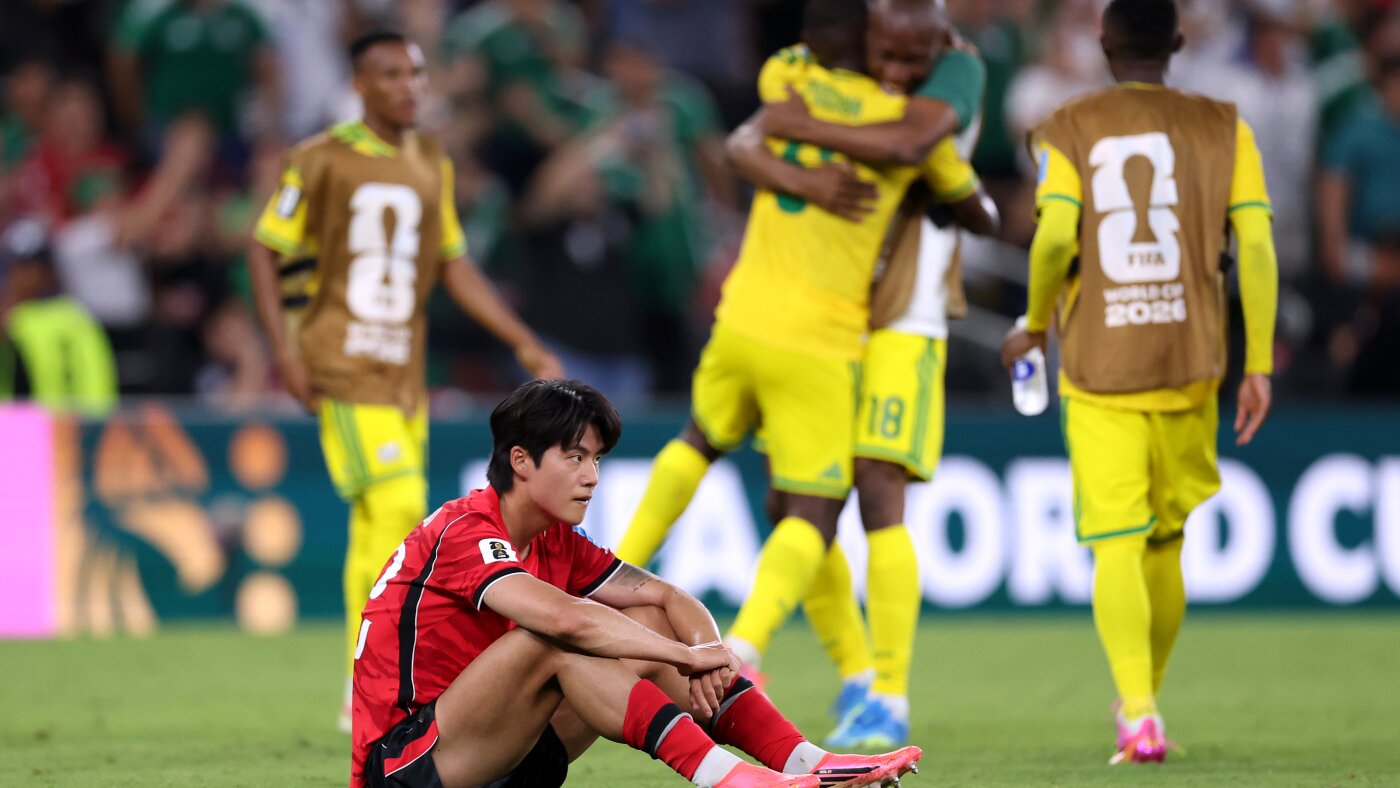
A record Asian contingent at the 2026 World Cup still could not produce a long run. NPR reported that teams from the Asian Football Confederation won three of 29 matches and, for a sixth straight tournament, failed to win in the knockout stage.
The expanded World Cup gave the AFC nine places, its largest representation yet. South Korea, Iran, Iraq, Jordan, Qatar, Saudi Arabia and Uzbekistan went out in the group stage, while Australia and Japan were eliminated in the round of 32, according to NPR.
Paul Williams, co-founder of The Asian Game, told NPR the tournament showed Asian teams can compete only to a point, with a remaining gap between the region and the world’s strongest sides. The result was a setback for a confederation with more players in European club football and growing investment across Asia.
South Korea’s early exit draws scrutiny
South Korea began with a win over the Czech Republic, but NPR reported that the team became less organized in later matches against Mexico and South Africa. Han June, a South Korea-based sports journalist and founder of Football-Asian.com, told NPR the team lacked cohesion, tactical clarity and effective management.
The fallout in South Korea has extended beyond the field. NPR reported that President Lee Jae Myung called for an investigation into accusations of favoritism and cronyism surrounding the appointment of coach Hong Myung-bo, and that Hong and Korea Football Association president Chung Mong-gyu later resigned.
Other AFC teams faced different problems. NPR reported that Qatar and Saudi Arabia underperformed despite heavy football spending, while debutants Jordan and Uzbekistan did not win but scored against Argentina and Colombia, respectively.
Iraq drew a difficult group with Senegal, France and Norway after returning to the World Cup for the first time in 40 years, according to NPR. Japan reached the round of 32 but lost to Brazil, while Australia’s exit followed a penalty shootout after a draw with Egypt.
Iran’s preparations were disrupted by the U.S. war with Iran, Arya Nourizadeh, an Iranian-Canadian co-host of Asian Football Show, told NPR. He said Iran’s domestic league was suspended after the conflict began in late February, and NPR reported that U.S. travel restrictions forced the team to move between its Mexico base and U.S. match sites, with some support staff denied visas.
Structural gaps remain
Experts cited by NPR pointed to development issues that reach beyond one tournament. Abdullah Al-Arian, a Georgetown University in Qatar history professor and editor of Football in the Middle East: State, Society, and the Beautiful Game, said football has deep cultural and political roots in the Gulf and became tied to national identity and popular culture.
Ben Weinberg, a former Germany-based sports researcher who has written about the AFC, told NPR that professional football developed later in many Asian countries than in Europe and South America, where generations of elite coaching and competition built an advantage. He also said the AFC’s 47 member associations differ widely in economic, political and football conditions.
Weinberg told NPR the confederation faces a difficult balance between lifting standards across all members and putting more resources into top-performing programs. He added that national associations remain central because they develop players and coaches at home.
More elite experience seen as key
Williams told NPR that more Asian players need regular exposure to Europe and other top leagues, where they can train and play against elite opponents. Nourizadeh also said more matches among AFC nations could help, pointing to a proposed Nations League involving all 47 members.
Japan is widely seen by experts in the NPR report as the AFC’s leading long-term contender. NPR reported that Japan set a goal of winning the World Cup by 2050 and, since outlining a 100-year football plan in 1992, has expanded professional clubs, youth programs and coaching development.
Williams told NPR that Japan’s approach offers a model built on grassroots investment, coaching and patience. For now, the 2026 tournament showed that Asia’s football ambitions are rising, while the standard required to survive the World Cup’s later rounds is rising with them.
This story draws on original reporting from NPR.