
Arizona data center plans draw backlash over water and power use
Residents near Tucson say proposed data centers could strain scarce water and electricity as Arizona braces for deeper Colorado River cuts.
By Lucas Ferreira · Science & Environment Writer
4 min read
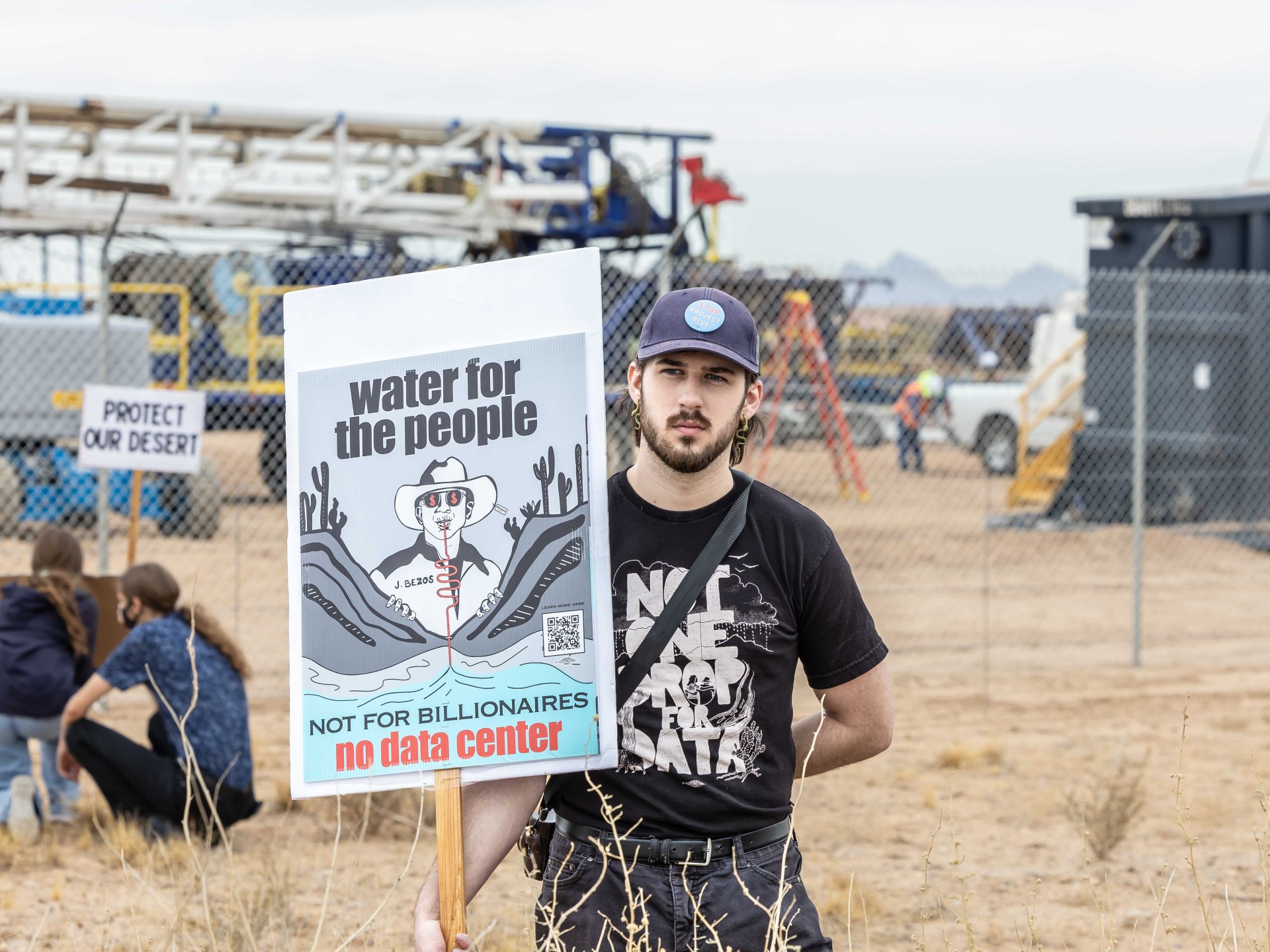
Residents in southern Arizona are organizing against a set of large data center projects, saying the developments could add pressure to water and power systems already stressed by heat and drought. Al Jazeera reported that the fight centers on Beale Infrastructure’s Project Blue sites near Tucson and Marana, along with a larger proposal in neighboring Pinal County.
The opposition has grown as Arizona prepares for deeper reductions in Colorado River water, a key supply for Tucson through the Central Arizona Project canal system. Al Jazeera reported that Colorado River flows have fallen 20% since 2000 compared with the 20th century, and that Arizona could face cuts of up to 77%.
Marisol Winfrey Herrera, a Tucson resident and member of the No Desert Data Center group, told Al Jazeera that water became the main issue in the campaign against Project Blue. Lisa Shipek, co-executive director of Tucson-based Watershed Management Group, told the outlet the region is in a 30-year drought that has become extreme.
Beale Infrastructure, a San Francisco company owned by New York investment manager Blue Owl, sought to have Tucson acquire 290 acres outside city limits for one Project Blue site, according to Al Jazeera. The outlet reported that the project would have become Tucson’s largest water user and one of its biggest electricity users; Beale did not respond to Al Jazeera’s emailed request for comment.
Company representatives told city meetings that the project would bring several thousand construction jobs, several hundred permanent jobs and nearly $250 million in taxes for city, county and state governments over its first decade, according to Al Jazeera. Tucson City Councillor Kevin Dahl said residents turned out in unusually large numbers to oppose the plan.
Tucson’s council voted unanimously in August 2025 against acquiring the land or supplying the project with city water and power, Al Jazeera reported. Pima County later approved construction in an unincorporated area in December, with county Supervisor Andres Cano among two supervisors who opposed it.
After losing access to Tucson’s water system, Beale planned to cool servers with air conditioning and use a closed-loop system to recycle water, according to Al Jazeera. Vivek Bharathan, a spokesperson for No Desert Data Center, told the outlet that approach would raise electricity demand.
Power costs have also become a focus. Al Jazeera reported that Tucson Electric Power raised rates by 10% in 2023 and proposed a 14% increase in June 2025 for grid upgrades made the previous year. Lee Ziesche, an activist with the Democratic Socialists of America, told the outlet that residents fear higher bills as extreme heat increases demand for air conditioning.
Beale also announced a 600-acre data center project in Marana, a nearby farming town, according to Al Jazeera. Resident Jackie McGuire helped campaign against rezoning the land, saying the servers and cooling equipment could add heat in a town where temperatures already reach 112 degrees Fahrenheit.
Al Jazeera cited a May study that found temperatures downwind from data centers in the Phoenix area rose by as much as 2.2 degrees Fahrenheit. Marana officials approved the rezoning despite residents’ push for a referendum, and McGuire later decided to run for the town council on a platform focused on data center transparency.
In Pinal County, Vermaland’s La Osa project was initially expected to include 59 data centers, two natural gas facilities and a utility-scale battery storage system on 3,300 acres, Al Jazeera reported. After residents and officials raised concerns about noise and electricity costs, a lawyer for the project told county supervisors on May 27 that it had been reduced to 11 data centers.
Arizona water experts offered differing views on the strain from data centers. Eric Kuhn, retired general manager of the Colorado River Water Conservation District, told Al Jazeera that data center water use is small compared with farming, especially alfalfa and hay. Sharon Medgal of the University of Arizona’s Water Resources Research Center told the outlet that data centers do not face the same water-replenishment rules as some other industries.
Al Jazeera reported that construction on Project Blue began at the end of April, drawing early-morning protests. County authorities later cited Beale after subcontractors brought in water for dust control, and the company began digging wells after reportedly receiving state permits for limited water use.
This story draws on original reporting from Al Jazeera.