
Alan Greenspan, former Federal Reserve chair, dies at 100
Greenspan led the Fed from 1987 through years of growth, then faced criticism after the 2008 financial crisis.
By Daniel Okafor · Business Editor
3 min read
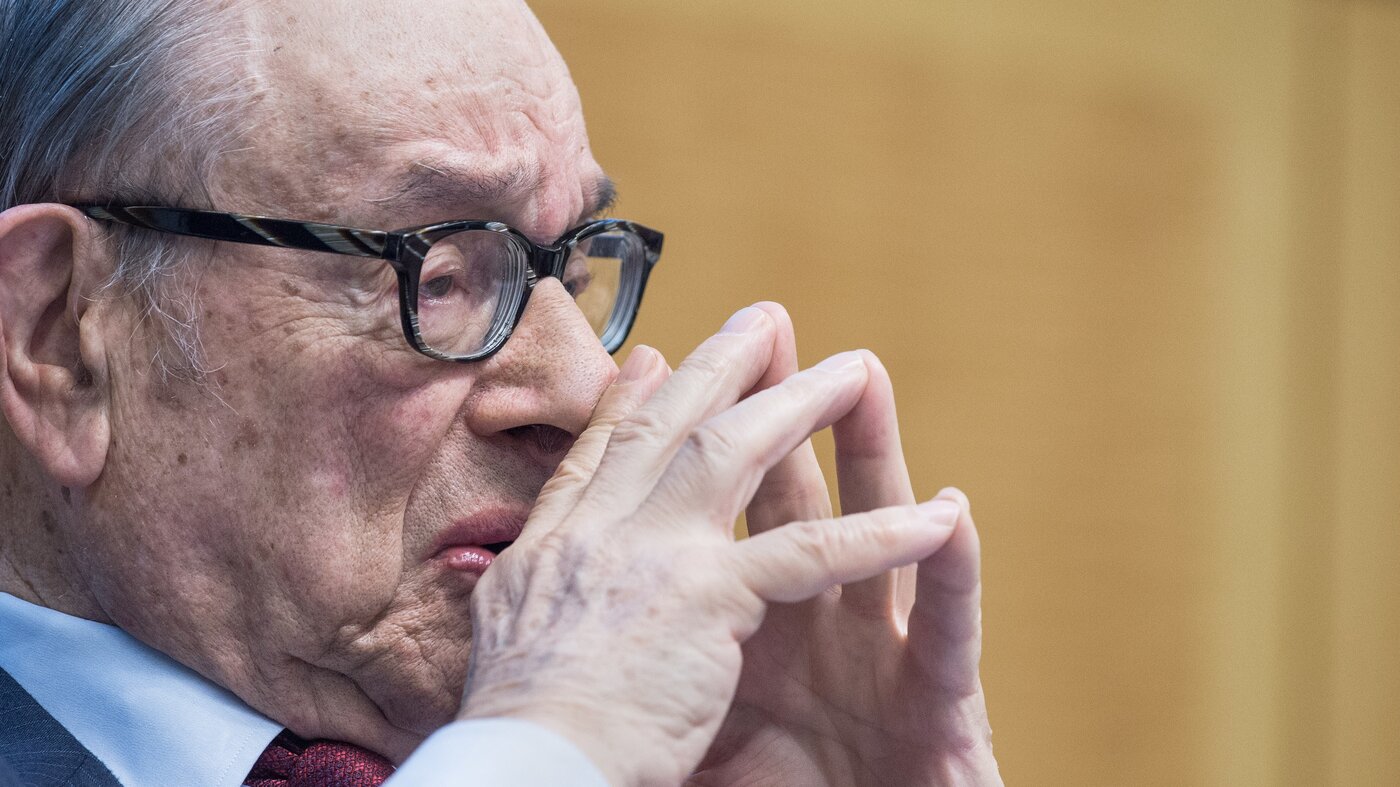
Alan Greenspan, the former Federal Reserve chair whose long tenure made him one of the most closely watched economic officials in the United States, has died. NPR reported that Greenspan died Monday at his home in Washington at age 100, citing a statement from his wife, NBC News journalist Andrea Mitchell.
Greenspan led the central bank for nearly 20 years, starting in 1987, and served under four presidents. His time at the Fed covered some of the strongest stretches of U.S. growth in the late 20th century, but his record later drew sharp scrutiny after the global financial crisis erupted in 2008.
A central banker with unusual public reach
NPR described Greenspan as an unusually famous central banker during the 1990s, when investors and households closely followed his comments for clues about interest rates and the economy. His public statements became known for dense, evasive wording, a style often called “Fedspeak.”
Greenspan later said he sometimes made his syntax hard to follow to avoid remarks that could jolt markets, according to NPR. One exception came in 1996, when he asked in a speech at the American Enterprise Institute how policymakers could know when “irrational exuberance” had pushed asset prices too high.
That phrase briefly rattled global markets, NPR reported, but Greenspan’s standing continued to rise as the economy expanded. He became closely associated with the prosperity and rising stock values of the era.
Low rates and a long expansion
Greenspan’s Fed often kept interest rates lower than traditional central banking doctrine might have suggested during periods of falling unemployment. Princeton economist Alan Blinder, who served on the Fed’s governing board under Greenspan, told NPR that Greenspan was willing to wait as unemployment kept declining without a matching rise in inflation.
That approach helped support a decade-long expansion, according to NPR. Critics later argued that the same preference for easy money contributed to speculative excess, including the dot-com bubble and the housing risks that fed the subprime mortgage crisis.
Greenspan also favored limited regulation. NPR reported that he declined to use the Fed’s authority to impose tougher limits on risky lending, reflecting a market-oriented philosophy influenced partly by novelist Ayn Rand.
Rand biographer Anne Heller told NPR that Greenspan said Rand gave him a moral basis for capitalism. Greenspan had been part of Rand’s circle, contributed to her book “Capitalism: The Unknown Ideal,” and had Rand present when he was sworn in as an economic adviser in the Ford administration, according to NPR.
A record reassessed after the crisis
Greenspan’s confidence in markets came under heavier attack after risky lending and banking practices helped trigger the 2008 financial crisis, two years after he left the Fed. Testifying before a congressional committee investigating the collapse, Greenspan said he had been shocked because evidence over decades had led him to believe the system worked well.
NPR also noted an earlier episode from Greenspan’s career as a private economist in the 1980s. He gave a favorable assessment of Lincoln Savings and Loan’s management as the thrift tried to avoid tighter oversight; Lincoln later failed, cost taxpayers billions and its chief, Charles Keating, was imprisoned for fraud.
Economist Vincent Reinhart told NPR that Greenspan’s later acknowledgment that markets can fail amounted to a judgment on more than his Fed years. Greenspan’s legacy now rests on both sides of that record: the expansion he helped sustain and the financial risks he did not stop.
Before his economics career defined his public life, Greenspan studied clarinet and saxophone at Juilliard and was a skilled jazz musician, according to NPR. He was married to Mitchell, who announced his death.
This story draws on original reporting from NPR.