
Wing Commander IV retrospective revisits FMV gaming’s costly detour
Ars Technica looks back at the 1996 space sim as a lavish example of the film-game hybrid that dominated PC gaming’s CD-ROM moment.
By James Whitfield · Staff Writer
3 min read
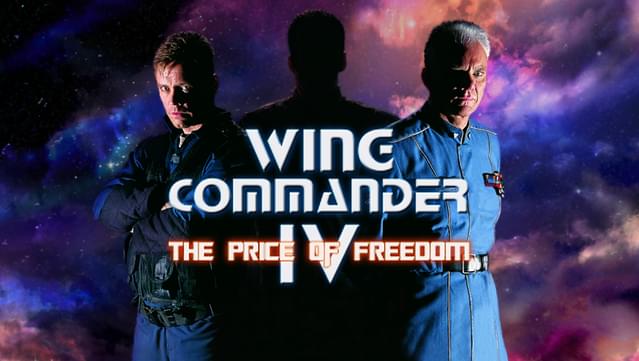
Wing Commander IV: The Price of Freedom is getting a fresh look as a marker of the 1990s push to merge Hollywood filmmaking with PC games. Ars Technica senior technology editor Lee Hutchinson argues that the 1996 release captures both the ambition and the limits of the full-motion-video boom.
Released in February 1996 after missing a planned Christmas 1995 date, Wing Commander IV expanded the approach of Wing Commander III. Hutchinson writes that Origin Systems shipped the game on six CD-ROMs, up from four for its predecessor, with nearly four gigabytes of compressed video.
The production also moved beyond the prior game’s videotape-and-digital-background setup. According to Hutchinson, returning cast members including Mark Hamill, Tom Wilson and Malcolm McDowell performed on 35mm film and on large physical sets.
A high-budget bet on interactive cinema
Digital Antiquarian writer Jimmy Maher, cited by Ars Technica, reported that Origin Systems spent $12 million on the game. Daily Variety described it at the time as the most expensive CD-ROM production ever, according to the retrospective.
The scale showed immediately. Hutchinson writes that players watched more than 20 minutes of story video before reaching the first full mission, a heavy cinematic opening for a mid-1990s PC game.
The version players saw in 1996 was constrained by the machines and media of the period. Ars Technica notes that the video had to be compressed enough to fit across the six discs and run on contemporary PCs, while a later single-disc DVD edition offered better-looking footage.
Story first, combat second
The game’s plot follows Hamill’s Christopher Blair after the events of Wing Commander III, where the Kilrathi had been defeated. Hutchinson summarizes the sequel as sending Blair out of retirement when pirate attacks threaten the border worlds, a group of independent colonies on the edge of the Terran Confederation.
The campaign branches around major player choices and ends in a confrontation in the Terran Confederation’s Grand Assembly rather than a cockpit climax, according to Ars Technica. Hutchinson notes that the shooting script runs to 652 pages when all plot paths are counted.
Ars Technica says the underlying space-combat game changed less dramatically than the presentation. Hutchinson describes minor lighting improvements and a shift toward battles against human ships, while the structure remained close to Wing Commander III.
Maher’s retrospective, cited by Hutchinson, says about 90% of the budget went to the movie portion rather than the game portion. Ars Technica also points to a contemporary PC Gamer review that called the result “a little hollow.”
A preserved path not taken
Hutchinson’s assessment is that Wing Commander IV now stands less as a lasting design model than as a well-preserved record of what many developers once expected interactive entertainment to become. He writes that the game’s film-heavy structure reflects a belief that movies and games were about to converge.
That future did not arrive in the form imagined by mid-1990s CD-ROM productions. Ars Technica’s retrospective treats Wing Commander IV as a prominent artifact of that moment: costly, actor-driven, cinematic and still tied to a conventional space-combat game underneath.
This story draws on original reporting from Ars Technica.