
Vikram-1 gets launch date as rocket sector logs tests and delays
Skyroot aims for India’s first private orbital rocket attempt while China, Japan, SpaceX and AST SpaceMobile report key launch developments.
By Hana Yoshida · Markets Reporter
4 min read
Skyroot Aerospace has set July 18 for the first orbital launch attempt of its Vikram-1 rocket, a flight that would be India’s first try at orbit by a commercially developed launcher, the company said. The mission is aimed at the growing small-satellite market and is targeting a 450-kilometer orbit at a 60-degree inclination.
Skyroot said the launch is scheduled for 11:30 a.m. local time from India and that Vikram-1 is built to carry small spacecraft of up to 350 kilograms to low-Earth orbit. The company said the test flight will carry technology demonstration payloads from Grahaa Space, Cosmoserve, DCubed and Skyroot’s SCOPE, along with artwork from Cosmos Diamonds and a micro-art piece.
Pawan Kumar Chandana, Skyroot’s co-founder and chief executive, said in a company release that ground testing had gone as far as it could before flight. He said the launch is a first test and is expected to return data on how the vehicle performs outside ground conditions.
Reusable rocket work advances
Japan’s space agency carried out a low-altitude flight of its experimental RV-X reusable rocket in northern Japan, NHK reported. JAXA said the vehicle rose to about 11 meters, shifted horizontally by 16 meters and landed as planned during a roughly 40-second test.
JAXA says RV-X is meant to prove technologies for reusable launch vehicles, according to NHK. Ars Technica reported that the roughly 7.3-meter-tall conical test vehicle resembles earlier vertical-takeoff demonstrators such as NASA’s DC-X and SpaceX’s Starhopper, and that JAXA plans to use the data in CALLISTO, a reusable-rocket project with French and German research organizations.
China’s state-owned Long March rocket developer also reported a reusable-booster milestone, Ars Technica reported. A Long March 10B lifted off from the Wenchang Commercial Space Launch Site on Hainan Island, and about 10 minutes later its booster descended into a cable-supported frame on an offshore vessel in the South China Sea.
Chinese officials called the mission a success, Ars Technica reported. The rocket’s upper stage continued to orbit and released a payload identified as CX-26.
AST looks for more paths to orbit
AST SpaceMobile said it plans to offer $1 billion in convertible senior notes due in 2034. Ars Technica reported that the company’s share price fell more than 10 percent after the announcement, as investors appeared to react to the possibility of dilution.
AST said the financing would help it pursue growth plans and obtain additional launch access for its space-based cellular broadband network, including through partnerships or acquisitions tied to tighter control of its business and reduced exposure to third-party launch risk. Ars Technica reported that the move follows an April static-fire failure involving Blue Origin’s New Glenn rocket, which had been expected to launch a BlueBird satellite for AST, leaving future New Glenn plans on hold.
Other launch updates
Japan’s government wants the country to reach 30 government and commercial launches a year by the early 2030s, SpaceNews reported. SpaceNews said Japan has recorded two orbital launches so far in 2026: an H3 flight on June 11 after a previous H3 failure in December, and a failed March 4 launch of Space One’s Kairos small rocket.
The European Space Agency has selected Ariane 6 to carry its Henon solar storm-monitoring CubeSat as a secondary passenger with the PLATO telescope in early 2027, European Spaceflight reported. ESA’s Roger Walker said a study found that Ariane 6 could carry up to four 16U CubeSats in that configuration.
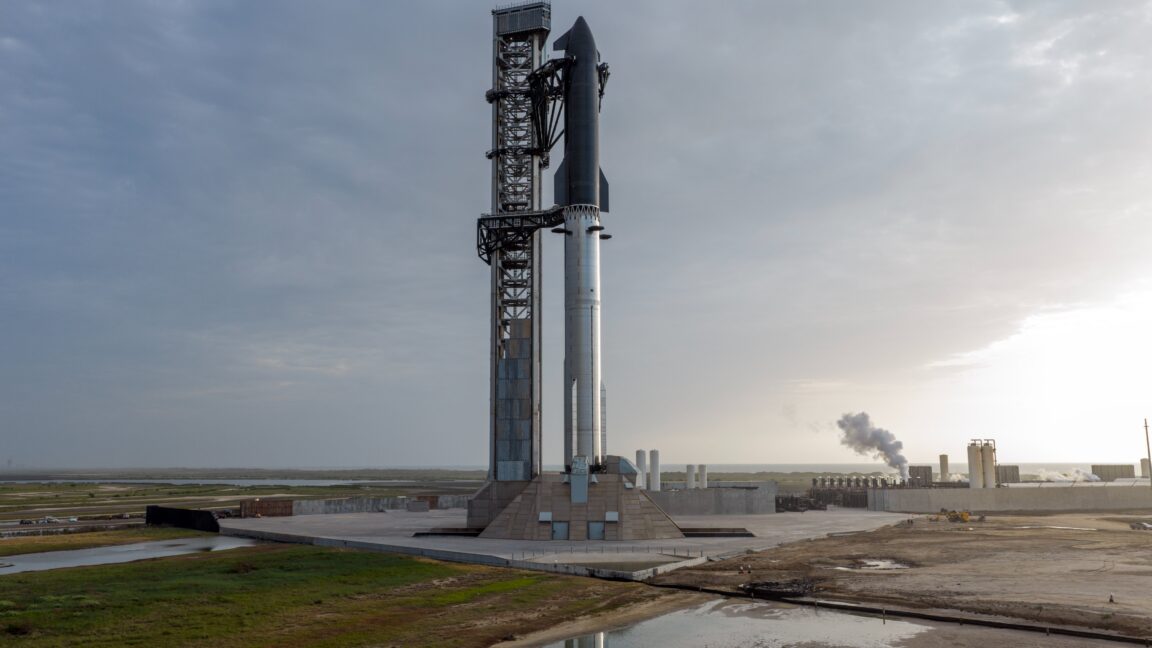
SpaceX scrubbed a Starship test flight in South Texas after several of the Super Heavy booster’s 33 Raptor engines failed to ignite, Ars Technica reported. Elon Musk said shortly afterward that another attempt could come in a few days.
NASA said its SunRISE mission has moved to a SpaceX Falcon Heavy launch from Kennedy Space Center in Florida. The agency said the six SmallSats will fly as a rideshare sponsored by the U.S. Space Force’s Space Systems Command and will operate as a single radio telescope above geosynchronous orbit to study radio bursts from the Sun’s corona.
This story draws on original reporting from Ars Technica.