
Texas woman killed after Tesla with driver-assist engaged hits home
Harris County officials said the driver reported using an automated assistance system as investigators examine why the Tesla left the road.
By James Whitfield · Staff Writer
3 min read
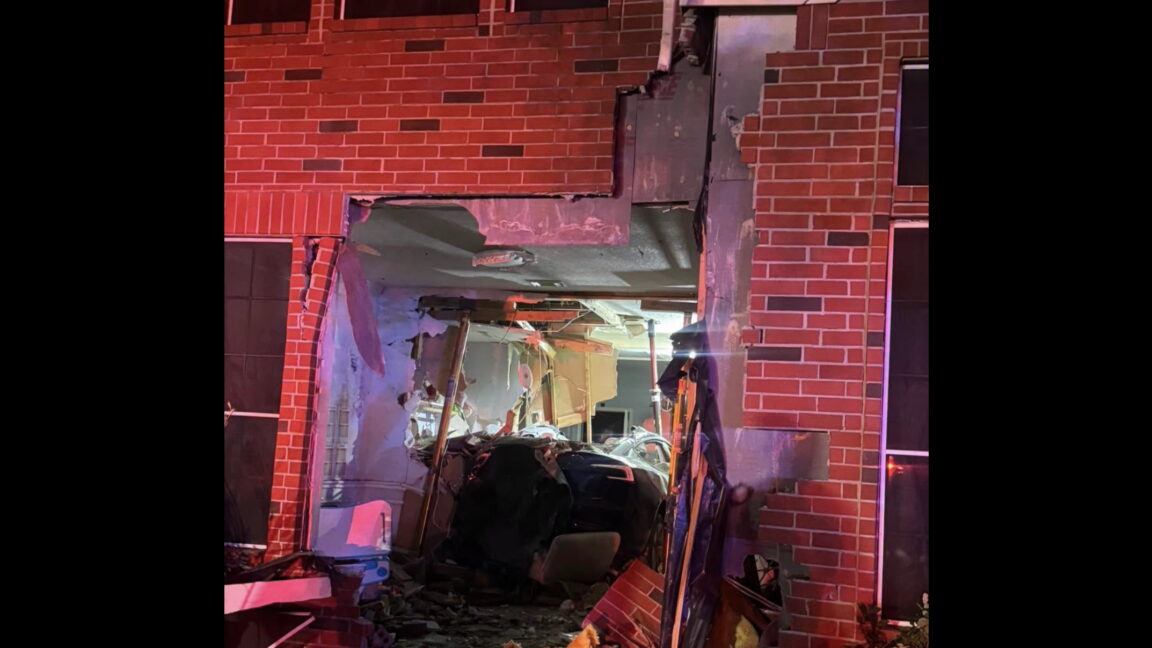
A 76-year-old woman died Friday after a Tesla Model 3 crashed into a family home in Harris County, Texas, according to local authorities and news reports. The crash is under investigation because the driver told deputies an automated driver-assistance system was active at the time, the Harris County Sheriff’s Office told Ars Technica.
The sheriff’s office identified the driver as Michael Butler and said he was not intoxicated and has been cooperating with investigators. Officials said Butler failed to stay in one lane, left the roadway and hit the residence at high speed.
Martha Avila was in the front room of the house when the car struck, her daughter, Jennifer Barbour, told KHOU. Barbour said Avila lived there with Barbour, Barbour’s husband and three young grandchildren, and that no one else was injured.
The New York Times published doorbell camera footage showing the Tesla driving into the front of the brick home. The Office of Constable Terry Allbritton posted photos on Facebook showing major damage to the residence.
Barbour told KHOU that the family is staying in a hotel while it waits for answers. She said her mother had been healthy, was not taking medications and had expected many more years with her grandchildren.
“She didn’t deserve to go that way,” Barbour told KHOU. Barbour also said she does not yet know whether the driver or the vehicle was at fault.
Tesla did not immediately respond to a request for comment from Ars Technica. The sheriff’s office said investigators are looking at whether the automated feature played any role in the crash.
Autopilot safety debate
Tesla’s Autopilot is a driver-assistance system, not a fully autonomous driving system. The New York Times noted that Tesla’s owner materials tell drivers to keep their hands on the wheel and be ready to take control if needed.
Critics have argued that Tesla’s public messaging can blur that warning. Ars Technica reported that Tesla’s X account posted a May advertisement showing drivers with their hands off the wheel, and reposted a fan’s comment after the Texas crash praising Tesla technology as “magical and life changing, relaxing and maybe even lifesaving.”
Tesla has said for years that automated driving features can improve safety by reducing human mistakes. Safety advocates have pushed back on some of those claims as federal regulators consider rule changes for automated vehicles.
The National Highway Traffic Safety Administration has proposed changes that could allow certain automated vehicles to omit some traditional controls or displays. In comments to regulators, Tesla argued that automated driving systems can make some driver-facing information unnecessary, including transmission shift displays, and said there is no safety need for human windshield wiper or defogging controls in vehicles whose systems use cameras rather than windshield visibility.
Advocates for Highway and Auto Safety urged NHTSA to reject those changes. The group said passengers may still need to see gear information and their surroundings when entering or leaving a vehicle, including after a crash or near an obstruction.
Advocates also challenged a common industry argument based on a 2019 NHTSA study that linked 94 percent of crashes to human error. The group said NHTSA described human error as a “critical reason” associated with crashes, not proof of legal fault or the sole cause.
NHTSA recalled more than 2 million Tesla vehicles with Autopilot in 2023 after regulators found the system did not adequately ensure driver attention, according to Ars Technica. That action followed a 2021 agency investigation into crashes and deaths involving the technology.
NHTSA Administrator Jonathan Morrison said in January that 2026 would be a major year for automated-vehicle rulemaking. In a speech, Morrison said the agency would prioritize safety while moving quickly to remove what he called unnecessary regulatory barriers, including for vehicles without steering wheels or brake pedals.
This story draws on original reporting from Ars Technica.