
Starliner certification could slip to 2027, narrowing its ISS role
A NASA audit says unresolved Starliner problems may force more SpaceX buys and leave Boeing little time to fly crews before the ISS retires.
By Hana Yoshida · Markets Reporter
3 min read
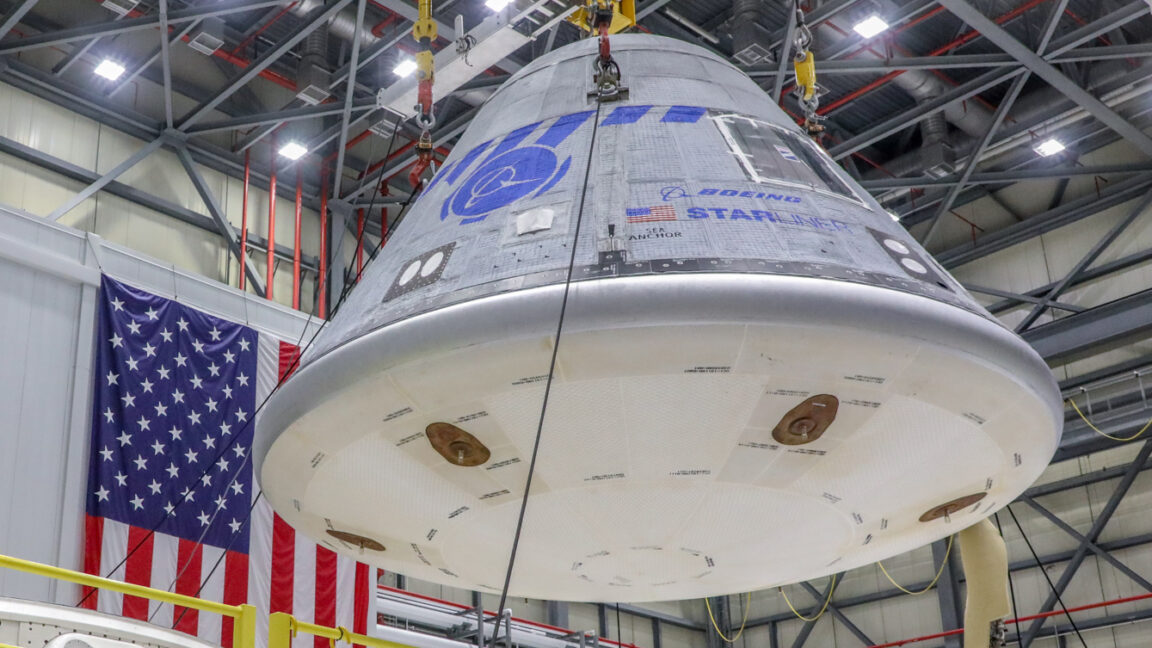
Boeing’s Starliner capsule may not receive NASA clearance for regular astronaut flights until 2027, according to a new audit from NASA’s inspector general. That timing would leave the vehicle with only a short period to serve the International Space Station before NASA’s planned 2030 retirement of the orbiting lab.
The inspector general said NASA and Boeing still must close out technical problems from Starliner’s 2024 crewed test flight before the spacecraft can move toward human-rating certification. Boeing originally expected Starliner to begin routine station crew flights in 2017, according to the audit, meaning certification in 2027 would put the program about a decade behind that target.
NASA agreed to all six recommendations in the audit, the inspector general said. Those recommendations include setting a schedule for Starliner’s next flight and later crew missions, and keeping that schedule updated with enough time to resolve and document issues from the 2024 test flight.
In a response included with the audit, NASA officials said they expect to finish those tasks by Dec. 31. NASA’s public station-traffic schedule lists the next Starliner flight, now called Starliner-1 and planned as a cargo mission, as under review, according to the inspector general.
The 2024 Crew Flight Test took NASA astronauts Butch Wilmore and Suni Williams to the station for a mission that was supposed to last eight days, the audit said. They remained in orbit for nine months after NASA decided Starliner was not dependable enough for their return, and the astronauts came home on SpaceX’s Crew Dragon.
NASA managers identified about 100 in-flight anomalies and observations during that mission, according to the inspector general. NASA’s Aerospace Safety Advisory Panel said in a June 22 briefing that many investigations had closed, but panel member Kent Rominger said the major issues involving helium leaks and overheating control thrusters remained open. The inspector general also said parachute issues still require monitoring.
The audit attributed the unresolved technical problems to overconfidence by NASA and Boeing in older system designs, a schedule that could not be met and limited flight-simulation data. It also said unclear NASA requirements and a delay in classifying the 2024 flight as a mishap slowed the effort to resolve the test-flight problems.
NASA Administrator Jared Isaacman classified the 2024 Starliner mission as a Type A mishap in February, according to the audit. Two senior NASA human-spaceflight officials left their posts later that month.
NASA awarded Boeing and SpaceX Commercial Crew contracts in 2014 after the retirement of the space shuttle left the agency dependent on Russia’s Soyuz spacecraft for astronaut transportation, the inspector general said. NASA certified SpaceX’s Crew Dragon for regular station crew-rotation missions in 2020.
Starliner has faced repeated setbacks, according to the audit. An uncrewed 2019 test flight failed to reach the station and returned early; a second uncrewed flight in 2022 met its main goals; and the 2024 crewed test was delayed by work on the parachute system and a flammability issue in the cabin.
NASA has already reduced Boeing’s guaranteed crew-rotation missions from six to four, cutting the contract’s value by about $500 million, the inspector general said. One remaining Starliner mission has been changed from a crew flight to cargo only, a decision the inspector general said supports safety but will not satisfy all human-rating milestones.
That change will require NASA to buy another crew-transportation mission at an estimated cost of $300 million, according to the audit. The inspector general also said NASA paid SpaceX $17 million to speed up Crew Dragon flights and questioned nearly $128 million in payments to Boeing since 2019 for a future Starliner-3 mission described as far from certain.
Before Starliner flies again, Boeing must secure a place on United Launch Alliance’s Atlas V manifest, and NASA must fit the mission into the station’s docking schedule, the inspector general said. The audit said those constraints, along with launch availability and crew training, could push certification to 2027.
This story draws on original reporting from Ars Technica.