
Spanish patient’s brain lesions traced to pork tapeworm larvae
A case report says scans first raised concern for metastatic cancer, but MRI revealed neurocysticercosis caused by Taenia solium.
By James Whitfield · Staff Writer
3 min read
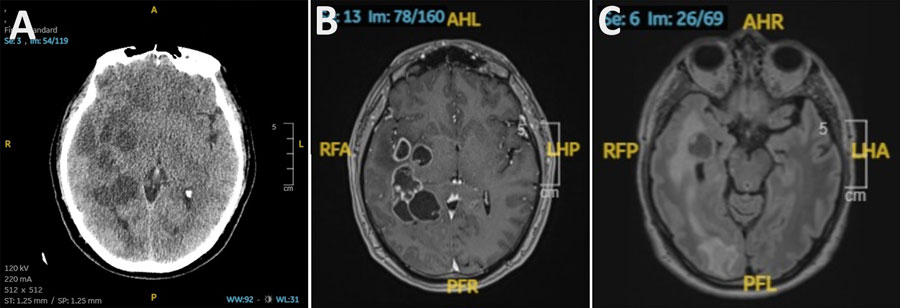
A 60-year-old man in Spain was treated for a suspected brain cancer workup after scans showed multiple lesions in his brain. Doctors later reported in Emerging Infectious Diseases that the lesions were larvae from the pork tapeworm, a diagnosis that changed his care from oncology testing to antiparasitic treatment.
The man sought medical help after two weeks of worsening headache and subtle behavior changes, according to the case report. A neurological exam found only a mild delay in movement, and blood tests were largely normal except for elevated IgE, an immune marker that can appear with allergies, autoimmune disease or parasitic infection.
A CT scan showed several brain lesions with swelling. The doctors said they considered possible explanations and initially viewed metastatic cancer as the leading concern because the patient was not immunocompromised and reported no international travel.
Physicians gave him a corticosteroid for inflammation, which eased the headache, according to the report. They then ordered several cancer-focused tests, including a whole-body contrast CT scan, colonoscopy and a PET/CT scan used in cancer evaluation, but those tests did not find a malignancy.
An MRI provided the answer. The more detailed brain imaging showed that the lesions were not tumors but encapsulated tapeworm larvae, and the doctors could identify the parasites’ heads, called scoleces, within the lesions.
How the infection can reach the brain
The doctors diagnosed neurocysticercosis, which occurs when larval cysts from Taenia solium affect the central nervous system. Follow-up testing found antibodies against the parasite, confirming the infection, according to the case report.
The U.S. Centers for Disease Control and Prevention says Taenia solium can infect people in different ways. Eating undercooked pork containing cysts can lead to an adult intestinal tapeworm, while swallowing eggs from fecal contamination can allow larvae to spread through the bloodstream and lodge in tissues, including the brain.
In pigs, the CDC says, eggs hatch in the gut, penetrate the intestine and move through the bloodstream before forming cysts in muscle and other tissues. If people ingest the eggs through contaminated food, water or hands, the parasite can follow a similar route in the human body.
The Spanish patient’s infection puzzled doctors because pork tapeworm is not endemic in Spain and he denied travel to affected regions. The case report said he had worked in construction before retiring 10 years earlier, often alongside migrants from places where Taenia solium is endemic.
The doctors suggested his case may have involved rare cryptic transmission through shared meals or bathrooms with coworkers, including one person who apparently had a tapeworm infection. They did not report direct proof of that route.
Neurocysticercosis can cause seizures, neurological deficits, cognitive decline, stroke and other complications, though some cases produce no symptoms, according to the report. The patient’s symptoms were relatively mild, and doctors treated him with two antiparasitic drugs; he recovered.
The case report’s authors said lack of travel history should not rule out neurocysticercosis when patients have multiple ring-enhancing brain lesions. They said earlier recognition could avoid unnecessary cancer procedures and speed targeted treatment.
This story draws on original reporting from Ars Technica.