
SpaceX prepares Starfall cargo reentry test from Florida
A Falcon 9 launch will test a new SpaceX pod meant to return cargo from orbit, with a Pacific splashdown planned after two trips around Earth.
By James Whitfield · Staff Writer
3 min read
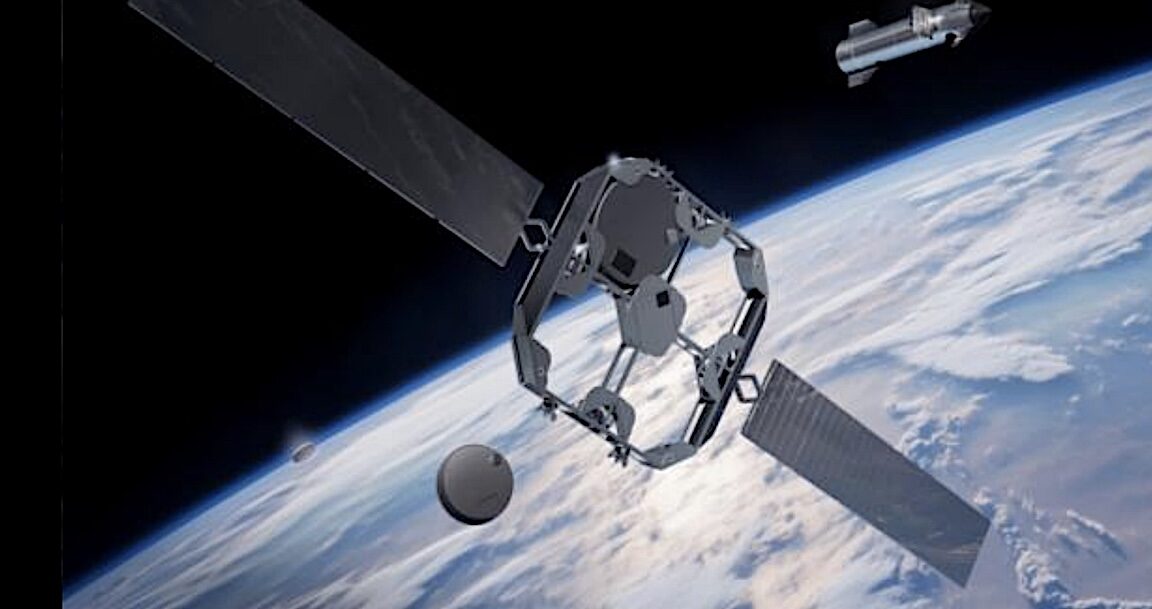
SpaceX is preparing to launch a new cargo-return vehicle called Starfall on a Falcon 9 rocket, a test that could shape how goods are moved through space and brought back to Earth. The mission matters because the vehicle is designed for rapid point-to-point cargo delivery and for returning materials made in orbit, according to a Federal Aviation Administration environmental assessment.
The launch is scheduled for Tuesday morning from Cape Canaveral Space Force Station in Florida. SpaceX’s mission page lists a one-hour window opening at 6:43 a.m. EDT, or 10:43 UTC, but gives little public detail about the payload or the upper-stage sequence.
Airspace and maritime warning notices say the Starfall vehicle is expected to circle Earth twice before reentering the atmosphere. The notices direct pilots and mariners to avoid a recovery area in the Pacific Ocean roughly 800 miles west of California, where the pod is slated to descend under parachute and splash down.
A cargo pod built for reentry
The FAA assessment describes Starfall as a vehicle for the “transport and delivery of goods through space.” The agency said SpaceX proposed two Starfall reentry demonstrations, though the review did not say whether both would fly on one mission or on separate launches.
According to the FAA, SpaceX plans to recover the reentry vehicle, including its parachutes and heat shields, as much as practical. The agency’s review says Starfall could support quick delivery of critical cargo through space and provide a way to return products from commercial in-space manufacturing.
The FAA listed Starfall as a cylindrical vehicle 10.2 feet in diameter and 2.5 feet tall. It weighs about 4,600 pounds without cargo and can carry roughly 2,200 pounds of payload, bringing its loaded mass to about 6,800 pounds. The vehicle is designed only for cargo, making it smaller than SpaceX’s Crew Dragon spacecraft, which carries astronauts to and from the International Space Station.
The first demonstration is expected to spend only a few hours in low-Earth orbit. The FAA assessment says Starfall could also fly shorter suborbital routes after launching on Falcon 9 or on SpaceX’s larger Starship rocket.
The current Starfall design cannot deorbit on its own, according to the FAA. It depends on its launch vehicle to set up reentry, then uses compressed nitrogen gas after separation to orient its heat shield for the plunge through the atmosphere.
Military and commercial uses
The FAA said Starfall could serve companies making products in orbit, a young market that has so far focused largely on pharmaceuticals. Varda Space Industries is one company developing that business, according to Ars Technica.
The U.S. military is another possible customer. The Pentagon has already worked with SpaceX on Rocket Cargo, also called Point-to-Point Delivery, a concept that would use rockets to move supplies to distant locations in less than an hour, according to Ars Technica.
Starship is central to that military concept, but it remains in experimental flight testing. Ars Technica reported that the Pentagon has also signed agreements with Blue Origin, Rocket Lab and Anduril to study and develop technologies for global cargo delivery from space.
Starfall would handle much smaller loads than Starship, but its size and parachute recovery plan could make it useful for lighter cargo. Tuesday’s demonstration is the first public test of whether SpaceX can send the vehicle into orbit and bring it back through the atmosphere to a planned ocean recovery zone.
This story draws on original reporting from Ars Technica.