
Space Force responsive-launch drill sends satellite into polar orbit
A Rocket Lab mission from New Zealand placed Victus Haze Puma in orbit for a U.S. military test of rapid response to threats in space.
By James Whitfield · Staff Writer
3 min read
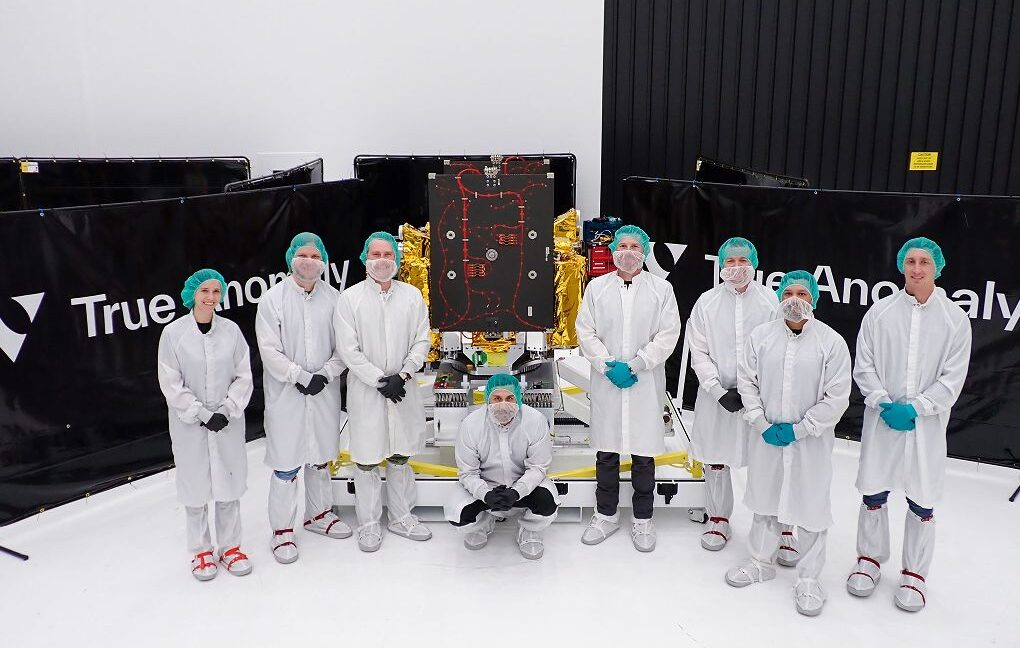
Rocket Lab launched a small satellite from New Zealand on Friday for a U.S. Space Force exercise meant to test how fast the military can respond to a problem in low-Earth orbit. The mission matters because the Space Force is trying to shrink satellite response timelines from years to weeks, days or even hours.
The launch drew little public attention before liftoff. Ars Technica reported that the main public clue was a safety notice warning aircraft and ships away from the rocket’s flight path, and that Rocket Lab did not provide the livestream it typically offers for missions.
By Monday morning, Ars Technica reported, neither Rocket Lab nor the Space Force had issued a public statement confirming the launch. The U.S. military’s public catalog of space objects, however, was updated over the weekend with a new satellite called Victus Haze Puma, listed as launched Friday from Rocket Lab’s private spaceport on the Māhia Peninsula.
The catalog placed the spacecraft in a polar orbit ranging from 215 miles to 286 miles, or 347 by 461 kilometers, at an inclination of about 97.5 degrees to the equator.
A test of rapid orbital response
The Space Force announced Victus Haze in 2024 after choosing Rocket Lab and True Anomaly to provide two spacecraft and related launch services. Under the plan described by the Space Force, True Anomaly would place one satellite in orbit first to act like a potentially hostile spacecraft, while Rocket Lab would keep another spacecraft ready to launch on short notice and inspect it.
Rocket Lab had a commercial launch scheduled last week but said Tuesday it was delaying that mission “to conduct additional checkouts,” according to the company. Aviation and maritime safety notices appeared shortly before the Victus Haze launch window opened Friday, Ars Technica reported.
The launch time, estimated at about 6:20 a.m. Eastern time Friday, lined up with the orbital pass of a True Anomaly satellite over New Zealand, according to Ars Technica. True Anomaly’s Jackal-0004 spacecraft launched May 3 from California aboard a SpaceX rideshare mission.
Jonathan McDowell, an astrophysicist who tracks space activity using open data, said publicly available orbital information showed Rocket Lab’s Victus Haze Puma came within about 60 miles, or 100 kilometers, of Jackal-0004 roughly eight hours after launch.
Based on prior descriptions from officials, the exercise is expected to include more maneuvers that bring Puma closer to Jackal. The satellites are later expected to reverse roles, with Jackal inspecting Puma.
True Anomaly says Jackal is ready
True Anomaly, a Colorado company that builds maneuverable satellites for national security missions, said Thursday that its newest Jackal spacecraft had completed its test objectives after reaching orbit in early May. The company said the work demonstrated capabilities for “end-to-end uncooperative rendezvous and proximity operations.”
“Jackal has been fully commissioned and is prepared for its next phase of mission,” True Anomaly said, without specifying that phase.
The company said its tests included using narrow- and wide-field cameras to track other space objects and validating moving-object detection and tracking algorithms during spacecraft maneuvers.
Victus Haze follows the Space Force’s 2023 Victus Nox mission, in which Millennium Space Systems built and tested a small satellite in less than a year and Firefly Aerospace launched it 27 hours after receiving Space Force orders. Victus Haze is broader, involving multiple satellites, rockets and spaceports.
True Anomaly’s spacecraft was first slated to fly on Firefly’s Alpha rocket, but that vehicle was grounded for nearly a year after a launch failure, according to Ars Technica. The Jackal spacecraft ultimately launched on SpaceX’s Falcon 9.
The Space Force has said Victus Haze is intended to prepare future forces to carry out rapid operations after adversary activity in orbit. The mission is funded through a mix of government money and private capital totaling about $92 million, according to Space Systems Command.
This story draws on original reporting from Ars Technica.