
South Korea plans drone training for its full military
Defense officials want troops to treat drones as a standard combat tool, but personnel shortages and supply limits could slow the plan.
By James Whitfield · Staff Writer
3 min read
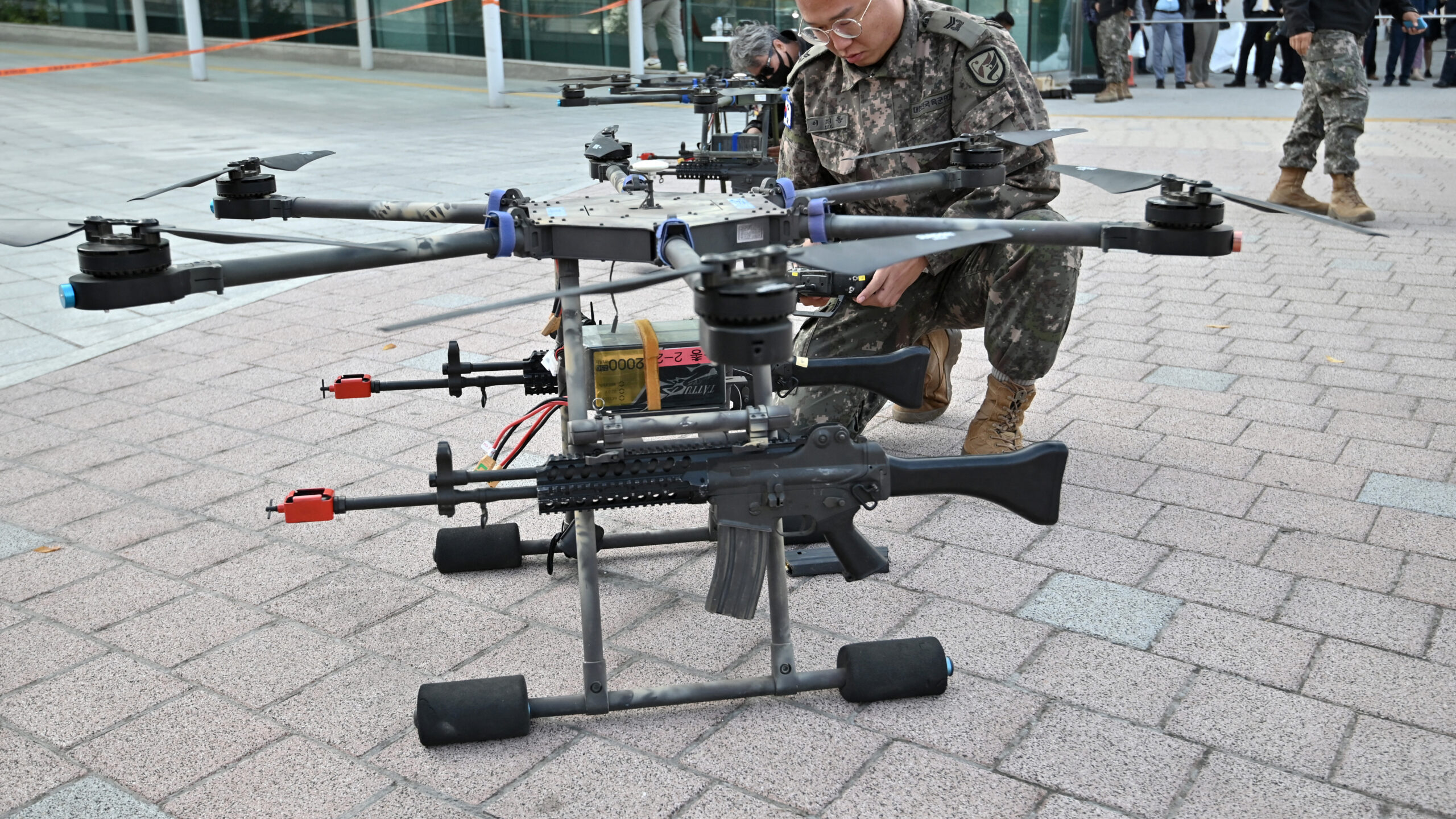
South Korea plans to train its active-duty military to operate drones as routinely as soldiers use personal firearms. The program reflects Seoul’s push to keep a technological edge against North Korea, whose active-duty force is far larger.
Defense Minister Ahn Gyu-back said at a June 26 briefing, reported by Reuters, that the goal is to make drones a “universal combat tool” and a “second personal weapon” for troops. South Korea’s military has about 450,000 active-duty personnel, while North Korea has more than 1.2 million, according to figures cited by Reuters.
The plan also calls for more low-cost drones at the unit level for reconnaissance and attack missions, along with wider deployment of systems designed to defeat drones, including lasers and microwave weapons, according to Reuters and The Korea Times.
Ahn linked the changes to lessons from wars in Ukraine and the Middle East, where small unmanned systems have become central to battlefield surveillance and strikes, according to Reuters. The South Korean effort comes as militaries worldwide study Ukraine’s use of drones to offset Russia’s numerical advantages.
Command changes and procurement limits
The Korea Times reported that South Korea’s former drone operations command, which previously had direct authority over combat units, will be reorganized. Its new role will focus on working with domestic industry to develop and buy commercial drone technology.
Ministry officials told The Korea Times that South Korea does not plan to issue drones to every service member for training. The ministry plans to provide 11,000 training drones this year and aims to field 60,000 drones across the armed forces by 2029.
That gap points to one of the central limits of the program: training hundreds of thousands of personnel does not mean each will regularly handle a drone. It also leaves commanders to decide how broadly drone skills can be taught with a limited fleet of training aircraft.
South Korea also wants drones made entirely with domestic components and no Chinese parts, Reuters reported, citing Ahn’s comments. The policy reflects security concerns, as China is North Korea’s main economic and security partner.
The requirement may be difficult to meet because China dominates the global commercial drone market through companies such as DJI. Min-Cheol Jung, cofounder of the South Korea-based Team Retriever counter-drone red team, wrote in War on the Rocks that South Korea could struggle to find enough commercial drones free of Chinese components to train large numbers of conscripts.
Manpower pressure
South Korea’s military has been shrinking as the country’s birthrate falls, The Korea Times has reported. That raises questions about whether Seoul can build and maintain a 500,000-person active-duty force, especially while mandatory military service excludes women.
Jung also warned in War on the Rocks that shortages among officers and noncommissioned officers could hurt the training effort. Those personnel would be expected to teach new conscripts how to use drones and integrate them into regular units.
Ukraine’s experience shows another model. Rather than training every soldier as a drone pilot, Ukraine has built specialized drone teams, created an Unmanned Systems Forces branch, used digital battlefield management tools and expanded its domestic drone industry, according to the accounts cited in the reporting.
North Korea may be studying the same war. North Korean soldiers who fought alongside Russia and survived encounters with Ukrainian drones have been returning home to instruct North Korean forces, according to Forces News, though the content of that training remains unclear.
South Korea is backed by 28,500 U.S. troops stationed on the peninsula, a presence that dates to the Korean War. The U.S. military has also added drone familiarization and counter-drone training for new recruits, and the Pentagon has requested $54 billion for drone and counter-drone systems in its fiscal 2027 budget.
This story draws on original reporting from Ars Technica.