
Gulf attacks test U.S.-Iran ceasefire as Hormuz traffic plan expands
Bahrain said Iranian drones targeted the kingdom as a tanker was hit in the Strait of Hormuz, adding pressure to an interim U.S.-Iran deal.
By Maya Lindqvist · Senior Technology Correspondent
3 min read
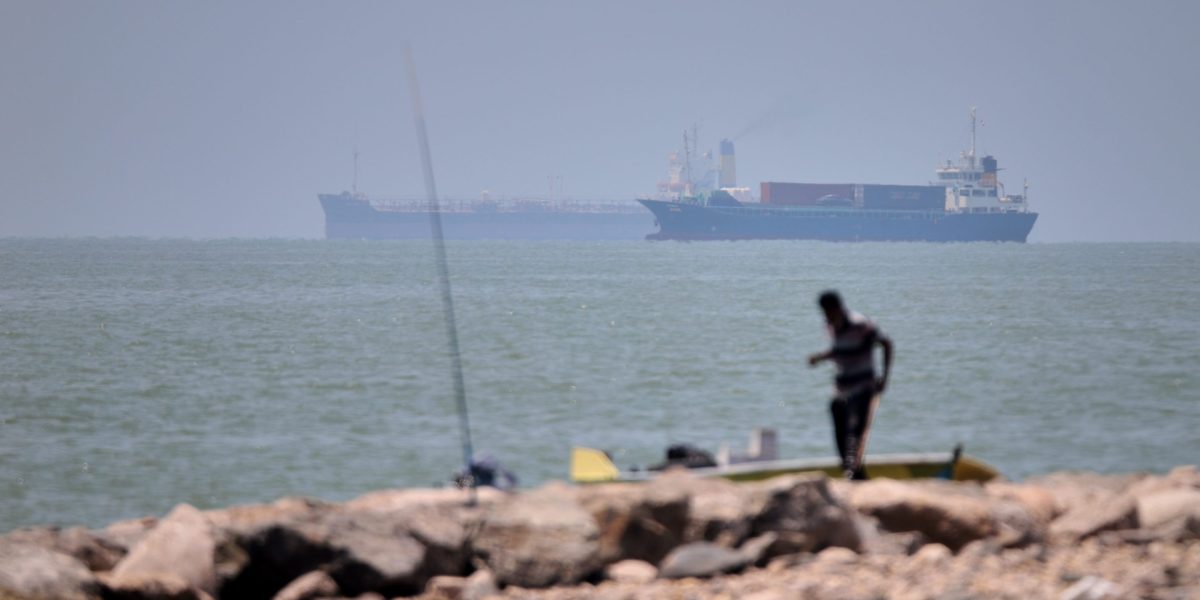
Iranian drones targeted Bahrain and a tanker came under attack in the Strait of Hormuz on Saturday, according to regional and maritime authorities, putting fresh strain on a fragile U.S.-Iran ceasefire. The incidents also raised tensions around one of the world’s most sensitive shipping corridors as a U.S. Navy-overseen maritime body moved to widen a route near Oman.
The Associated Press reported that the attacks appeared to be Tehran’s likely response to U.S. overnight airstrikes. U.S. Central Command said American forces struck Iranian missile and drone positions as well as coastal radar sites.
Those U.S. strikes followed an Iranian drone attack Thursday on a ship trying to leave the Strait of Hormuz, according to AP. The exchanges have continued despite an interim U.S.-Iran agreement meant to create space for a final accord to end the conflict.
Bahrain says Iranian drones targeted the kingdom
Bahrain’s Foreign Ministry said a number of Iranian drones targeted the country. The ministry described the attack as a threat to the security of citizens and residents.
Bahrain is home to the U.S. Navy’s 5th Fleet and has been a strong critic of Iran, according to AP. The kingdom recently hosted U.S. Secretary of State Marco Rubio for a Gulf Cooperation Council foreign ministers’ meeting that called for an end to Iranian attacks and for the Strait of Hormuz to remain fully open.
Iran’s Islamic Revolutionary Guard Corps said in a statement carried by the state-run IRNA news agency that it had targeted several locations belonging to what it called the U.S. terrorist army in the region. The Guard did not identify the locations it said it struck.
U.S. Vice President JD Vance, who has led American negotiations with Iran, said Friday night on social media that Iran should contact U.S. officials if it has disputes over the ceasefire agreement. He added that violence would be answered with violence.
Tanker hit as Hormuz route changes
The British military’s United Kingdom Maritime Trade Operations center said a tanker was attacked Saturday in the strait. UKMTO said the crew was safe and no environmental damage had been reported.
No group immediately claimed responsibility for the tanker attack. AP reported that suspicion fell on Iran.
Soon after the tanker incident was reported, the Joint Maritime Information Center, which is overseen by the U.S. Navy, said a route near Oman’s coast would be expanded to allow both inbound and outbound traffic. The move could become another point of confrontation with Tehran, which has said ships must obey Iranian instructions in the strait.
Iran has also warned that it will begin charging fees for passage through the waterway, according to AP. The Strait of Hormuz is bordered by Iran and Oman and is widely regarded as an international waterway, a position backed by the U.S. and Gulf Arab states.
Ebrahim Azizi, head of the Iranian parliament’s national security commission, wrote Friday that Iran governs the Strait of Hormuz and that others should respect its rules. The U.S. and Gulf Arab governments have rejected Iran’s demands, according to AP.
The Joint Maritime Information Center warned that the threat to shipping in the region was substantial. It advised mariners that mines were present and said they should expect naval activity while clearance work continues.
U.S. and Iranian negotiators still have unresolved issues under the interim deal, including shipping through the strait and the future of Iran’s stockpile of highly enriched uranium, according to AP. The agreement gives the two sides 60 days to settle the details.
This story draws on original reporting from Fortune.