
South Korea plans $1 trillion AI push in chips, data centers and robots
The program pairs new semiconductor and AI infrastructure with a robotics drive, while raising power, water and labor concerns.
By James Whitfield · Staff Writer
3 min read
South Korea’s government and major technology companies plan to put about $1 trillion into semiconductor plants, AI data centers and humanoid robotics, according to Reuters and South Korean media. The effort aims to expand memory-chip output and speed the use of AI systems in factories and other industries as global demand strains supply.
President Lee Jae Myung announced the initiative in a televised address on June 29, BBC News reported. Lee said South Korea needed to secure semiconductors, physical AI and AI data centers as core elements of the country’s next economic push.
Chip plants and data centers lead the spending
The largest part of the plan is a $585 billion commitment by Samsung and SK Hynix to build new semiconductor fabrication plants in South Korea’s southwestern provinces and expand chipmaking capacity in the Seoul capital region, Reuters reported. The government wants to double domestic production of dynamic random-access memory, or DRAM, within five years.
The timing reflects the position of Samsung and SK Hynix in the AI supply chain. The companies have reported strong results as AI developers buy more memory chips, while shortages have pushed up prices for some consumer electronics, according to reports cited by Ars Technica.
New capacity may take years to affect supply. Reuters reported that SK Hynix Chairman Chey Tae-won said the company’s chip cluster in Yongin, in the Seoul metropolitan area, took nine years to build.
A second project calls for $357 billion in AI data-center investment from SK Group, GS Group and Naver, Reuters reported. Those facilities are planned for regions outside the main capital area, including South Chungcheong, Gangwon and North and South Jeolla provinces.
The Korea Times reported that South Korea’s Ministry of Climate, Energy and Environment is preparing power and water supplies for the projects. The ministry said it is working to secure 6.3 gigawatts of electricity and 650,000 tons of water for southwestern chip plants, plus 8 gigawatts of power for the planned AI data centers.
Government officials said renewable energy, nuclear power and fossil fuels would all help meet the electricity demand, The Korea Times reported. International Energy Agency data cited by Ars Technica showed nuclear and coal each supplied more than 30 percent of South Korea’s electricity in 2024, while natural gas supplied nearly 25 percent.
Robots draw investment and labor pushback
The robotics portion centers on what South Korea calls physical AI: systems that let robots and self-driving vehicles act with more autonomy in real-world settings. The Chosun Daily reported that the government plans to develop a Korean general-purpose foundation model for robots within three years.
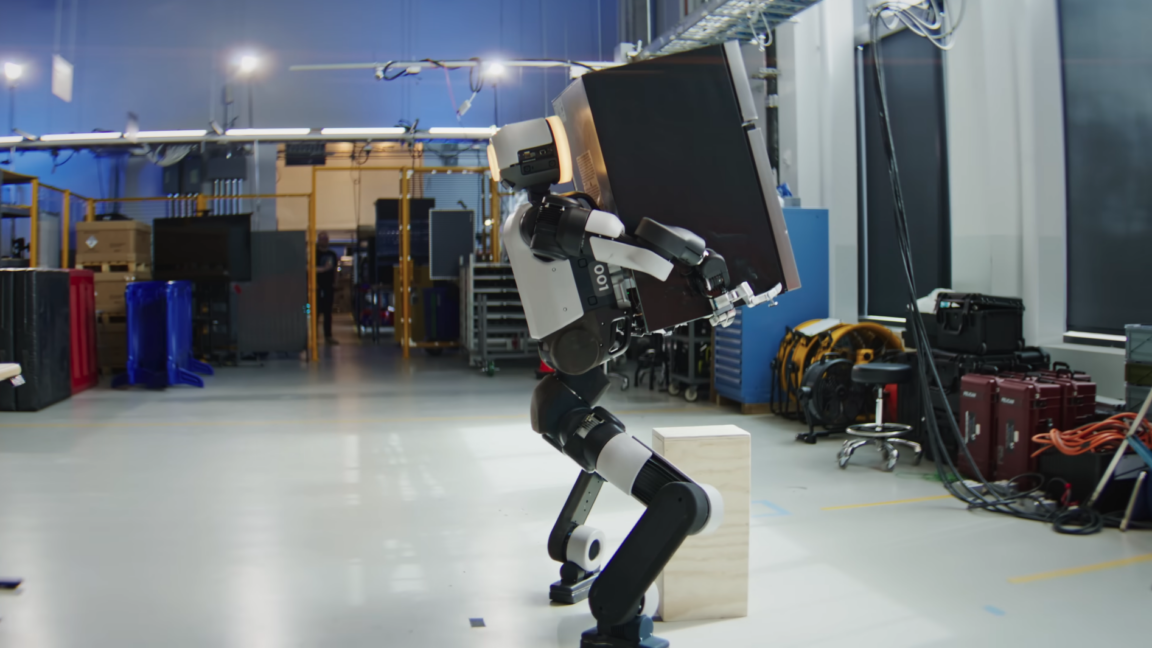
Hyundai Motor plans to spend $5.8 billion on a robot factory and AI data center in the Saemangeum area of North Jeolla Province, The Chosun Daily reported. Hyundai, which bought Boston Dynamics in 2021, has been using South Korean suppliers to help scale production of the Atlas humanoid robot, according to the Korea Herald.
Reuters reported that the government wants humanoid robots commercialized in 10 major industries by 2028. It also plans to train 10,000 workers as AI robotics specialists over five years.
The labor response has been tense. The Korea Times reported that Hyundai Motor’s union voted on June 25 to authorize a possible strike as it sought profit-sharing and job protections related to the company’s planned use of Atlas robots. A state labor mediation committee gave the union the legal right to strike after halting arbitration, while Hyundai urged the union to resume talks, according to Aju Press.
The broader AI boom has also prompted political debate over who benefits from chip profits. CNBC reported that South Korean officials have urged technology companies to share extraordinary gains with workers and smaller suppliers, while Bloomberg reported that a presidential policy aide floated a possible citizen “national dividend” tied to excess tax revenue before the government described it as a personal view.
This story draws on original reporting from Ars Technica.