
Sourdough Sidekick automates starter feeding for frequent bakers
The $179.99 King Arthur-backed appliance feeds sourdough starter on a schedule, but a review found limits for casual bakers.
By James Whitfield · Staff Writer
3 min read
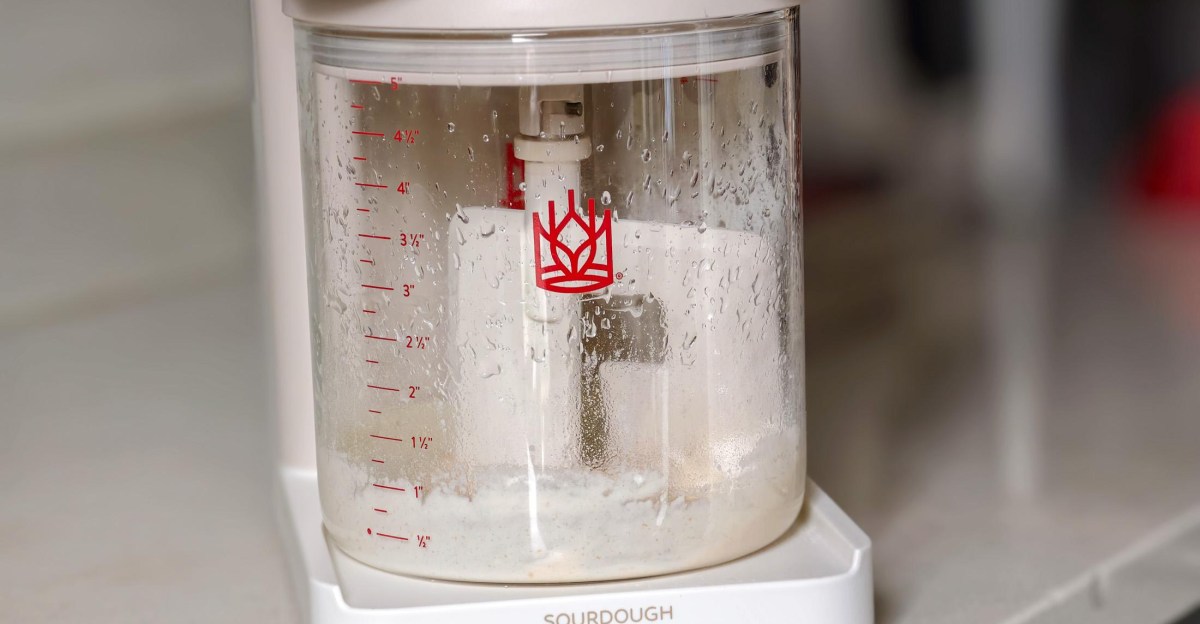
The Sourdough Sidekick, a countertop appliance backed by King Arthur Baking Company, is now being sold as a way to automate sourdough starter care. The device targets one of sourdough baking’s more repetitive tasks, but The Verge’s Dominic Preston found it best suited to people who bake more than once a week.
The appliance was developed by FirstBuild, the GE Appliances innovation hub, with King Arthur Baking Company, whose branding appears on the machine, according to The Verge. Preston reported that it began with a crowdfunding campaign in March 2025 and is now available directly from King Arthur for $179.99 in the US.
The Sourdough Sidekick uses a crock for starter, plus separate flour and water containers. In Auto mode, Preston said, users add 15 grams of existing starter, choose when they plan to bake and enter how much starter the recipe needs. The machine then adds flour and water over time, mixes the starter and adjusts its schedule based on local temperature.
Preston said the device performed well with a basic white bread flour, producing an active starter that was ready at the planned time. His resulting loaf was good, though he said it may have been overproofed, suggesting the machine produced a livelier starter than his usual manual feeding.
Where the appliance struggled
The Verge found that the Sourdough Sidekick can work with several flour types, including most whole wheat and rye flours, but changing flour requires recalibration because densities vary. Preston said a coarse-milled rye flour made a starter too thick for the machine to mix correctly, leaving uneven dry and wet areas.
Auto mode also has strict rules. According to Preston, it requires the same 15-gram starter amount each time, and its minimum output changes depending on the planned bake date. He reported that it can make as little as 150 grams when the bake date is a few days away, but requires at least 400 grams when the date is four or more days out, which can create more unused starter than manual feeding.
The machine also lacks an Auto maintenance setting, Preston wrote. Users must choose a bake date within the next week, or remove the crock and store the starter in the refrigerator if they do not know when they will bake again.
Custom controls add flexibility
The Sidekick includes Ratio and Custom modes, according to The Verge. Ratio mode lets users choose preset feeding ratios and feeding frequency, while Custom mode allows exact flour and water quantities, making it possible to create a looser starter or start a new starter from scratch.
Preston said Custom mode helped solve the coarse rye issue by adding more water. He also reported that FirstBuild provides instructions for using Custom mode to begin a starter, and that he produced a healthy new one in four days. Unlike Auto mode, however, The Verge said Ratio and Custom do not adjust for ambient temperature.
The appliance has Wi-Fi and an app, but Preston found the app limited. It can send alerts when starter is ready or discard needs removal and can show current settings, but it cannot change the machine’s settings, according to The Verge.
Cleaning and noise were the other drawbacks. FirstBuild recommends washing the crock, lid and paddle after each cycle, Preston said, but the crock and lid are not dishwasher-safe. The machine also stirs every two hours by default, producing about 30 seconds of loud whirring each time, according to the review.
The Verge gave the Sourdough Sidekick a score of 6. Preston concluded that it could appeal to bakers with enough counter space who make sourdough about twice a week, while people who bake one loaf a week or less may lose much of the benefit.
This story draws on original reporting from The Verge.