
Vizio’s budget Mini LED TV can work without its smart software
The Verge found Vizio’s Mini LED Quantum offers low prices and a rare way to bypass smart-TV data collection during setup.
By James Whitfield · Staff Writer
3 min read
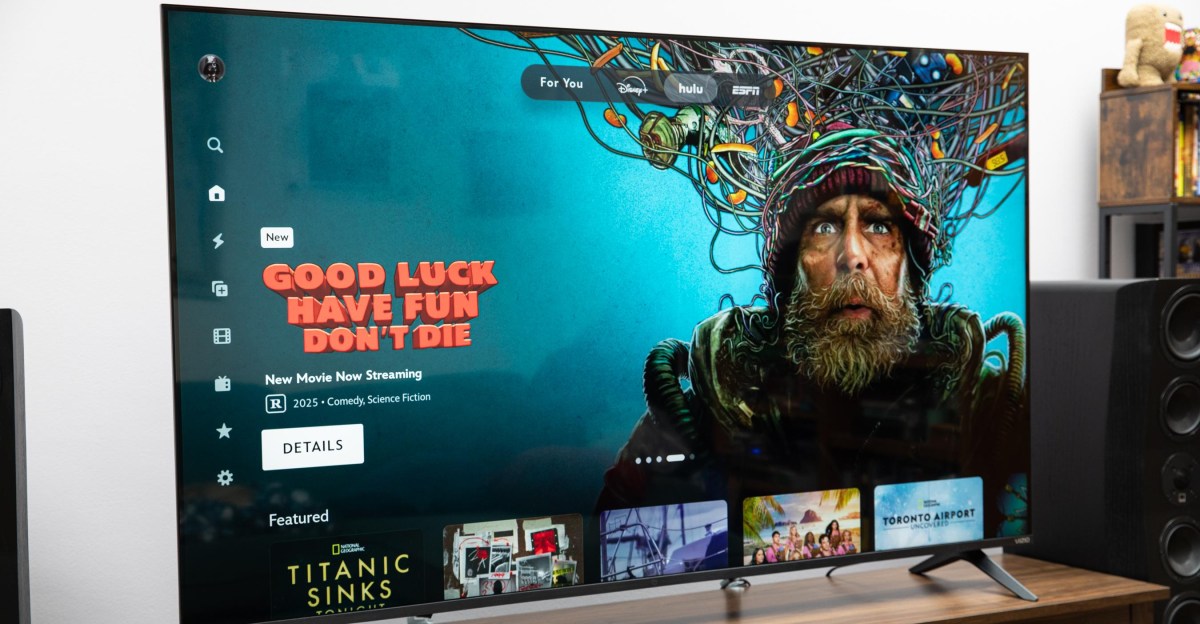
Vizio’s new Mini LED Quantum TV gives buyers a relatively inexpensive path to quantum-dot display technology, according to a review by The Verge. The more unusual finding is that the set can be configured to avoid using Vizio’s smart-TV platform, a rare option as TV makers and retailers push ad-supported software and viewing-data collection.
The Verge’s John Higgins reviewed the 65-inch model, which Walmart lists at $398. The same line is also sold in 75-inch and 85-inch sizes for $498 and $768, respectively, according to the review.
Vizio has been quieter since Walmart completed its acquisition of the company in 2024, The Verge reported. Higgins wrote that Walmart bought Vizio in part for its advertising business, and that Vizio’s operating system is central to collecting viewing data and supporting ad revenue.
Setup can turn off the smart platform
According to The Verge, Vizio now asks users to sign in to or create a Walmart account for some TV functions. On the Mini LED Quantum, Higgins reported, users cannot open streaming apps in Vizio OS unless they accept an activity data policy that allows Walmart to collect usage information.
The review says buyers can decline those prompts during setup. After skipping the Walmart account step, accepting Vizio’s terms of service and privacy policy, and then rejecting the activity data policy, the TV disables its smart features and leaves the HDMI inputs available for external devices, The Verge reported.
Higgins wrote that users can also remove the TV from Wi-Fi or skip Wi-Fi setup, though skipping internet access may mean missing firmware updates. The Verge said an external streaming box can be used instead, but if Vizio OS remains active, Vizio and Walmart can still scan HDMI use and collect viewing data under Vizio’s viewing-data policy.
Strong value, with clear limits
The Verge said the Mini LED Quantum uses quantum dots and supports Dolby Vision, HDR10 Plus, HDR10 and HLG. The set runs Vizio OS when its smart features are enabled, includes three HDMI 2.0 ports, an ATSC 1.0 tuner, USB 2.0 and optical audio out, and supports Dolby Atmos and DTS:X, according to the review.
Higgins found the 65-inch model delivered good picture quality for its price. In the review, he said the Calibrated and Calibrated Dark picture modes were the most accurate, though both skewed slightly cool. The Verge measured peak brightness at 309 nits in SDR for Calibrated Dark, 579 nits for small HDR highlights, and 936 nits in Calibrated mode.
The review also noted trade-offs. The screen is glossy and can show distracting reflections, The Verge said, and fast motion showed some blur during sports viewing. Higgins reported that the IPS panel did not produce black levels as deep as pricier TVs, and that some blooming appeared around bright objects in dark scenes.
Cost-cutting showed up elsewhere, according to The Verge. The TV has three HDMI 2.0 ports rather than four ports with at least one HDMI 2.1 connection, the back is plastic, the feet have one height setting, cable channels fit only one cable each, and the speakers are loud but unimpressive.
Privacy controls remain limited
For buyers who use Vizio OS, The Verge said Walmart’s data collection can be reduced by turning off Viewing Data in the TV privacy menu and disabling personalized ads on a Vizio account page. Higgins described Vizio OS as easy to use but sometimes slow, with support for major apps, AirPlay and Google Cast.
The Verge concluded that the Mini LED Quantum is an unusually appealing option for people who want a large, inexpensive TV without relying on built-in smart features. Higgins cautioned that software updates could change the setup path that currently allows users to operate it as a non-smart display.
This story draws on original reporting from The Verge.