
Russell holds off Verstappen to win Austrian Grand Prix
George Russell took his second 2026 win at the Red Bull Ring as Red Bull's upgrade put Max Verstappen back in the fight and Ferrari fell short.
By Hana Yoshida · Markets Reporter
3 min read
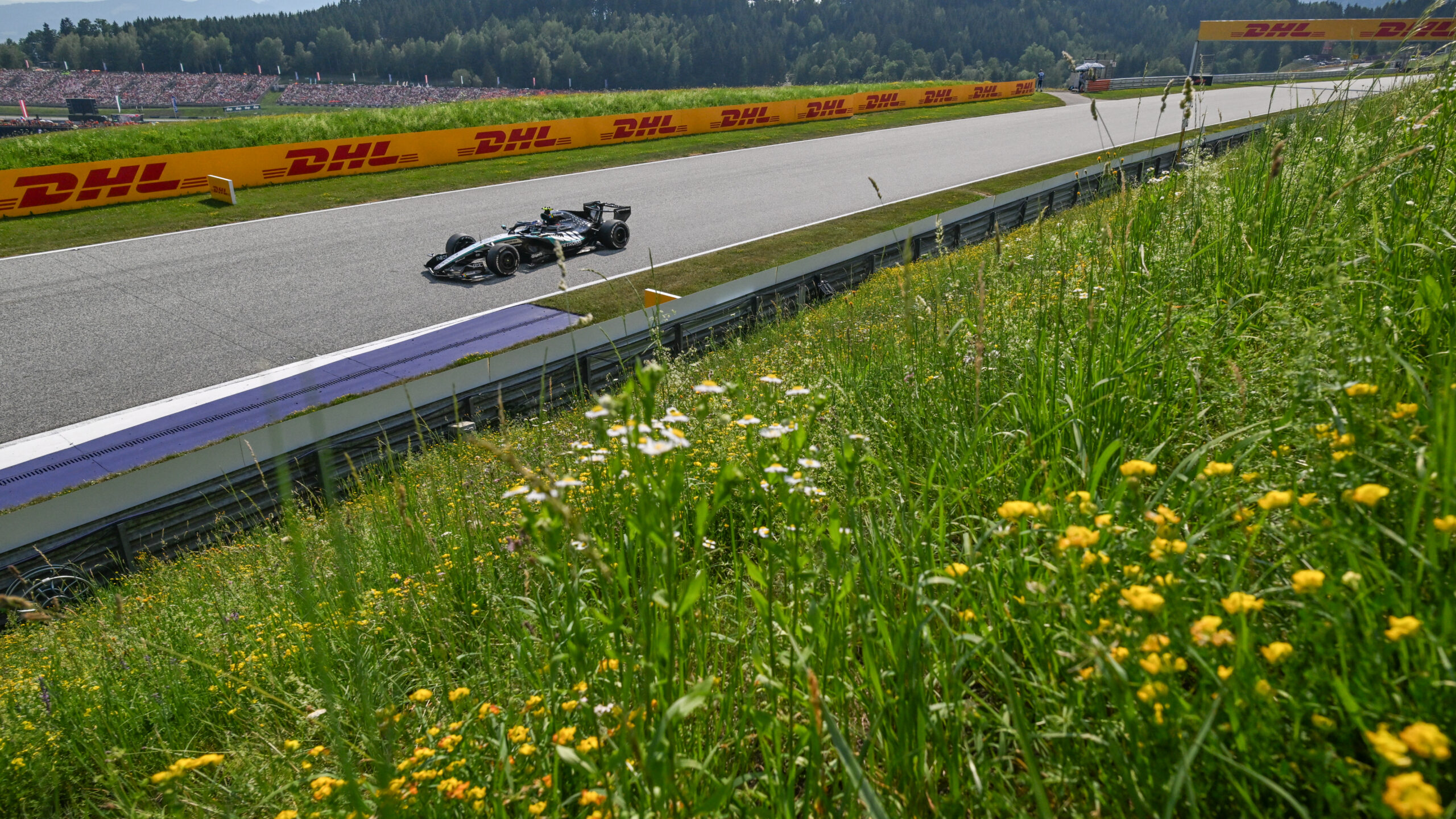
George Russell won the Austrian Grand Prix at the Red Bull Ring, giving Mercedes another victory in a 2026 season it has largely controlled, according to Ars Technica. The result put Russell back into second place in the standings, while Max Verstappen’s late charge showed Red Bull’s upgraded car could threaten Mercedes at its home race.
Russell started from pole after setting a 1:06.113 in qualifying, Ars Technica reported. He led from the opening lap and was not seriously threatened for most of the 71-lap race, taking his second win of the year after winning the season opener.
Verstappen started fifth and moved up to second early, according to Ars Technica. Red Bull had brought a major update to Austria, and Verstappen used it to close on Russell in the final stint, finishing 1.6 seconds behind the Mercedes driver.
Kimi Antonelli finished third for Mercedes, just under two seconds behind Verstappen, Ars Technica reported. Antonelli, who won five races in a row after Russell’s season-opening victory, retained a large championship lead despite Russell’s move back into second place.
Ferrari misses chance after upgrades
Ferrari entered the weekend with higher expectations after a strong showing in Barcelona, where Lewis Hamilton had won, according to Ars Technica. The team introduced its first permitted engine upgrade of the season in Austria, along with a new synthetic Shell fuel.
The FIA had determined that Ferrari’s engine was well behind Red Bull’s new in-house V6, allowing Ferrari two engine upgrades this season, Ars Technica reported. The first of those changes did not deliver the expected step forward at the Red Bull Ring.
Charles Leclerc qualified second and Hamilton third, but neither Ferrari could match the leaders over the race distance, according to Ars Technica. Hamilton finished fifth after a fight with Verstappen, while Leclerc dropped to eighth as Ferrari lost time and could not repeat its Barcelona tire performance.
McLaren placed Oscar Piastri fourth and Lando Norris seventh, Ars Technica reported. Isack Hadjar finished sixth for Red Bull, while Racing Bulls claimed the final points positions with Liam Lawson ninth and Arvid Lindblad 10th.
Short track, limited racing
The Austrian round took place during severe heat in the region, which made cooling a concern, particularly for brakes, according to Ars Technica. After a busy opening phase, the race settled into a more strategic contest, with teams looking for gains through tire choices and pit timing.
The Red Bull Ring has the shortest lap times on the Formula 1 calendar, even though Monaco is shorter in distance, Ars Technica reported. Valtteri Bottas set a 1:02.939 there in qualifying for the 2020 Austrian Grand Prix, while the newer 2026 cars produced slower times because they have less downforce and narrower tires than the previous ground-effect generation.
The FIA, teams and engine manufacturers have also agreed to adjust the balance of Formula 1’s hybrid power units, according to Ars Technica. For 2026, the V6 produces 536 horsepower and the electric motor adds 469 horsepower when battery charge is available.
Under the agreed changes, Ars Technica reported, V6 output will rise to 563 horsepower in 2027 and 603 horsepower in 2028, while regular electric motor output will fall to 402 horsepower next year. Overtake mode will remain at 469 horsepower, and energy harvesting will increase to 375 kW in 2027 and 400 kW in 2028.
This story draws on original reporting from Ars Technica.