
Observable Space bets on telescopes as space data race moves to Earth
Dan Roelker’s company is scaling U.S.-built telescopes for satellite tracking, space optics and laser communications, Ars Technica reported.
By Hana Yoshida · Markets Reporter
4 min read
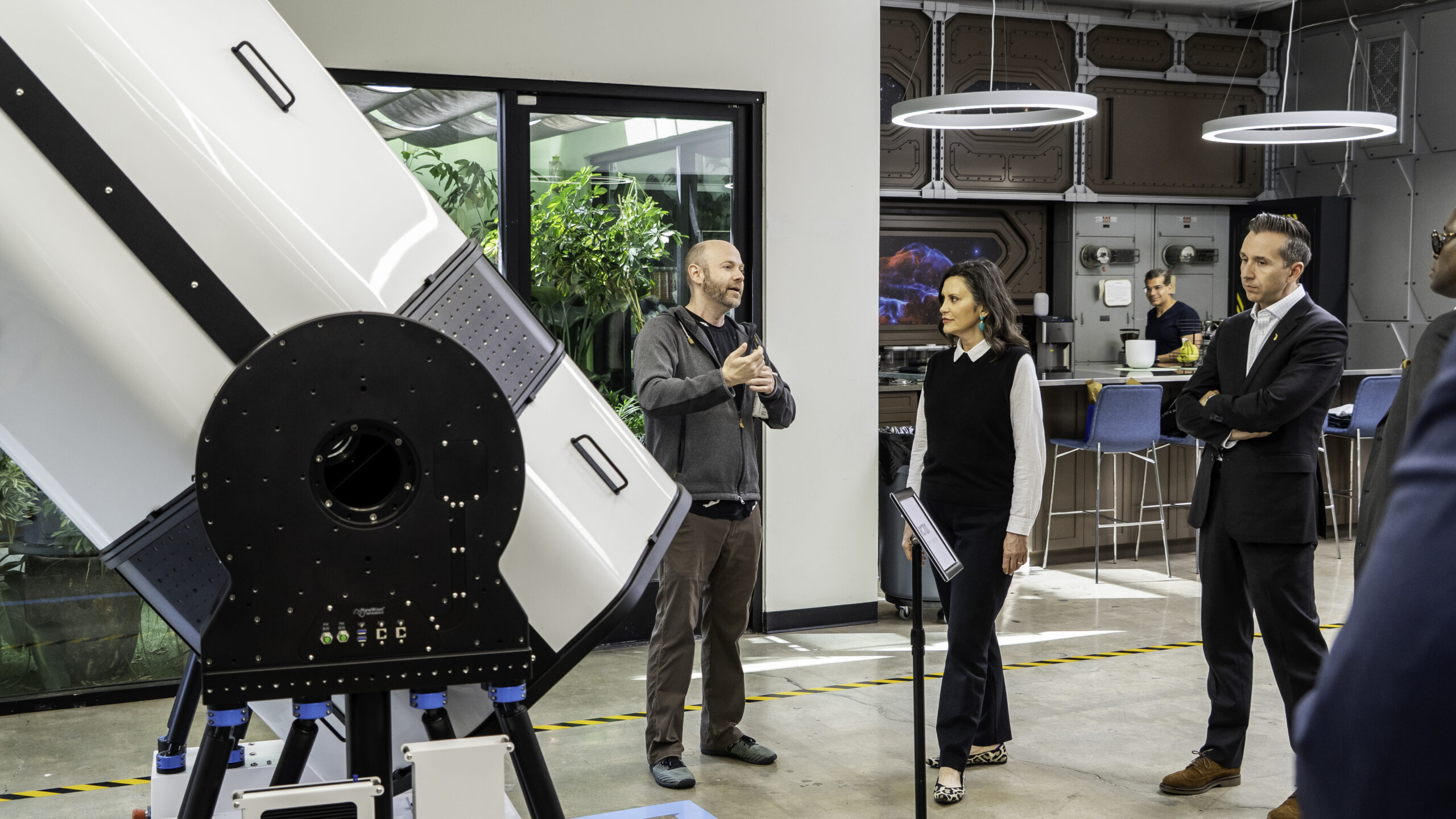
Observable Space is building telescopes and optical systems for a space industry that increasingly depends on tracking satellites and moving data by light, Ars Technica reported. The company, co-founded by former SpaceX software executive Dan Roelker, is targeting ground systems as crowded orbits and high-bandwidth space missions put new demands on optical infrastructure.
Roelker told Ars Technica that the next competitive front in space will be on Earth, where companies and governments collect, process and transmit light from satellites and spacecraft. His career has run through cybersecurity, video games, SpaceX, cryptocurrency and now telescope manufacturing.
From cyberwarfare to space software
According to Ars Technica, Roelker grew up in a working-class family in Pennsylvania, studied mathematics and philosophy at a private Seventh-day Adventist university in Maryland, and became interested in hacking in the late 1990s. He worked at the Johns Hopkins Applied Physics Laboratory before entering private industry during the dot-com boom.
Roelker later joined Sourcefire as a founding developer in 2002, Ars Technica reported; Cisco eventually acquired the network-security company for $2.7 billion. He then worked in offensive cybersecurity at companies later bought by BAE Systems and Raytheon, before the Defense Advanced Research Projects Agency recruited him in 2011 to manage cyberwarfare programs.
Roelker told Ars Technica his DARPA work included Plan X, an effort to develop tools for automated cyberattacks and one of the first public acknowledgments that the U.S. military was pursuing offensive cyber capabilities. He left DARPA in 2014 and joined Riot Games to work on the League of Legends client, but moved to SpaceX in 2015 after seeking a faster-paced role.
At SpaceX, Roelker became vice president of software engineering after a difficult hiring process, Ars Technica reported. He arrived after a Falcon 9 failure and helped focus the software team on returning the rocket to flight and supporting the company’s first successful land-based booster landing in December 2015.
A telescope company with defense and data customers
Roelker later worked on software efforts tied to Falcon Heavy, Crew Dragon, early Starship work and Starlink, according to Ars Technica. He left SpaceX in 2019, then joined OpenSea as an early employee leading engineering before cashing out after the NFT marketplace raised $300 million at a $13.3 billion valuation in January 2022, Roelker told Ars Technica.
In 2022, Roelker co-founded OurSky with a plan to use software to combine telescope observations and track objects in orbit with high precision, Ars Technica reported. The effort later merged with PlaneWave Instruments, a Michigan telescope maker founded by Richard Hedrick, creating Observable Space with Roelker, Connor Poole and Hedrick as co-founders.
Observable Space has become the largest U.S.-based telescope manufacturer while developing software, adaptive optics and laser communications systems, according to Ars Technica. The company won a contract to build 1,200 telescopes for the Argus Array, a project funded by former Google chief executive Eric Schmidt to image the Northern Hemisphere sky.
The company is also winning military work as orbital traffic grows. Ars Technica reported that active satellites in low-Earth orbit have risen from about 3,000 to more than 15,000 over roughly five years, driven by systems including Starlink, Amazon Leo and Chinese constellations.
The U.S. Space Force last month awarded Observable Space a $94 million contract to expand production of high-performance optical telescopes, according to a company announcement cited by Ars Technica. Jeremy Verbout, assistant secretary for mission capabilities, said in the statement that mobile, off-grid robotic telescopes would support high-fidelity space domain awareness for the Joint Force.
Laser links become a new market
Observable Space is also developing lower-cost optics for spacecraft, including its Iguana space telescope with a 200 mm aperture, Ars Technica reported. The first Iguana unit is expected to fly later this year on an Apex spacecraft bus during Project Shadow, a mission meant to demonstrate space-based interceptors.
Laser communications are another focus. NASA’s Jet Propulsion Laboratory said in 2024 that the Psyche spacecraft had demonstrated laser communications across 290 million miles, with project lead Meera Srinivasan saying the test confirmed optical communications could be a robust way to explore the Solar System.
Ars Technica reported that Observable Space helped support optical communications for Artemis II as it flew around the Moon in April, using an Australian National University system at Mount Stromlo Observatory. The company is also speaking with SpaceX and others interested in orbital data centers, which need high-bandwidth links to Earth and many ground stations to avoid weather disruptions.
Observable Space announced in late May that it had raised a $90 million Series A round, with much of the money intended to speed its laser communications business, Ars Technica reported. Roelker told Ars Technica he does not plan to compete in rockets or spacecraft buses; his company is focused on the optical systems those vehicles need to see, communicate and avoid collisions.
This story draws on original reporting from Ars Technica.