
Matter 1.6 adds Joint Fabric to simplify smart home sharing
The new Matter spec aims to let Apple Home, Alexa, Google Home and other platforms share one smart home network.
By Hana Yoshida · Markets Reporter
3 min read
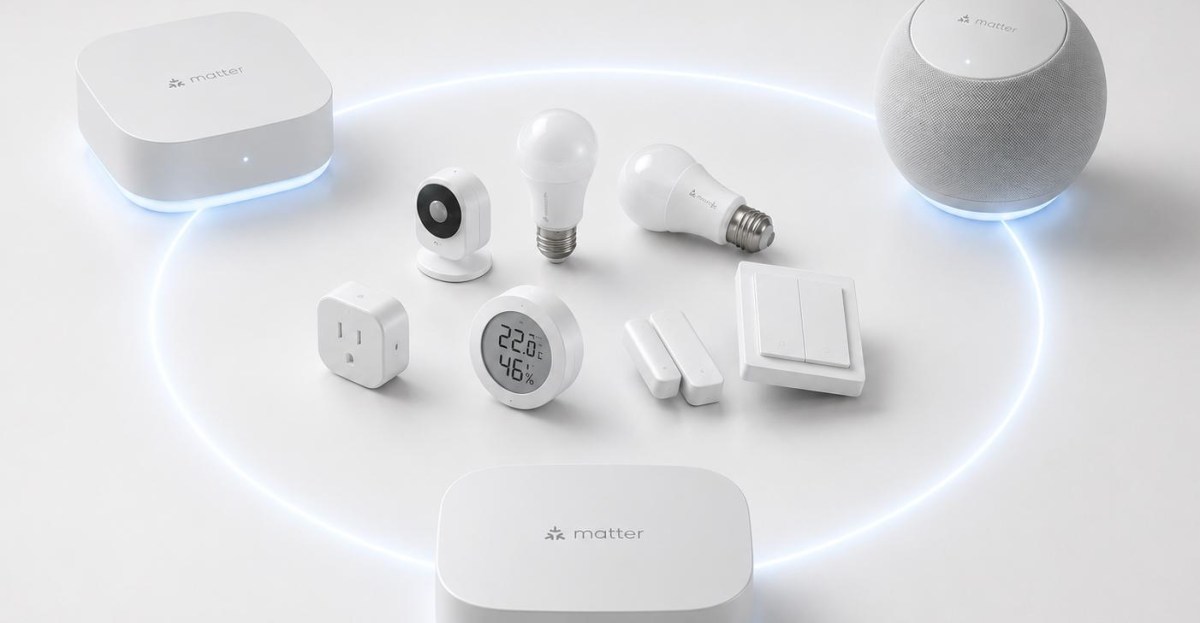
The Connectivity Standards Alliance has announced Matter 1.6, adding a feature intended to make smart home devices work across multiple platforms with less repeated setup. The update matters for users who want one device to show up in Apple Home, Google Home, Amazon Alexa, Samsung SmartThings and other Matter systems without managing separate sharing steps.
The feature, called Joint Fabric, creates a single Matter network that multiple authorized smart home ecosystems can help manage, according to the CSA. In that setup, a user would add a compatible device once and make it available across approved platforms.
The CSA introduced the specification this week at Unify, its first conference, in Austin, Texas, according to The Verge. Matter 1.6 does not add new categories of supported devices, but it does include several setup and control changes meant to improve daily use.
Joint Fabric changes how platforms share devices
Matter already includes multi-admin, a feature meant to let a device set up in one smart home app be used by another Matter-compatible platform. The Verge reported that, in current implementations, each ecosystem runs its own Matter “fabric,” or network, and sharing devices between them can still be cumbersome.
Joint Fabric takes a different approach by letting major platforms become authorized participants in the same Matter network, according to the CSA’s description cited by The Verge. Users would also be able to remove a platform’s authority without deleting the devices from the home network.
The change is part of Matter’s broader enhanced multi-admin work, The Verge reported. A prior effort, Fabric Sync, arrived with Matter 1.4 in 2024 and allowed devices created in one ecosystem to be shared to another after a single authorization, but the platforms still kept separate networks.
The Verge reported that adoption has been a sticking point for Matter. The CSA has released specifications to address interoperability problems, but platform makers have sometimes been slow to fully implement new features, which can leave gaps between what the standard supports and what users can do.
NFC setup and thermostat controls are also included
Matter 1.6 also adds full NFC setup support, according to The Verge. That would allow users to tap a device to pair it rather than scan a QR code, and it can also allow pairing before a device has power.
The Verge noted that pre-power pairing could help with products such as smart bulbs or wired smart switches, where access may be easier before installation is complete. The update is aimed at reducing friction during setup, one of the recurring complaints around smart home devices.
The new spec also includes Thermostat Suggestions, which The Verge described as a standard way for thermostats and ecosystems to exchange time-based recommendations. A thermostat could accept or delay a recommendation after considering information from other platforms.
That system is meant to prevent one request from immediately overriding another, according to The Verge. For example, a manual temperature adjustment in one platform could take precedence over an automation that arrives moments later, and a utility savings program or air-quality preference could be recognized across services.
Matter is an IP-based smart home standard backed by companies including Apple, Amazon, Google and Samsung, according to the CSA and The Verge. It is designed to let connected devices communicate locally over technologies including Wi-Fi, ethernet and Thread, and it supports device types including lights, thermostats, locks, cameras, appliances, robot vacuums, EV chargers and air-quality monitors.
This story draws on original reporting from The Verge.