
Lucid Gravity Touring shows range and speed at a lower price
Ars Technica found Lucid’s entry Gravity SUV quick, roomy and fast-charging, though some cabin details lagged its six-figure test price.
By Maya Lindqvist · Senior Technology Correspondent
3 min read
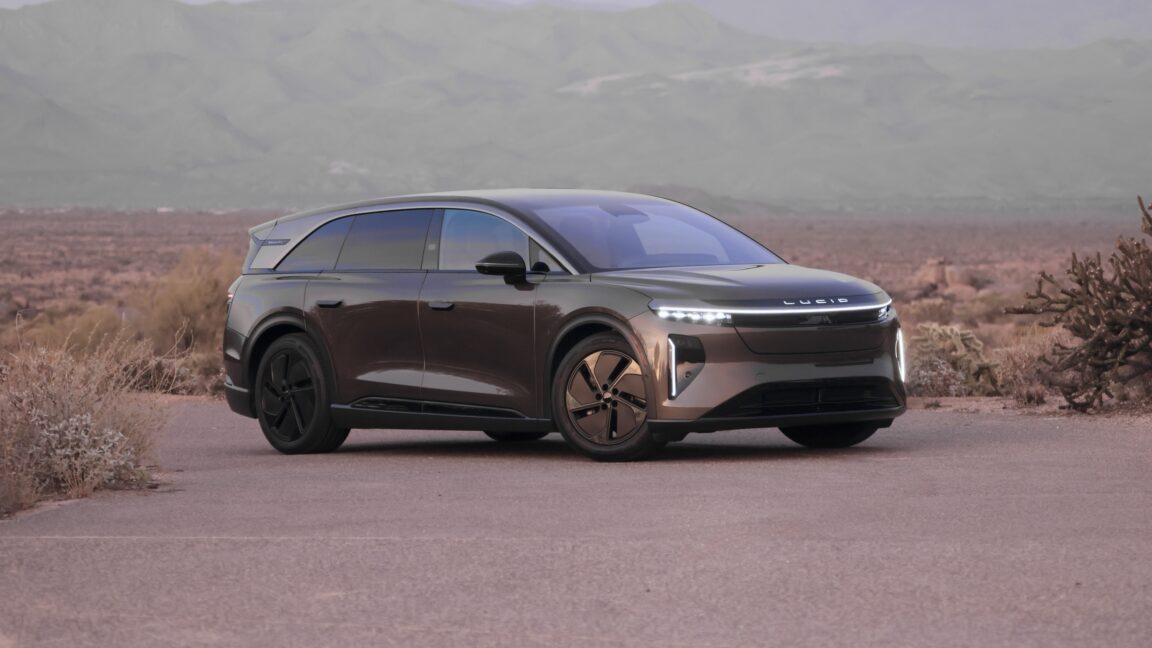
Lucid’s 2026 Gravity Touring gives the EV maker a lower-priced version of its electric SUV without stripping away the core hardware that defines the model. In a review for Ars Technica, Jim Resnick reported that the Touring delivered strong real-world range, rapid charging and ample performance, while showing some uneven interior execution.
The Gravity Touring starts at about $82,000 in the U.S., including destination, according to Ars Technica. The tested vehicle added several options, including a 22-speaker audio system, third-row seating, rear-wheel steering, three-chamber air suspension, Nappa leather, ventilated and massaging front seats, metallic paint and Lucid’s Dream Drive 2.0 Pro driver-assistance package. The total price came to $107,200.
Lucid also sells the Gravity Grand Touring, which starts above $100,000. Ars Technica reported that the Touring uses an 89-kWh, 16-module battery pack, compared with the Grand Touring’s 123-kWh, 22-module pack. Output rises from 560 horsepower in the Touring to 828 horsepower in the Grand Touring, while rated range increases from 337 miles to 407 miles.
Range and charging
Resnick reported that the lower range and power figures did not feel like major compromises during a week of driving. In mixed suburban and highway use, the Gravity Touring covered 320 miles from a full charge, close to its EPA estimate.
The SUV’s native NACS port allowed use of Tesla Superchargers, and the Lucid supported plug-and-charge authentication, according to Ars Technica. One charging stop took the battery from 15 percent to 95 percent in 31 minutes. Lucid says the Gravity can add as much as 200 miles in 11 minutes when connected to a suitable high-power DC fast charger.
Efficiency varied by use. Ars Technica reported 3.3 miles per kWh in city and suburban driving and 3.8 miles per kWh during steady freeway driving.
Performance and handling
The Touring uses two motors: a 147-hp front motor and a 413-hp rear motor, for a combined 560 hp and 811 pound-feet of torque. Lucid lists a 4.0-second 0-to-60 mph time for the model.
Ars Technica described the Touring as extremely quick in normal driving, even without the Grand Touring’s higher output. Resnick wrote that the SUV had more than enough power for merging and passing, and that the difference between the two trims felt less dramatic on the road than the specifications suggest.
The review praised the steering, air suspension and body control, especially given the vehicle’s roughly 5,200-pound weight. It also noted serious braking hardware, including six-piston front calipers and 15-inch front rotors. Resnick said the Gravity handled tight roads better than expected for its size, though it remained far from a sports car.
Roomy cabin, mixed details
Inside, the Gravity uses Lucid’s Clearview Cockpit, pairing a 34-inch curved 6K OLED display with a 12.6-inch central touchscreen. Ars Technica found the software clear and quick, with fast Apple CarPlay reconnection, though it noted slight audio-display lag during music playback.
The cabin packaging drew strong marks. Ars Technica reported nearly 41 inches of front legroom, 42.6 inches for rear passengers and a third row usable by an adult. Cargo room measures 56 cubic feet behind the second row and 112 cubic feet with seats folded and moved forward, more than the standard Ford Expedition figure cited in the review.
Some materials and trim pieces drew criticism. Resnick said several cargo-area panels felt cheap, floor mats were thin and curling, and the third-row seats were awkward to fold and raise. He also reported that large A-pillars blocked part of the driver’s view.
The review’s bottom line was that the Touring keeps most of what makes the Gravity notable — space, charging speed, comfort and design — while cutting about $20,000 from the Grand Touring’s price. Ars Technica said the model strengthens Lucid’s second production line after the Air sedan and raises expectations for the company’s planned midsize EV platform.
This story draws on original reporting from Ars Technica.