
Judge lets New York enforce gambling laws against Kalshi
A federal judge denied Kalshi’s bid to block New York rules on sports-event contracts while the prediction-market case continues.
By James Whitfield · Staff Writer
3 min read
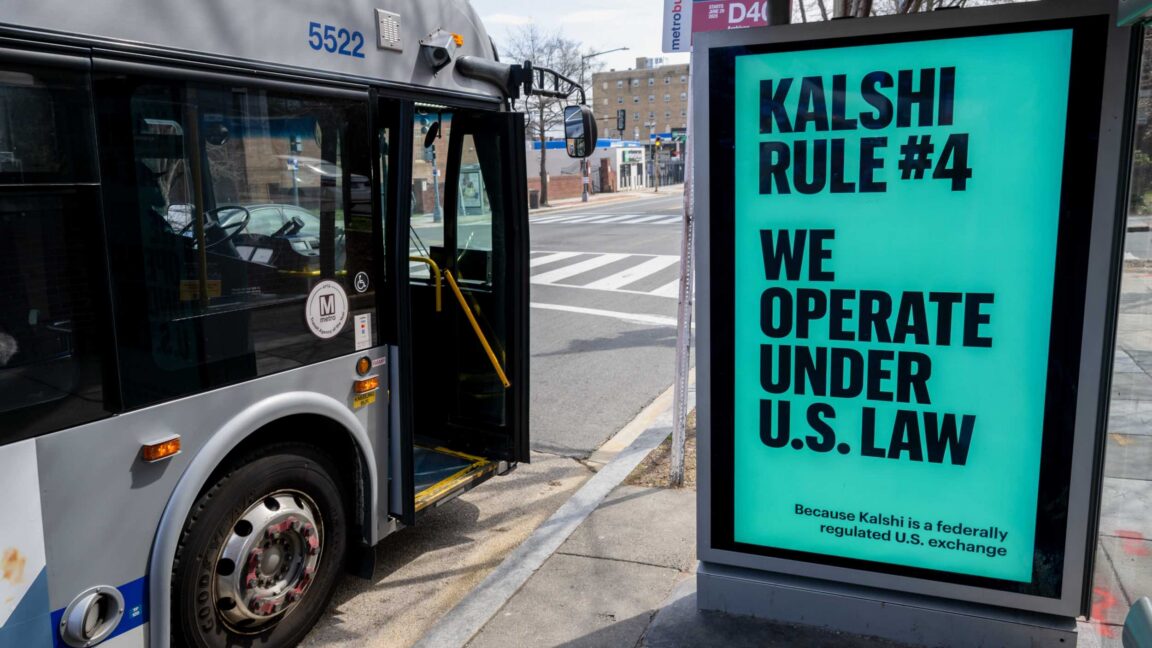
A federal judge has refused to stop New York from enforcing its gambling laws against Kalshi, dealing the prediction-market operator a setback in a broader fight over sports-event contracts. The ruling matters because courts are split over whether federal commodities law shields prediction markets from state gambling rules.
U.S. District Judge Analisa Torres of the Southern District of New York denied Kalshi’s request for a preliminary injunction against New York State Gaming Commission officials. Kalshi filed a notice saying it will appeal the decision to the U.S. Court of Appeals for the 2nd Circuit.
Kalshi is registered with the U.S. Commodity Futures Trading Commission as a designated contract market. The company argued that its sports-event contracts fall under the CFTC’s authority over derivatives and that New York’s gambling rules intrude on federal control.
Torres rejected that argument at this stage of the case. She wrote that Congress did not show a clear intent to displace all state laws that may touch designated contract markets, and that the Commodity Exchange Act leaves states room to regulate related issues.
Judge says federal inaction does not bar state rules
Torres said the CFTC’s decision not to restrict Kalshi’s sports-event contracts does not prevent New York from applying its gambling laws. She found that New York’s gaming rules can work alongside federal law rather than conflict with it.
The judge also said Kalshi had not shown that it would be impossible to comply with both the Commodity Exchange Act and New York gambling law. For the injunction request, Torres did not decide whether Kalshi’s sports-event contracts qualify as swaps under federal law.
New York Gov. Kathy Hochul and Attorney General Letitia James said in a joint statement that the state’s gambling laws are meant to protect consumers. They said Kalshi tried to disregard those laws and that state officials would continue to hold gambling platforms, including prediction markets, to legal requirements.
New York ordered Kalshi to stop sports contracts
The case began after the New York State Gaming Commission ordered Kalshi in October 2025 to stop offering, advertising, promoting or operating an unlicensed mobile sports wagering platform tied to sports events in the state.
Kalshi began listing sports-event contracts in January 2025, including markets tied to NCAA basketball and the U.S. Open golf tournament, according to court records cited in the case. New York officials argued that residents could be harmed by unsupervised sports gambling, especially people ages 18 to 24.
State officials also pointed to New York’s ban on wagering involving sports contests that include New York-based college teams. Kalshi said the state order threatened civil penalties and fines for activity the company says belongs under federal derivatives regulation.
Torres applied a presumption against federal preemption because gambling has long been an area of state police power. She wrote that Kalshi had not shown Congress had a clear and manifest purpose to override New York’s authority to regulate gambling when a designated contract market offers sports-event contracts.
Prediction-market cases continue nationwide
The New York ruling does not end Kalshi’s lawsuit. It allows the state to keep enforcing its laws while the litigation proceeds.
Other courts are considering similar disputes over prediction markets and state gambling laws. In April, the U.S. Court of Appeals for the 3rd Circuit ruled in a Kalshi case that New Jersey could not regulate sports bets offered through prediction markets.
Kalshi has also lost in other courts, including before the 6th Circuit, where judges declined to block Ohio gambling laws during litigation. The differing appellate outcomes increase the chance that the U.S. Supreme Court may eventually decide how far federal authority over prediction markets extends.
This story draws on original reporting from Ars Technica.