
Iowa lead-azide detonation remains paused amid lead-dust concerns
The Army says 68 barrels of aging lead azide are too unstable to move, but a court freeze and health concerns have delayed its disposal plan.
By Hana Yoshida · Markets Reporter
3 min read
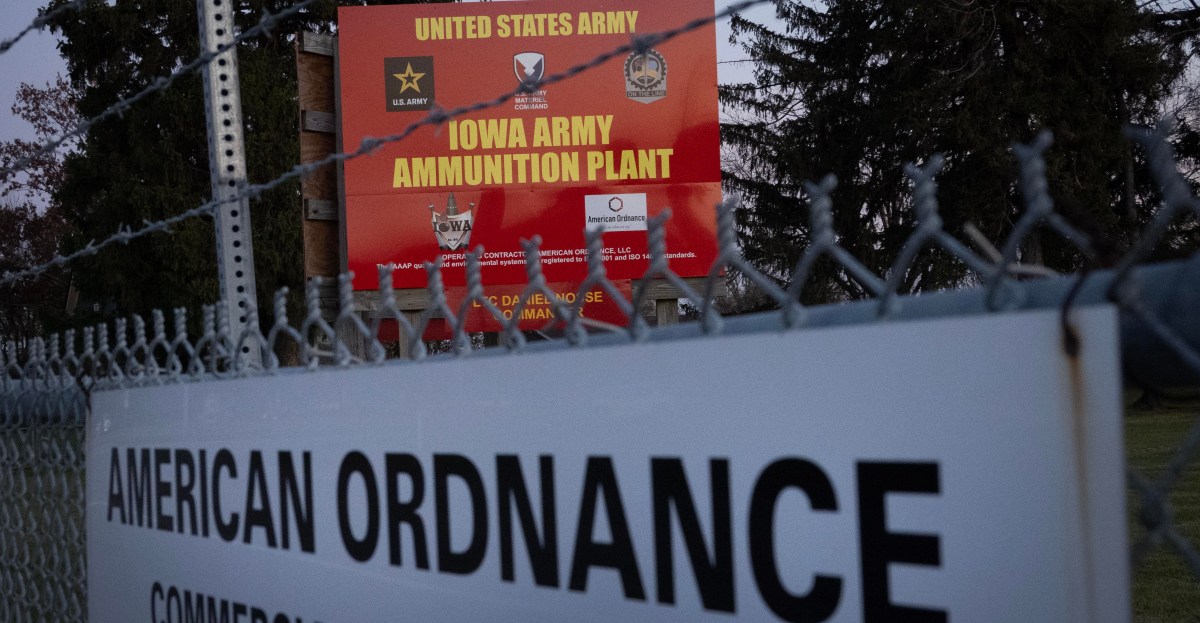
The proposed Iowa lead azide detonation remains paused after a federal appeals court froze the Army’s environmental permit and President Donald Trump said he ordered a halt pending court approval, Reuters reported. The plan concerns 68 barrels holding about 9,700 pounds of deteriorating explosive material at the Iowa Army Ammunition Plant in Middletown, not a routine weapons test.
Army and federal officials say the barrels have become too hazardous to safely open, move or chemically treat. Government lawyers said in a court filing that a controlled detonation was needed to protect the public from what they described as the greater threat of an uncontrolled explosion, according to Reuters.
Why does the Army want to detonate lead azide in Iowa?
Lead azide is a compound used to initiate military munitions. Reuters reported that the Environmental Protection Agency said long-term storage had caused recrystallization, making the material dangerously unstable and its transport risky.
The stockpile includes material more than 60 years old, The Verge reported. ATF Director Robert Cekada said a March inspection found substantial crystallization on the outside of the barrels. Cekada said workers could not safely remove the lids to add water and ethanol because doing so might set off the contents.
The Army had hired a contractor to dissolve the chemicals, but later canceled that approach. Army Col. Aaron Teller said chemical neutralization was unsafe because the exterior crystallization made opening the containers too dangerous, The Verge reported.
Cold weather added to officials’ concerns. Reuters reported that the EPA said temperatures expected to fall below 30 degrees Fahrenheit could create an immediate risk of an explosion.
What are the concerns about the planned blast?
Residents and environmental groups have opposed the plan because a blast could release lead dust beyond the installation. The direction and distance of any plume would depend on weather and wind. Army modeling contemplated travel as far as 100 miles, The Verge reported, while University of Iowa public-health professor Patrick O’Shaughnessy told Reuters that a Wednesday plume could likely travel 40 to 50 miles southwest of the site.
O’Shaughnessy told Reuters that avoiding a passing dust plume or sheltering from it could reduce immediate inhalation exposure. He said the longer-term concern is lead dust settling on homes, farms and the environment, where it does not break down; lead can harm people and animals, with children particularly vulnerable to effects on brain development.
Officials have proposed measures intended to limit contamination, including water tanks, tarps, containment screening and foam around the aging storage magazines, according to The Verge. Those are planned controls, not confirmed results.
What have Iowa officials advised residents and farmers to do?
- Iowa Health and Human Services advised people in potentially affected areas to keep windows and doors closed for 24 to 48 hours, switch off systems that draw outdoor air, and clean potentially affected surfaces afterward, Reuters reported.
- The agency also advised residents to consult health-care providers about blood-lead testing.
- Iowa agriculture officials recommended that nearby farmers move or shelter livestock, feed and equipment where feasible.
The 8th U.S. Circuit Court of Appeals temporarily froze the environmental permit after environmental groups sued, Reuters reported. The reported presidential pause left the timing uncertain; no date should be treated as final while the court matter remains unresolved.
This story draws on original reporting from The Verge.