
Ikko’s compact MindOne Pro draws criticism in hands-on report
The Verge said Ikko’s small phone has a clever shape and accessories, but early use exposed comfort and heat concerns.
By Maya Lindqvist · Senior Technology Correspondent
3 min read
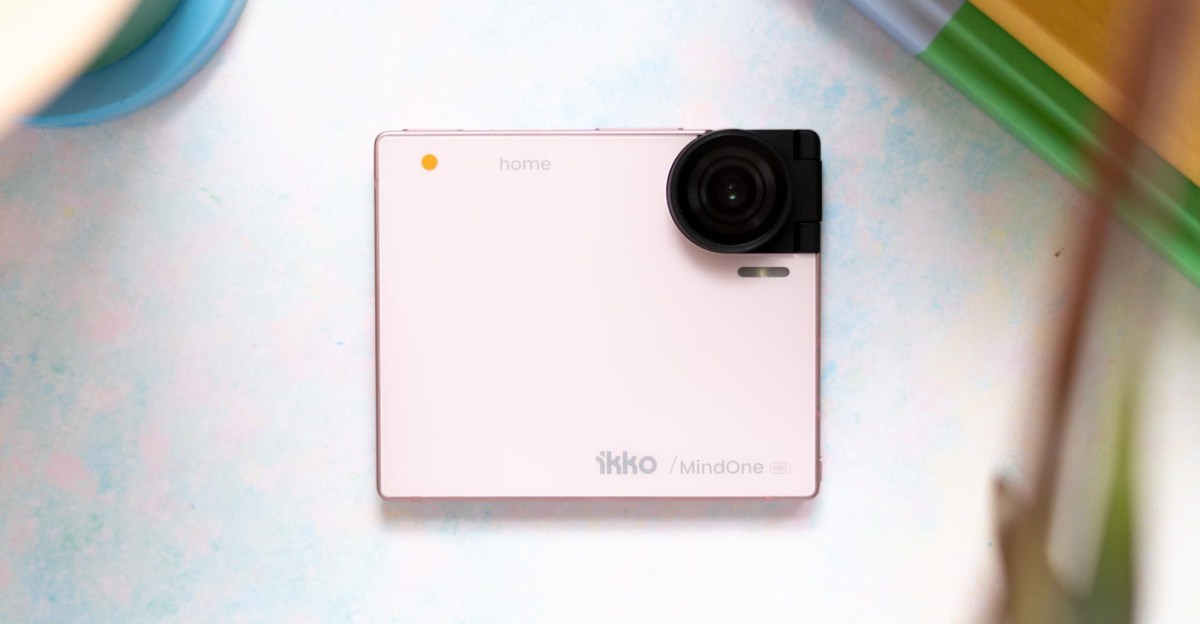
Ikko’s MindOne Pro, a compact smartphone with a square display and flip-up camera, drew a negative early assessment from The Verge despite its unusual design. Reviewer Allison Johnson said the device’s clever hardware ideas did not add up to a phone that felt right in regular use.
According to The Verge, the MindOne Pro comes from Ikko, a Shenzhen-based company better known for earbuds and other audio accessories. Johnson reported that the phone is sold globally at $499, with Ikko listing it at $429 on its website at the time of her hands-on report.
The device’s main draw is its small, boxy form. Johnson said the screen is square, while the phone body is slightly rectangular, making the device feel close to square without technically matching that description.
A compact phone with extra tricks
The Verge reported that the MindOne Pro includes a camera that flips upward for selfies. Johnson said the same mechanism can be opened partway, letting the camera assembly serve as a small stand or as a PopSocket-like grip.
Ikko also offers a keyboard accessory for the phone, according to The Verge. Johnson described it as similar in spirit to the Clicks keyboard case for iPhone, and said it adds both a magnetic ring and a headphone jack.
Johnson first saw the MindOne Pro at CES in January, The Verge reported. She described Ikko’s pitch as sitting between a small smartphone and an AI gadget, with the product appearing to straddle both categories.
Good idea, rough experience
The Verge’s hands-on report focused less on the novelty of the shape and more on how the phone felt after trying several ways to use it. Johnson said she used it as a normal smartphone, installed a minimalist launcher to treat it more like a basic phone, and tested it both with and without the keyboard case.
None of those approaches solved the central problem, according to Johnson. She wrote that the device never felt quite right, even though the hardware concept had clear appeal.
The Verge also flagged heat as an early concern. Johnson said the MindOne Pro became significantly warm during setup, and while she noted that initial setup can tax a phone’s processor, she said this device became more noticeably hot on its first day than most phones she uses.
The result, in The Verge’s assessment, is a device with an eye-catching form and several unusual features but a weak first-use experience. Johnson’s report casts the MindOne Pro as an ambitious first phone from an audio-focused company that has yet to turn its design ideas into a convincing everyday handset.
This story draws on original reporting from The Verge.